
Cakolli: Administrative instructions are not in line with the law; new mayors and local councilors should be elected
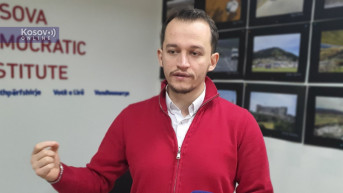
Eugen Cakolli from the Democratic Institute of Kosovo stated for Kosovo Online that the administrative instructions regarding petitions for the removal of mayors were not in line with the law because new procedures have been introduced in the meantime, which were not anticipated by local self-government laws, and this hinders the rights of citizens in four municipalities in the north to remove mayors.
"Yesterday, we heard the news that a group of citizens submitted requests for the removal of mayors in their municipalities. Later, we heard that officials from local self-governments claimed that the petitions were not in accordance with legal frameworks, arguing that they were not legally submitted because municipal officials were not informed in advance. However, we believe that the administrative instructions are not in line with the law because new procedures have been introduced in the meantime, which were not anticipated by local self-government laws, and this hinders citizens' rights to remove mayors by introducing new administrative barriers", Cakolli said.
He added that there should be no additional procedures regarding the collection of 20 percent of signatures.
"Officials of local self-government do not have the legal right to consider whether citizens' initiatives are in line with the law or not. This was the responsibility of the Central Election Commission, which should have determined whether 20 percent of the votes of registered voters in a given municipality had been collected. Therefore, we need to know more about the number of citizens, and the Central Election Commission should inform the public as soon as possible about this number, whether it has been reached or not. After that, I think that in case we continue to have this political problem, then the group of citizens that initiated this request should send it to local self-governments, who would then forward it to the ministry. Still, I believe that citizens' right to do so has been violated so far", Cakolli emphasized.
He added that according to the law after the prescribed procedures had been followed, the Central Election Commission should now publicly announce and inform the ministry and local self-governments whether the 20 percent threshold of votes had been reached.
"In case it has, officials of local self-governments will instruct the Central Election Commission to conduct the voting process, which must be completed within the usual timeframe of two months. Depending on the number of citizens who signed the request, the residents of these four municipalities will be asked whether they are for or against the dismissal of their current mayors. If more than 50 percent of voters come out and vote in favor of the dismissal, then the President of Kosovo should come out and announce new extraordinary elections to be held within 30 to 45 days after this procedure. However, knowing that there may be some administrative delays, I think it is not reasonable to expect that new elections will be held at the earliest by the end of February or the beginning of March. It needs to be determined whether citizens living outside the country will vote and whether the voting will only take place in these municipalities. After that, any judicial appeals should be considered if there are any in case the votes are not counted correctly. The Central Election Commission has not even adopted new election rules so far", our interlocutor emphasized.
When asked why Kosovo institutions refused the petition, which seemed like they wanted to postpone elections in the north, Cakolli claims that there is no way to delay or deny citizens the right to express their rights under the law.
"Even at the beginning, we asked the current mayors to resign because we believed it was the easiest way both in terms of time and finances, as we wouldn't have to spend double the money. However, there is no persuasion, even if the mayors are dismissed, for Serbian political parties, especially the Serb List, to participate in the elections. That's why I think Kosovo institutions regarding this should be much more proactive, and on the other hand, we should have a stronger political agreement on this issue. Even if citizens, for example, submit petitions correctly, they still have a problem when it comes to the local assemblies of these municipalities where majority Albanian parties dominate, but they lack legitimacy due to their low number of votes. The entire institutional framework in the northern municipalities needs to be resolved through a political agreement to anticipate not only the election of new mayors but also local councils to elect new institutions with full legitimacy as they had before the crisis that occurred in the north", Cakolli concluded.



comments