
Rakovic: Behind the self-proclaimed priest Xhufka are political structures; it started the same way in Montenegro
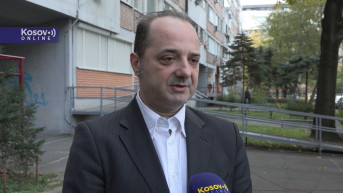
Historian Aleksandar Rakovic assesses that Kosovo Prime Minister Albin Kurti is certainly behind the intrusion of the self-proclaimed priest Nikolla Xhufka into the church in Rakinica near Podujevo, and he adds that Serbia must take urgent steps and devise how to respond to such challenges, which, in his opinion, are not the actions of individuals.
"The whole story is certainly orchestrated by Kurti. Whether he personally is involved or his system, that's less important, but certainly, nothing is done without his knowledge and approval. Can we really imagine that something in Montenegro was done in a similar situation without Djukanovic's approval and knowledge? Let's just add one and one, and we'll see what it's all about. This is currently the biggest problem we have in Kosovo and Metohija, and a similar problem was much easier to resolve in Montenegro and Croatia, where foundational agreements were signed with the Serbian Orthodox Church. We need to think about how to respond to prevent the problem from escalating. We don't have allies in the Albanian quasi-state structures in Kosovo and Metohija, nor in the international factors pretending to mediate, but in reality, these matters are always resolved in favor of separatist Pristina," Rakovic says for Kosovo Online.
He says that there is no fear for Serbian sanctities in Kosovo as long as the current archbishop leads the Albanian Orthodox Church. However, as he notes, problems may arise in the future.
"While Archbishop Anastasios is at the helm of the Albanian Orthodox Church, there is no fear that this canonical eparchy will show intentions to occupy Serbian churches and monasteries in Kosovo and Metohija. However, the problem may arise when he is no longer at the head of the church, when someone else, an Albanian nationalist, will agree with the Greater Albanian policy, the Albanian state, and the so-called Kosovo structures that all our Serbian churches and monasteries should be taken over by Albanians, whether it is the Albanian Orthodox or Catholic Church. Moreover, let me remind you that Albania has submitted a request to UNESCO to include our four churches and monasteries that are on the UNESCO list in the heritage of the so-called Kosovo and exempt them from the heritage of the Republic of Serbia," Rakovic says.
He believes that all this represents a "Greater Albanian project."
"In short, Albania did it with the so-called state of Kosovo because it is their Greater Albanian project. Some serious political structures stand behind this self-proclaimed individual. This is how it started in Montenegro 30 years ago with various self-proclaimed individuals who invaded churches and ended up with Djukanovic's regime adopting a law seizing the property of the Serbian Orthodox Church. That process lasted 30 years; it was interrupted by litigations, Djukanovic's defeat in elections, the correction of his law, and the signing of a foundational agreement with the Serbian Orthodox Church. However, the situation is different in Montenegro because the Serbian Orthodox population is in the majority there. In Kosovo and Metohija, Serbs have been expelled, Albanians are the ethnic majority, they have their quasi-state structure, and they see that they can do whatever they want. We need to devise our responses to what is coming. This is not the act of a madman; we see that he has an organized group, even some officials of the Podujevo Municipality were with him, they changed the lock, and practically, they have already taken over that Serbian church in Podujevo," Rakovic says.
0 comments