
Citizens of Northern Kosovo, One Month After the Closure of Serbian Institutions: "It's Like a Bad Dream"
Like a Bad Dream. This is how the citizens in northern Kosovo, without saying much, describe how they feel, one month after the shutdown of Serbian institutions.
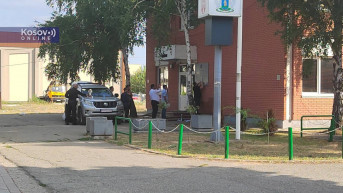
An atmosphere of confusion and uncertainty is evident from Lesak to North Mitrovica. Undoubtedly contributing to this are the police bases--some old, some new, and some resembling fortresses. Along the road, reinforced patrols of the Kosovo Police and armored vehicles have become part of everyday life for Serbs. KFOR troops, who are also much more present than before, are diligently clocking in their patrols. In their statements, they emphasize that their mission is in line with UN Security Council Resolution 1244.
However, for most citizens of this part of Kosovo, this daily routine is currently the least of their concerns amidst a sea of newly emerging problems.
Neither Here nor There
In conversations with Kosovo Online reporters, citizens say that the bans on Serbian goods, followed by medications, and finally the Serbian dinar, have already created enough complications, and they didn't need any more. But they got them.
A month ago, instead of resolving the simplest administrative problem in an hour, now they feel "neither here nor there." In the best-case scenario, they say, such tasks will take an entire day in the future. They don't want to think about the worst-case scenario. They quote a local saying: "There's always worse than bad," and wait patiently.
"One and a half months ago, I gave birth to my second child, and what has happened since then truly feels like a bad dream," says Danijela Gvozdic from North Mitrovica.
Ironically, Danijela Gvozdic says that her healthy, living child "does not exist" at the moment.
"He isn't registered anywhere in the birth registry, and this brings many consequences. My child doesn't have a health insurance card, I can't receive parental benefits... In fact, I wonder if my child will even be able to get any vaccines. You know, children aren't objects. They shouldn't have to wait for all of this. This needs to be resolved urgently, because children are our most sensitive issue, and I don't think they or their parents should have to go through this," the young mother says sincerely.
A Dark Comedy
The head of the North Mitrovica Municipal Administration, Sasa Petrovic, says that Danijela Gvozdic's case is not unique and that ordinary citizens, through no fault of their own, have been the ones most affected.
"A month after the raid on the temporary organ offices and local administrative services, 400 people have been denied their right to work. Their workspaces have been seized, and they cannot go to their jobs. Even though we've been asking since the beginning and waiting for an answer, to this day, we haven't received a response as to when we will be allowed to resume our work," Petrovic explains.
Petrovic explains that the shutdown of these institutions has not only taken away the citizens' right to life, particularly for newborns, but in what feels like a dark comedy, it has also taken away their right to death.
"The families of those who have passed away cannot register the death in the civil registry, they cannot initiate inheritance proceedings, and even if the deceased's last wish was to be buried somewhere in central Serbia, that too has become impossible," Petrovic says.
He adds that the list of newly arisen problems is extensive and connected to all aspects of daily life.
"Young couples who wished to marry have been unable to do so in our region since August 30. All children born during this period will be considered illegitimate, and their status will have to be determined later through other procedures," he explains.
One of the key issues he highlights is child protection.
"This is currently one of the most pressing issues. According to the Law on Support and Improvement of the Material Situation of Families with Children, our services were responsible for children with disabilities or developmental challenges. Our services would submit requests and prepare documentation for the relevant commission, which worked with the Health Fund, to determine the level of disability or illness in these children. After that, they would assign a personal assistant for school-age children, or other necessary services. Families with these issues are now facing serious difficulties, as they are among the hardest hit by the closure of local administrations," Petrovic emphasizes.
He also mentions another serious problem: social welfare benefits, including financial aid and one-time cash assistance.
"Since August 30, all of this has been inaccessible to families living in the municipality of North Mitrovica. A significant number of people relied on these one-time payments to meet their basic needs, as they had no other way to provide for themselves. They lived off this aid," Petrovic warns.
Petrovic explains that many citizens, due to their health conditions, had to turn to the municipality for support, as the funds they received from health or pension funds for medical treatments were insufficient.
"We had a large number of citizens who, due to their health conditions, needed to reach out to the municipality. They submitted requests, and through one-time financial aid, we covered their trips to larger medical centers, paid for scans, tumor markers... All of this has been unavailable to the citizens of North Mitrovica and the three municipalities in northern Kosovo since August 30. If this continues--mind you, the first month has passed--I fear that, from a human rights and social rights perspective, this will truly turn into a catastrophe, as that is how it will look on the ground," Petrovic warns.
Where Do We Go from Here?
Residents of North Mitrovica admit that living is becoming increasingly difficult and complicated, and they ask for nothing more than to return to normal life.
"You know, it's very hard. I don't currently need any documents, but older people are struggling. They beg someone to drive them to Raska just to get a document. I don't see a way out of this situation," says a young resident of the city on the Ibar River.
Another interviewee points out that the shutdown of Serbian institutions is just the continuation of the problems they've been facing, reminding that it all started with the discontinuation of the Serbian dinar.
When asked how they're coping, he simply spreads his hands.
"How? However we can. And where else? Where else are we supposed to go? Is this fair, is this normal, is this healthy? To have to go to Raska or elsewhere just to get the pension we earned over years of work, just for therapy. Is that healthy? It's not about the dinar. This is a disgrace. It's shameful. And the world watches coldly and what? Nothing. They act like it's normal," says an elderly man.
"He has a lot on his conscience, and he's trying to ease it. Even someone without a minute of schooling could solve this. You can't ask for and receive something that never was. This shows that Kosovo, with its holy sites and everything else, is Serbian land, and part of Serbia," he states.
We received no different response in the center of North Mitrovica.
Some citizens say that the Serbian government is doing everything it can to make life easier for the people, but recent events have made life more complicated.
"It's getting harder and harder and more complicated for the people. The citizens are the ones suffering the most. For basic services, we have to go to Raska. Our government is doing everything it can to provide services and make them as accessible as possible. But this is getting harder to endure," one passerby says.
A young resident of Mitrovica, who didn't want to appear on camera, took a few minutes to answer the simple question: "How are you living, a month later?"
"A nightmare we're waiting to wake up from. That's how we feel," he says briefly.

0 comments