
Clewing: Kosovo cannot avoid the creation of the CSM, it does not have the power to implement its decisions in the north
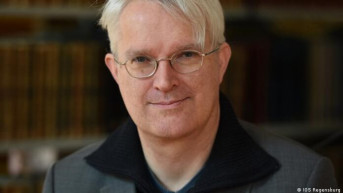
Konrad Clewing, an expert on the Balkans at the Leibniz Institute for Eastern and Southeastern European Studies in Regensburg, believes that the Franco-German proposal is not to the detriment of Kosovo, nor Serbia. Clewing believes that Kosovo cannot avoid the creation of the Community of Serb-majority Municipalities, Reporteri reports.
However, according to Clewing, the Franco-German proposal lacks the point that "neither party supports or maintains institutions on the territory of the other that are not in accordance with the legal framework of the other party".
"The government of Kosovo cannot avoid submitting a proposal for the Serb-majority municipalities in the north of the country," Clewing said in an interview with Deutsche Welle.
A few days ago, parts of the Franco-German proposal for a compromise solution between Kosovo and Serbia were published. What are your views on this proposal?
If what was published on Euractiv.de coincides with the proposal, then I think it is an interesting impulse that is neither to the detriment of Kosovo nor to the detriment of Serbia. But, it strengthens Kosovo's position: Article 1 on good neighborly relations, although it sounds like an empty phrase, is actually a strong point for equal rights between the two countries. However, Serbia is not being asked for what is currently impossible, i.e. formal recognition of Kosovo. Likewise, both parties must fully respect the territorial integrity of the other party and not represent or act on behalf of the other party in international institutions.
However, there is one thing that I miss: that neither side supports nor maintains institutions on the territory of the other that are not in accordance with the legal framework of the other side. I say this because, contrary to the perception that Serbia does not maintain any institution in Kosovo, it does so openly in some areas, as in the case of the so-called University of Pristina based in Mitrovica, which openly declares on its website that it is based on the legal acts of the Republic of Serbia and does not mention the existence of Kosovo. The existence of such parallel institutions greatly contributes to destabilization.
Even in these moments we have a destabilized country. The Serbs left the institutions in the north of Kosovo. How serious do you think the situation is?
This withdrawal is truly an extraordinary act and if not ended soon, has great potential to bring about a change. Because the withdrawal of Kosovo Serb policemen from the north of Kosovo created a security gap. This void in the police, in the court, in the local government will have to be filled somehow. If the situation lasts longer, I think it is very dangerous, and that is why I actually think that the current strong diplomatic actions of the USA, France, Germany and the EU are justified.
These countries asked Albin Kurti to delay the implementation of the license plate penalty system. Kurti's government refused it, how do you evaluate this decision?
We must keep in mind that Kurti comes from a movement that basically arose as a result of resistance to Kosovo's paternalism by the international community. And in this respect, it is consistent and logical that he and the government he leads do not act completely according to the instructions of the Western countries. And they succeeded in that several times. I remind you here of the non-holding of Serbian elections in Kosovo, despite the appeals of Western powers or friends of Kosovo. This was an act of resistance that was worth it. Because it increased the visibility of Kosovo and strengthened its citizenship. But now we have a more dangerous situation.
What should the government in Kosovo do to prevent serious tensions?
Kosovo institutions currently do not have the power in the north of Kosovo to implement their decrees. And I think they better not try. Their request for license plates, no matter how legitimate it may be, cannot be legally enforced under the circumstances, i.e. when the Serbian police officers are absent. This can only be done by the use of force, and that would provoke counter-violence. So, I don't think it makes sense at this point to start imposing fines as early as November 21. I think it would really be better to postpone this step until an agreement based on the Franco-German plan is signed. It is pragmatic and necessary.
As a condition, Serbia offers the formation of the Community of Serb-majority Municipalities. The Government of Kosovo categorically rejects the creation of an ethnically based entity. Will Kosovo succeed with this firm stance?
The Government of Kosovo cannot avoid submitting a proposal for municipalities with a Serbian majority in the north of the country. In 2015, the Constitutional Court did not reject the creation of the association, but on the contrary said that it supports the creation of the Association promised by the Agreement from 2013, but that the association should not have executive powers. Both the previous government and the current one should have made a concrete proposal based on this decision a long time ago. The Kosovo side has not done anything on this issue so far, because it thought it could postpone it. But I don't think that in the geopolitical situation we have today, after the Russian attack on Ukraine, we should be so relaxed and think that things will one day improve by themselves.
At the moment, we have a very strong focus of the main countries on reaching an agreement between Serbia and Kosovo. If the parties do not come to an agreement, do you think there is a risk that the West will turn its back on the region, and especially on Kosovo?
The West would be very irredeemable if it did not act vigorously now to achieve lasting peace in the region. An agreement between Serbia and Kosovo is impossible if it does not happen under the supervision and pressure of the Western countries. Because the dialogue developed by the EU so far has not brought anything. The basic weakness of the West is that for a long time - even after the Russian aggression against Ukraine - it did not manage to leave the position of neutrality in relation to the status of Kosovo: important international institutions, such as the EU and NATO, which in fact since 1999 have been following the creation of Kosovo's state structures and are in principle in favor of its membership in them, they are officially neutral regarding its status. And this weak attitude of the West is a permanent source of destabilization in the region.


comments