
Council for the Protection of Human Rights and Freedoms: The non-certification of the Serb List's candidacy is politicized
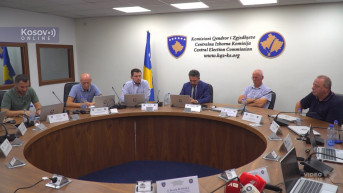
The Council for the Protection of Human Rights and Freedoms reacted after the Central Election Commission's decision not to certify the Serb List's candidacy for the February 9 elections, stating that the law explicitly outlines the reasons for rejecting a certification, and political affiliation or opinion is not one of them, Gazeta Blic reports.
The Council emphasizes that the Serb List has the right to appeal the CEC's decision within the legal timeframe by presenting facts to overturn the decision.
"The next step is the Election Appeals and Complaints Panel and the Supreme Court. The Council for the Protection of Human Rights and Freedoms believes that the process has been unnecessarily politicized and that the conflict is not against the Serb List, but between the representatives of the ruling and opposition factions within the CEC. The government blames the opposition for not voting for the rejection of the Serb List’s certification, while the opposition has sought clarification from the Ministry of Internal Affairs regarding this matter."
They highlight that an "unnecessary uproar" has been raised, claiming that the non-certification of the Serb List is part of some political agreement, and that there have also been reactions from the international community that strongly opposed the CEC's decision.
"The Council for the Protection of Human Rights and Freedoms calls on the CEC to clarify the legal basis for this decision, and if the decision is based on the law, the CEC should insist on rejecting the certification. Otherwise, disciplinary and legal measures should be taken against those who have abused their position, regardless of their position or political party affiliation," the Council stated.
Furthermore, the Council emphasizes that the application of double standards seriously harms democracy and is in complete contradiction with the law.
The statement adds that the CEC must maintain its independence by not being subject to any political influence and by treating all parties equally, without allowing discrimination based on ethnicity, religion, party, politics, or status.
The Council also reacted to the second refusal by Kosovo Prime Minister Albin Kurti to appear before the Special Prosecutor's Office.
Kurti, according to the statement from the Council for the Protection of Human Rights and Freedoms, requested that the Special Prosecutor’s Office conduct the hearing in his office.
However, as stated, the Criminal Code of Kosovo does not provide for this option.
"After any potential refusal of the invitation, the Prosecutor's Office can order that Kurti be compelled to testify. The Council for the Protection of Human Rights and Freedoms believes that Kurti, as the head of the government, should be committed to the rule of law and, therefore, through his personal and concrete example, should prove this commitment," the statement reads.
As a solution, the Council for the Protection of Human Rights and Freedoms proposes that the interview with Kurti be postponed until after the elections, so as to eliminate the justification that the Special Prosecutor's Office is attempting to interfere with the February 9 elections.
"Additionally, it is a time of holidays, the campaign is about to begin in full force, and there is no need to escalate the situation. After all, we are not in favor of escalating the situation when there are still many other issues. The elections are very close, there is no need to rush," the Council concluded.

0 comments