
Cupi: Kosovo and Bosnia and Herzegovina are key challenges for Turkey
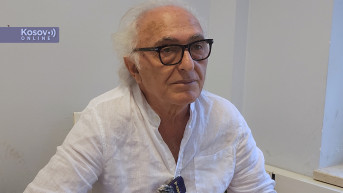
Analyst from Tirana, Frrok Cupi, stated that Turkey’s initiative, the “Platform for Balkan Peace,” represents Ankara’s attempt to strengthen its position in the Western Balkans. In addition to the key regional challenge of the normalization of relations between Belgrade and Pristina, there are also political turbulences within Bosnia and Herzegovina, as well as tense relations between Sarajevo and Zagreb.
“I get the impression that this will spark debate about what Turkey will do to establish peace, between Belgrade and Pristina, for example. That is the most pressing issue in the Balkans today. Will Turkey perhaps side with Belgrade as Russia’s ally, since Turkey is almost an ally of Russia? Or will it side with Kosovo, where it has invested large amounts of money and where the population is almost entirely Muslim?” Cupi told Kosovo Online.
He emphasized that a major challenge for Turkey is also how to resolve the political turbulence within Bosnia and Herzegovina, between the Republic of Srpska and the Federation of Bosnia and Herzegovina, as well as how to improve relations between Sarajevo and Zagreb.
“Turkey has committed to improving relations between Croatia and Bosnia. This is a long-standing wound, 30 years old, and very serious. If steps are taken forward, it would be very important. But if there is failure, it will be said that Turkey failed to achieve what it intended,” Cupi explained.
This analyst believes the key question is what kind of capacity Turkey has to mediate in establishing peace in the Western Balkans.
“Turkey is a NATO member, but so are many Balkan countries, with equal status. Of course, Turkey has much greater defense capabilities, but the status is the same,” Cupi said.
He added that European integration and the religious factor also play significant roles.
“Turkey is cautious with such matters. However, the question arises as to how Turkey will act in the Balkans,” he emphasized.
When asked what Ankara’s motives are for launching the “Platform for Balkan Peace,” the analyst said that Turkey believes it holds an “advantage” in this part of Europe.
“Historically speaking, even now, it has an advantage in many areas, especially in economics and defense. Look, Turkey is a large country that hasn’t created problems in the Balkans for a long time. Even the issues it has with Greece are old, dating back to the 1923 Treaty of Lausanne,” Cupi said.
He added that under President Recep Tayyip Erdogan, Turkey has “entered a new phase of influence.”
“Turkey has entered a spiral of influence, acting as a mediator in negotiations. With the US, it is mediating talks between Russia and Ukraine, and that is a new reality,” Cupi explained.
He sees the key question as whether Turkey has the “approval” of the United States to engage with open issues in the Balkans.
“I have the impression that it does. I think so, because President Donald Trump’s attitude toward Turkey’s president is cautious and elegant, so as not to interfere with each other’s business,” Cupi stated.
He added that both countries share an interest in mediating talks to end the war in Ukraine, and that Turkey’s involvement in Syria is also important to the US.
“I believe Trump is interested in Erdogan addressing these issues. Also, stability must be maintained in the Balkans. And since the US does not want to be directly involved in this process, Turkey’s role becomes clear,” the analyst said.
He sees two potential problems regarding Ankara’s intentions.
The first is the fact that, unlike Turkey, the countries of the region see their future in the EU.
“Turkey is a large country that long aspired to become a member of the European Union but has since given up. So, a country that large, which has abandoned the EU path, how can it be reliable for countries that are EU members or candidates for membership?” Cupi asked.
The second issue, he noted, is how Greece might react to such an initiative.
“The question is, how will Greece ‘wake up in the morning’ regarding this Turkish action? Greece is an EU member but also a Balkan country, and it doesn’t distance itself from that identity like Slovenia or Croatia, or even Romania and Bulgaria. So, the question is how Greece will interpret this initiative. From time to time, tensions between the two countries flare up. In a situation where the question is who will lead the region, it seems Turkey wants to assume the leadership role. Until recently, that role belonged to Greece, which has already had problems, even with Albania, which it was used to viewing as ‘subordinate,’” Cupi concluded.



0 comments