
Curcic: EU plans bureaucratic reforms, will not affect the Western Balkans
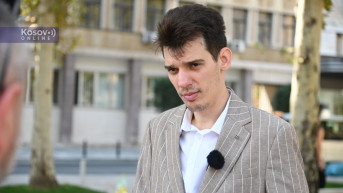
Researcher at the Institute for European Studies Petar Curcic stated that the EU is planning “bureaucratic reforms” in order to respond more efficiently to current “challenges,” but that the reorganization within the Union will not reflect on the Western Balkans, since this is a “separate track” compared to the Union’s foreign policy agenda.
“I think these are separate tracks. Primarily because the European Union gradually placed its enlargement agenda for the Western Balkans starting in 1997, and especially in 2003. Therefore, enlargement will depend primarily on the bilateral and multilateral relations of the Western Balkan countries with individual EU members and with the EU as a specific organization,” Curcic told Kosovo Online.
He is convinced that the announced reforms within the EU may still have a positive impact on the Western Balkans.
“It may have a good effect in the sense that the system of applying for, accepting, and implementing certain joint projects will become more efficient. In that respect, it will have a certain, but very indirect influence,” Curcic believes.
He is confident that even after the transformation of the European Commission is completed, the region will remain on the EU’s priority agenda.
“The Western Balkans has its place in the foreign policy agenda of priorities. It will certainly remain within the administrative framework, it will have its place, although it is not a large department. Out of about 30,000 bureaucrats in Brussels, only a small portion is dedicated to our region,” the researcher specified.
Curcic emphasized that, when it comes to the Western Balkans, the key guidelines will still be given by the most powerful EU members, where, as he points out, “European policy is shaped.”
By this he primarily means Germany, France, and Italy.
“They are traditionally interested in this region. Their diplomats will continue to deal with this region, and the EU certainly has its broader decision-making mechanism. Here we are talking about agriculture, transport, communications, digitalization,” Curcic noted.
He explained that the EU’s current priority is “strengthening the bureaucracy” as a “response” to current challenges.
“And this is the broader context, to somehow make its administration appear more efficient in the eyes of the public, while at the same time showing that it wants to modernize,” Curcic said.
He added that the decision on reorganization within the EU was probably influenced by reforms within the U.S. administration initiated by Donald Trump. However, he stressed that such “voices” could already be heard in Europe earlier.
“Undoubtedly, those voices originated indigenously within the EU as well, from various opposition parties, both systemic parties within the European Parliament, and from the member states themselves, which naturally try to adapt to these circumstances. This is a bureaucratic reform that will not significantly affect the systems and decision-making in the EU’s foreign or domestic policy,” Curcic emphasized.



0 comments