
Hoti: Reduction of Brussels Administration could slow Western Balkans’ integration
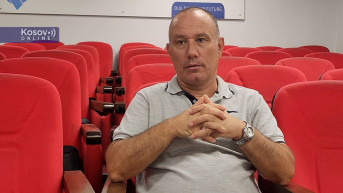
Lecturer at the Mediterranean University of Tirana and the University of Vienna, Dritan Hoti, stated that the announced reforms within the EU could produce a “temporary slowdown in the integration of the Western Balkans bloc of countries.”
“If there is a reduction, that means there could be a temporary slowdown in the integration process of the Western Balkans bloc. That would be somewhat contradictory. On the one hand, a united Europe says that it aims to accelerate the integration of Western Balkan countries based on geopolitical imperatives, especially due to the war between Russia and Ukraine and the impact this war has on the European continent, with its main effects on Central Europe and the Balkans, which are traditional areas of vital interest for Russian foreign policy,” Hoti told Kosovo Online.
He primarily views the reforms in the light of strengthening the Union’s military capacities.
“There may be pressure from right-wing forces in the EU, but priority is now given to military readiness. Military preparedness has increased in Europe, and in that context, there will be a reduction in bureaucratic costs, giving preference to military-related investments aimed at strengthening national armies, which to some extent is connected with boosting collective European security,” Hoti is convinced.
He recalled that the process of restructuring—reducing technical and bureaucratic staff within EU institutions—has been happening since the very formation of the Union, but it remains unclear whether this latest reform will also “affect” the staff dealing with the “technical-legal integration processes” of candidate states.
“A reduction in staff numbers could lead to temporary slowdowns, and the question is what will be done with the personnel of certain bodies that form the EU’s main apparatus. That remains to be seen,” Hoti specified.
He also emphasized that if there is “strategy and political will” within the EU, then reforms could contribute to the accelerated accession of Western Balkan candidates.
“If there is a strategy and will to have an accelerated ‘bloc integration’ process, taking into account the current geopolitical imperative related to the war between Russia and Ukraine, it might be feasible for our countries to join the EU by 2029 or 2030,” Hoti stressed.
He added that candidate states must meet the “legal, social, economic, and institutional criteria,” but in such a case there would not be a “rigid EU stance” on enlargement.
As examples, he cited the enlargement waves that first included Poland and Slovenia, then Romania and Bulgaria, and finally Croatia.
“The same criteria as for the developed EU countries were not required,” Hoti noted.
He explained that the “geopolitical imperative” has always been the key driver in the EU enlargement process.
“The most important element for EU enlargement has always been the geopolitical imperative, as an incentive for the integration of certain former communist European countries into the Union. This imperative is even more important today,” Hoti said.
As a second key element, he pointed to the combination of “will and motivation” of the Western Balkan candidate states themselves for the earliest possible EU membership, which requires avoiding “deep social and political upheavals” that would slow down the process.
“Internal political stability of a country is more important than quick integration into the EU. So, the strategy of accelerated integration is a priority, but political stability is equally important, and that depends on what is called local and regional actors—that is, the governments of those countries and their societies,” Hoti argued.
The solution, he concluded, lies in “symmetry.”
“There must be some kind of symmetry, some sort of cooperation or ‘two-way chemistry,’” he clarified.
Hoti also warned that even if the Western Balkans integrates into the EU by 2029 or 2030, as European officials have announced, that does not mean they will fully align their foreign policies; instead, they may continue with “controversial policy positions” linked to their “traditional stances in foreign affairs.”
“We see countries such as Slovakia or even Hungary which, although EU and NATO members, are not prevented from having a differentiated approach to the Russian issue compared to other Union members. So, coercive mechanisms did not work, even though there were some warnings for Hungary, or even Slovakia. The same tendency, the same phenomenon, can be seen with certain countries in the Western Balkans, where EU integration will not definitively solve problems nor change the historical orientation of some countries’ foreign policies. This will be a kind of dual political and institutional coexistence,” Hoti concluded.

0 comments