
Curcic: The Position of UNGA President is symbolically significant, no difficulties expected in Baerbock’s election
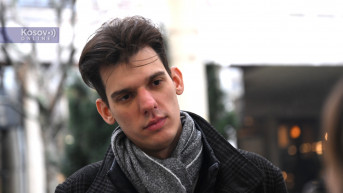
Researcher at the Institute for European Studies in Belgrade, Petar Curcic, stated that the position of President of the United Nations General Assembly (UNGA), for which Germany has nominated Annalena Baerbock, will primarily be significant for Baerbock herself and her CV. However, it will be interesting to observe her stance on global hotspot issues.
"The German media perceive Baerbock’s candidacy as a personal career move—some criticize her for leaving domestic politics, while others see it as a smart professional step that aligns with her diplomatic ambitions," Curcic said. He added that the role of UNGA President is symbolically significant as it allows the holder to propose topics for specific resolutions.
Regarding whether a resolution related to the Balkan region can be expected during Baerbock’s tenure, Curcic emphasized that Germany undoubtedly maintains an interest in the region.
He recalled that during the previous UNGA session, a resolution concerning the region was adopted even though Germany was not presiding at the time but was one of the co-sponsors.
"Regardless of whether she is at the head of the UNGA, certain countries’ interest in regional topics often naturally brings these issues to the agenda. I do not expect particularly significant changes in the General Assembly’s approach under Baerbock’s leadership," he stated.
Curcic believes there will be no difficulties in Baerbock’s election, as it is a procedural matter.
"These positions are reserved and rotate periodically among different regional groups. It is now Western Europe’s turn, and it seems that a compromise has been reached for Germany to take on this delicate responsibility. I do not foresee any problems. Ultimately, her term will last only one year, and I don’t expect any form of resistance," Curcic assessed.
Her candidacy, he believes, represents a form of compromise, as her Green Party is unlikely to be part of Germany’s next ruling coalition. However, it still holds influence at the federal state level, and Baerbock has led German foreign policy during a highly challenging period of polarization in Europe.
With Baerbock’s greater presence at the UN, Curcic expects an emphasis on green policies, green transformation, increased efforts within multilateral organizations, faster decarbonization of the economy, and the transition away from fossil fuels.
"It will be very interesting to see her stance on the Middle East and critical global issues—not only regarding Gaza, Israel, and Palestine but also concerning the Houthis in Yemen and security matters in general. This will be a litmus test because Germany has one policy, while Arab countries have another. Moreover, there is a rhetorical cooling in relations between the U.S. and the European Union, and the issue of fossil fuel reliance remains. For Baerbock, it will be a personal challenge to balance the interests of various global actors and find common ground among conflicting positions," Curcic concluded.

0 comments