
Curcic: Statements by Rohde and Reiffenstuel contradictory, part of Germany’s strategy toward the Western Balkans
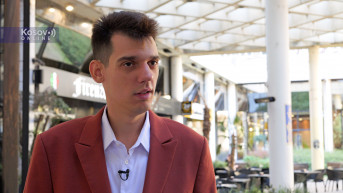
Petar Curcic, a researcher at the Institute of European Studies, assessed that the contradictory statements by German officials regarding the future of the Serbian healthcare and education system in Kosovo should be interpreted as “part of a strategy” in which Germany unequivocally supports Pristina, but also seeks good relations with Western Balkan countries, especially Serbia.
“These two statements are, in my view, part of a strategy that reflects an understanding of Germany’s long-term positioning, a policy that has not fundamentally changed since the Kosovo crisis: from 1987 until 2008. In that sense, Germany remains one of the key countries supporting Kosovo’s independence and, as they put it, its further integration into the EU and other multilateral organizations. But on the other hand, Germany has to take broader regional policy into account,” Curcic told Kosovo Online.
On September 15, Michael Reiffenstuel, Director for the Western Balkans, Turkey, the Council of Europe, and the OSCE at Germany’s Foreign Office, called on Kosovo to refrain from attacks on healthcare institutions run by Serbia, describing as troubling the actions taken by Kosovo authorities in raiding the Serbian Republic Health Insurance Fund (RFZO) and Republic Pension and Disability Insurance Fund (PIO) in North Mitrovica.
Five days later, after the invasion of the Kosovo Police in KBC and the Health Center in North Mitrovica, outgoing German ambassador Jorn Rode accused Srpska lista that it was not true that health and education were not part of the negotiations and agreements signed in Brussels.
Curcic said that while Rohde showed sympathy toward Pristina for much of his mandate, he also occasionally voiced “critical tones,” and that “different views in diplomacy depend on hierarchy.”
Reiffenstuel, he explained, is more highly positioned in terms of authority than Rohde, which is why his perspective on the region carries greater weight.
“The Western Balkans is a particularly sensitive area, and we are not just talking about the Belgrade–Pristina dialogue, but also other countries, from North Macedonia to Albania,” Curcic stressed.
Reiffenstuel’s statement, he added, should be understood as Germany’s interpretation of the implementation of what it considers the Brussels Agreement.
“There are different interpretations, Belgrade insists on establishing the Community of Serb Municipalities, while Germany and some other countries support Kosovo’s tighter integration and the organization of competencies. So this is part of one unified policy, the only question is how far Germany is willing to go in pushing for acceleration and backing Kurti’s government,” Curcic said.
He added that there is also the “Kosovo perspective.”
“We have an unstable political situation, elections failed to produce a clear result. Kurti is again trying to ramp up rhetoric through pressure politics. But given the overall political context, foreign actors are certainly trying not to further radicalize a situation that is already tense in the region,” the analyst noted.
In that light, he argued, the dissonant tones from German officials regarding the Brussels Agreement and CSM competencies should be viewed.
“These two statements may be contradictory, but they are essentially part of the same strategy, because Germany’s policy toward Serbia, or Kosovo, is not going to change,” Curcic said confidently.
He believes Germany attaches importance to the Brussels Agreement, but that the question lies in “interpretations.”
“That is evident in the language used. They don’t speak of the CSM, but of a ‘community of municipalities with a Serbian majority.’ In other words, they adopt Pristina’s discourse in interpretation. Rohde’s statement regarding the unresolved issues of healthcare, education, and science falling under Pristina’s jurisdiction shows that Germany’s interpretation is clearly closer to Pristina’s, which is no surprise, given that Germany recognized Kosovo’s unilaterally declared independence back in 2008,” Curcic specified.
That is why, he added, the CSM issue remains unresolved.
“It is a major open issue that still needs to be regulated, and we will see what form that will take. Of course, Pristina’s parties are not particularly eager to implement it at the moment. On that issue, the support of Western countries that back and advise Kosovo’s institutions in decision-making will undoubtedly be necessary,” Curcic argued.
Asked whether this means the CSM is no longer a topic for Germany or the EU, Curcic replied that “time will tell.”
“I think this issue must eventually be resolved and the CSM has to be formed. Of course, the general political circumstances require insisting on a certain degree of stability. The only question now is the extent of readiness and patience. But undoubtedly, both the Brussels Agreement and all decisions made before and after the negotiations will have to be implemented. These are issues in this long negotiation process that will inevitably have to be addressed,” Curcic concluded.

0 comments