
Milivojevic: No conditions for serious dialogue – Pristina is not changing its positions, especially on the CSM
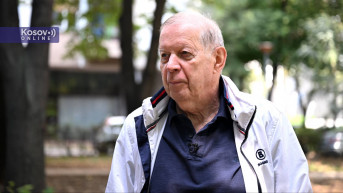
Former diplomat Zoran Milivojevic stated that yesterday’s continuation of negotiations on normalizing relations between Belgrade and Pristina under EU auspices showed that there are no conditions for serious dialogue, not only because the Kosovo authorities refuse to form the Community of Serb Municipalities, but also because the role of the European mediator has been reduced to “logging” political points, without any strategy on how to move the process forward.
“Unfortunately, we are seeing a continuation of the same process we had with the previous High Representative. There is nothing new,” Milivojevic said.
From yesterday’s failed round of talks, he draws two conclusions.
“The first is that there are no conditions for any serious dialogue because the Pristina side is not changing its position. The second conclusion is that the mediators are not prepared either. The new mediator also approached it from the same positions: the important thing is to hold a bilateral meeting and thereby ‘record’ a political point, but without results,” Milivojevic stressed.
He reminded that this is already the third EU team “acting from the same positions.”
“We had two failures with Federica Mogherini and later with Borrell and Lajcak, and now we have one with Sorensen. We are in the same place,” the diplomat explained.
He emphasized that the key problem is that the issue of forming the Community of Serb Municipalities is no longer on the dialogue “agenda.”
“Serbia sent clear messages after these two failed negotiation rounds that it has no intention of making any more concessions and insists on the respect of previously undertaken obligations. The CSM and the Brussels Agreement are at the forefront because they are conditions for the survival of the Serbian people and for the possibility of talking at all about any kind of normalization,” Milivojevic argued.
He believes that the problem of disregarding everything agreed so far has been “sharpened over the past three years” by the policies of the Self-Determination Movement and Albin Kurti.
“This continues and practically calls into question the survival of the Serbian people in those areas, as well as the purpose of negotiations on normalization and what should be the basis for a political solution,” Milivojevic claimed.
He says confirmation of this also comes from the statements of Besnik Bislimi after yesterday’s round of dialogue.
“Bislimi was very clear: this is a message that we have policy continuity even without a new government, and that there are no conditions for this situation to change, that the CSM is not even on any agenda that would involve continuing normalization talks between Belgrade and Pristina from the Pristina side,” Milivojevic noted.
He sees a problem in what the European mediator in the dialogue, Peter Sorensen, thinks about such an approach.
“Quite simply, it was clear that there would be no results yesterday. It was clear that Bislimi would not discuss anything. He only wants to talk about recognition, at least that is how it seems to me. So it is not clear what the mediator thinks about this and how the EU imagines this process can continue at all,” Milivojevic said.
The former diplomat warned that if the meetings so far were only “trial runs,” then the message is also clear.
“In that case, there is no point in talking about the continuation of negotiations or about new meetings unless the position changes – first that of the mediator, and then of the Pristina side – with regard to previously undertaken obligations and the condition without which, let us be clear, there can be no continuation of talks, and that is the Community of Serb Municipalities,” Milivojevic argued.
He specified that this is the “condition of all conditions,” which gains weight from current events directed against the Serbian community in Kosovo.
“It becomes especially significant when we have daily repressive measures by the Pristina administration and elements of a kind of continued ethnic cleansing of the Serbian people, making normal life impossible,” Milivojevic insisted.
As an example, he pointed to yesterday’s takeover of Serbian Post facilities in Gracanica and other parts of Kosovo.
“This move with the post offices is simply a sign that there is no retreat from that, and under such conditions it is difficult to talk without guarantees that Serbs can count on a normal life. That is the first and fundamental guarantee that allows us to even discuss other issues related to normalization or a political solution,” Milivojevic concluded.


0 comments