
Dacic: Injustice Corrected for Serbs with Passports from the Coordination Directorate for Kosovo and Metohija
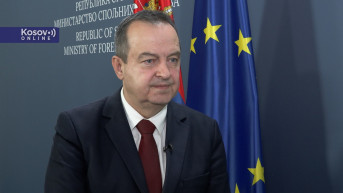
Today, the European Parliament adopted a decision on visa liberalization for passport holders issued by the Coordination Directorate for Kosovo and Metohija. Ivica Dacic, the acting Prime Minister of Serbia and Minister of Foreign Affairs, told Kosovo Online that he expects the Council of the European Union to support this decision and that it will quickly come into effect. He emphasized that this corrects a long-standing injustice and is very good news for all Serbian citizens who hold passports issued by the Coordination Directorate.
"Our citizens who have remained to live in Kosovo and Metohija cannot be penalized just because they did not leave the Kosovo and Metohija territory or did not take illegal Kosovar documents, as the status issue is absolutely not internationally recognized. In this regard, this is the correction of an injustice that has lasted for about ten years because our citizens who had passports issued by the Coordination Directorate for Kosovo and Metohija did not have the right to visa liberalization like other Serbian citizens," says Dacic.
As he explains, Serbia had pointed out this injustice at the time, but the stance of many countries, including Germany, was that the Kosovo and Metohija region was a black hole in terms of crime, which is why they did not allow visa liberalization. According to their interpretation, it was not a matter of status but rather a criterion of whether a territory could receive visa liberalization.
"Considering that in the meantime the so-called Kosovo received visa liberalization, in our opinion undeservedly, and this issue remained unresolved, we raised this topic because it would be the last group of our citizens who do not have the right to visa liberalization for the EU. It is a positive thing that the European Commission has seen this in a correct way, and the representatives of Pristina are against this solution because they of course do everything to promote the unilaterally declared independence of Kosovo," says Dacic.
Commenting on yesterday's regular session of the United Nations Security Council, which discussed the situation in Kosovo and during which some representatives of Western countries, including France and the United Kingdom, opined that the Community of Serb Municipalities (CSM) should be formed and that its formation has been long awaited, Dacic stated that he thinks the Security Council could do something else on this matter.
"It could also adopt other acts, such as resolutions, which would compel the Pristina authorities to form the CSM. Why? Because after the signing of the Brussels Agreement, there was a UN Security Council session in which I participated and at which everyone welcomed the signing and emphasized the obligation to form the CSM. It has been 11 years since then, and during that time Pristina has clearly shown that it does not want this and has clearly shown that it wants to continue the policy of ethnic cleansing of Serbs from Kosovo and Metohija. On the other hand, the international community has continuously rewarded Pristina instead of punishing it and forcing it to form the CSM. In this regard, it is good that this topic still appears in the speeches of some Western missions, but we gain nothing from verbal communication. On the other hand, there are activities in the Council of Europe where they want Pristina to be admitted as a member of the CoE, while they have forgotten the obligation to form the CSM," says Dacic.
He stated that yesterday's session was an opportunity, which, he says, Serbian President Aleksandar Vucic brilliantly utilized, to present to the international community what is happening in Kosovo and who is the main culprit and cause of all the problems.
“As always, representatives from Pristina have tried to manipulate and once again distort the image of the real essence of the problem, and the cause of all the problems in Kosovo and Metohija is separatism, secessionism, the desire to create a separate state, unification with Albania, creating a 'Greater Albania', and the desire for the ethnic cleansing of Serbs from Kosovo and Metohija. In this regard, they at the UN Security Council session talk about the need to abolish the UN peace mission in Kosovo and Metohija, unlike us who speak about the need to strengthen the UN presence. That is a big difference, and among other things, it clearly shows what the current international positions are. Serbia is a UN member, a country that was part of Yugoslavia among the founders of the UN, and representatives from Pristina sit with their names and surnames as citizens when they come to the Security Council session by invitation. That is the difference in status and such a difference will surely remain," emphasizes Dacic.
Asked about the effect achieved by Kosovo's president Vjosa Osmani, who brought women who had suffered sexual violence during the war 25 years ago to the Security Council session discussing the situation in Kosovo over the past six months, Dacic says that, as always, representatives from Pristina have some irrational and malicious moves.
“These moves are intended to present a distorted image of the events in Kosovo and Metohija in the past, escaping from problems in the present and the violence being perpetrated against the Serbian people. Every such attempt and manner of presentation, and this move by Osmani, can only encounter condemnation even from representatives of Western countries who, after all, do not appreciate such behavior,” assessed Dacic. Regarding the further course of Serbia's EU integration, after the Brussels Agreement and its Ohrid Annex from last year were included in EU Negotiation Chapter 35, the Serbian Foreign Minister says that Serbia is not an EU member and cannot influence the negotiation framework established by the EU, but it is up to Serbia to highlight what its approach to all this is.
“This is a compromise variant that has been proposed by France and other countries that wanted to reduce everything to a plan, to lead to the conclusion that without forming the Community of Serb Municipalities, which according to the implementation plan is the first obligation, there is nothing further, and on the other hand, our red lines remain as we said and as President Vucic has always emphasized we will fulfill what we have agreed upon. This is yet another formulation that will be interpreted differently. When there is a difficult situation, usually a solution is found that no one can precisely define how it will be interpreted. As far as we are concerned, we know what we have agreed upon and what we have consented to. What we have not agreed upon, we will certainly not implement,” notes Dacic.



0 comments