
Dacic: Serbia fulfilled its obligations; because of Pristina there is still no solution
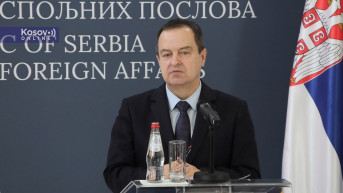
The Minister of Foreign Affairs of Serbia, Ivica Dacic, said that Serbia had fulfilled everything that had been agreed upon in the dialogue and that everything that hindered, obstructed, and caused the absence of a solution, was on Pristina and those who, as he stated, supported it in that process," Glas Srpske reports.
"After more than ten years of dialogue, I can only say that our side has fulfilled everything that was agreed upon and that everything that hinders, obstructs, and causes the absence of a solution, is on Pristina and those who support it in this process. We do not hope for anything, we just insist that the undertaken obligations are finally fulfilled," Dacic said.
He added that there was only one obligation, the formation of the Community of Serb-majority Municipalities.
"Until this obligation from the Brussels Agreement is implemented, it is pointless to agree on anything else," Dacic said.
He pointed out that "Kosovo and Metohija are an inalienable part of Serbia, which is also written in the Constitution".
"If Kosovo and Metohija were lost to Serbia, as some say, why are they still talking to us, and especially why can't they find any solution without us, but ask us to participate in creating that solution? This is the result of the policy we have led for years and it is solely to blame for the fact that Kosovo and Metohija is not an independent state today," Dacic points out.
Asked if he had information on whether other countries were preparing to withdraw the recognition of Kosovo, Dacic said that "until the ongoing process is completed in a way that will be acceptable to Serbia, there will be those who will want to reconsider its earlier decision on the recognition of Kosovo".
"We have shown that a large number of UN members have done this so far because they have accepted our arguments that this issue is still open and that the recognition of Kosovo is not in accordance with international law," Dacic reminds.
Referring to the persistent drawing of parallels between Republika Srpska and Kosovo, as well as claims from Pristina that "they will not allow a new Republika Srpska", Dacic said that this "best illustrates the double standards facing Serbia and the Serbs in general".
"The selective and tendentious choice of arguments, i.e. quasi-arguments, is something that our country has been facing for decades. What is common in both cases is that international obligations are violated, as a rule, to the detriment of Serbia and the Serbs, and that those, who do it, do not bear the appropriate consequences," Dacic emphasized.
Speaking about the fact that Turkey armed Kosovo with "Bayraktars", Dacic said that this was negative on several grounds.
"The delivery of "Bayraktars" to Pristina is extremely negative on several grounds: firstly, the delivery of any kind of weapons that can disturb the security balance is bad news; if it is a region where tensions are on the rise - it is even worse; if you are delivering those weapons to a party that has been recognized for a long time not only as a non-cooperative party but as a party that obstructs any agreement, without any indication that it will behave in accordance with the basic norms of behavior in the international community - this is already gaining more than worrying proportions," Dacic said.
He asked whether it should be mentioned at all that it was against the still valid Resolution 1244 of the UN Security Council to have any armed forces in Kosovo, except for those that would react in case of fire or natural disasters.
"I am completely convinced that Turkey did not deliver those drones to Pristina with the aim of early warning against forest fires. In other words, the delivery of "Bayraktars" to Pristina is negative in many ways, harmful, and even dangerous for the stability of the region," Dacic said.



0 comments