
Dacic: Vucic clearly showed in the Security Council what is happening in Kosovo and who is to blame
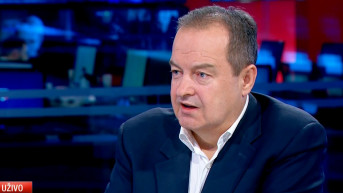
Serbian President Aleksandar Vucic, in his address to the United Nations Security Council, has weighed everything carefully and in a clear, historically significant manner, shown what's happening in Kosovo and who is to blame and the creator of it all, Serbian Minister of Foreign Affairs Ivica Dacic assessed.
Dacic noted that even Albanian analysts from Kosovo pointed out that Kurti's policy of constant provocations had led to Kosovo becoming a topic in the UN Security Council, in some kind of conflict with the views of those who supported their independence.
He told TV Tanjug that Vucic had pointed out that systematic conditions were being created in Kosovo for the disappearance of one ethnic group, one people, and had listed everything that had been done against the Serbs, from which it could be seen that it had elements of genocide.
"That is the favorite word used by Albin Kurti when talking about Serbia… There are fewer Serbs in Kosovo, and Albanians, despite claims of genocide, are more numerous than before the alleged genocide… So, who is committing genocide against whom," Dacic asked and reminded that in Pristina in 1991, there had been 40,000 Serbs, and now there were only a few hundred, and in Prizren 20 or 30, instead of the former more than 10,000.
Dacic also pointed out that the ethnic cleansing of Serbs had gained momentum due to all of Pristina's moves, which wanted to show that there was no perspective for Serbs to stay and live in Kosovo.
As for the Security Council meeting itself, Dacic said that it was a great success that it had been held at all because, despite Serbia's efforts to keep the Kosovo issue in the focus of the United Nations, many Western countries wanted to talk about it as little as possible.
As he explained, this time there was no vote in the Security Council on whether the session would be convened at the request of Serbia; rather, Guyana did it on its own, as it has the right as the chair.
"When the request arrives, the 15 members of the UN Security Council, especially the five permanent ones, assess whether it suits them to be on the agenda. Then there is no veto; nine are needed to 'push' something through…I talked to numerous foreign ministers of Security Council member countries, and the foreign minister of Guyana told me that he would instruct his Mission to schedule an open session without voting. So, I thank Guyana because without that country, there might not have been a session and it might not have been an open session. We got a new friend," Dacic said.
He added that he was pleasantly surprised by the speech of the head of UNMIK, who had listed important things.
In response to the observation that all members assessed that the decision on the dinar did not contribute to stability and requested its postponement, Dacic said that no one was avoiding the fact that sustainable solutions were needed and that Belgrade had been trying for years to be constructive, but the problem was in unilateral acts of Pristina.
"I listened to all the speakers, and it is true that everyone expressed the demand for the decision to be reconsidered, postponed, while we advocate that it not even be considered, but even in Pristina, Kurti managed to unite the West against him because even his allies at the Security Council session criticized him, which has not been the case so far," Dacic said.
0 comments