
Milic: Belgrade-Pristina dialogue will be high on the European Council agenda due to fear of new conflicts in the region
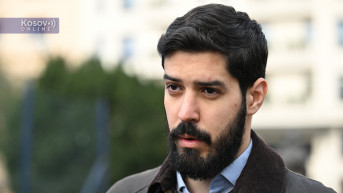
The normalization of relations between Belgrade and Pristina will be high on the agenda of the European Council summit taking place this week in Brussels, as, besides the war in Ukraine happening in the immediate European neighborhood, the potential for a future conflict in our region remains one of the greatest fears for EU states, according to political scientist Dimitrije Milic from the New Third Way.
He says for Kosovo Online that at the upcoming meeting of ministers for European affairs at the General Affairs Council and later at the gathering of heads of states and governments of EU member countries on December 14th and 15th, efforts will be made toward further progress in the implementation of the agreement between the two sides.
"Looking at the nearest European neighborhood, apart from the war in Ukraine, which is still a very relevant issue, the potential for a new conflict in the region always stands as a warning for European states and is almost certain to be a topic addressed at these meetings. It is difficult to expect that the current negotiation process remains unfinished in a way that all points are not implemented, or that at least their implementation does not begin," Milic notes.
Regarding the possibility of incorporating obligations from the Ohrid Agreement into Chapter 35 of Serbia's EU negotiation framework, which includes that Belgrade does not obstruct Kosovo's membership in international organizations, including the United Nations, Milic believes there are "solid chances for that to happen."
"The Ohrid Agreement is defined in such a way that EU member states that have not recognized Kosovo's independence can stand behind it, and it does not seem that this stance will change. Of course, the question is how everything will be formulated, especially when we talk about the most controversial point for Serbia, which is Kosovo's entry into the UN, emphasized as a 'red line' by the President, Prime Minister, and Foreign Minister of Serbia. If the formulation is general, stating that Serbia does not oppose Kosovo's entry into various international organizations, it leaves room for interpretation," Milic says.
He adds that regardless of whether Serbia supports it or not, the question remains whether Kosovo can even achieve a majority and secure the support of many countries that are generally against Kosovo's entry into the UN.
"What could be positive, from the Serbian perspective, is that if the Ohrid Agreement were implemented within this negotiating chapter, any progress on the part of the Pristina side in European integration would imply the establishment of the Community of Serb Municipalities, giving this issue much greater guarantees for implementation. So, the question is only about the formulation. As long as you have five EU member states that do not recognize Kosovo as an independent state, plus Hungary, which recognizes it but aligns with Serbia on many issues, probably the formulation should not be too explicit," Milic concludes.


0 comments