
Djuric for Figaro: We strive for a historical compromise that will be beneficial for both Serbs and Albanians
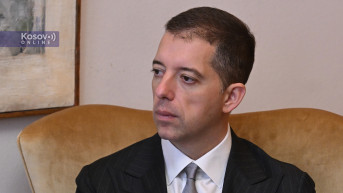
Serbs and Albanians are not destined to be enemies, and currently both are suffering and enduring the consequences of unilateral actions by the authorities in Pristina, whose aim is to undermine the collective political, economic, and cultural rights of minority communities, especially the Serbian one, warned the Serbian Foreign Minister Marko Djuric in an interview with "Figaro."
He pointed out that hundreds of thousands of Serbs now vacation in Albania each year, while established economic ties with Albania prove that a paradigm shift in relations between Serbs and Albanians is possible.
However, he notes, what stands in the way are the unilateral and aggressive moves by Pristina.
"The Kosovo conflict is not as complex as the Middle East, but with serious work, we can achieve a compromise that will be beneficial both for Albanians and Serbs. We aim for a historical compromise in which no side will get everything, nor will one side lose everything," Djuric said in response to Figaro's question on how he sees the solution to the Kosovo issue.
Asked why Serbia proposes to organize the next meeting of the presidents of the USA and Russia, Donald Trump and Vladimir Putin, he replied that Belgrade, as the former capital of the Non-Aligned Movement, is an ideal location for leaders of opposing states.
"Our national philosophy is that Serbia stands above the divisions between East and West. We have hosted tens of thousands of refugees from Ukraine and Russia, providing them with financial support and work permits. Therefore, Presidents Trump and Putin would feel very comfortable meeting in Belgrade. This is an idea of President Vucic, who is one of the few leaders who speaks to everyone in the Russo-Ukrainian conflict," said the head of Serbian diplomacy.
Moreover, he noted that Serbia's comprehensive diplomacy is very well received around the world, citing that a Serbia-Africa Summit was organized in December last year, which was attended by 40 African countries.
Asked whether it is possible for a European country to remain neutral in the Moscow-Kiev conflict today, Djuric emphasized that Serbia's stance is unambiguous.
"We defend the principle of preserving Ukraine's territorial integrity. But we are very grateful to Russia for always supporting Serbia's sovereignty over its entire historical territory. This diplomatic position is also the stance of Ukrainians. Serbia is militarily neutral, and we want to renew the traditional policy that was characteristic of Yugoslavia after its break with Stalin in 1948. Belgrade needs to become a bridge between East and West again," he stressed.
Noting that he was in charge of the two most important issues in Serbian politics, the Kosovo issue and the restoration of friendly relations between Washington and Belgrade, and asked what the next challenge he wants to take on is, Minister Djuric said his challenge is to make Belgrade once again the main hub of exchange between nations and civilizations, as it was during the three Non-Aligned Movement summits in 1961, 1979, and 1989.
"Belgrade is already one of the favorite tourist destinations for European youth, which is a huge asset for us. Now it is up to us, the Serbs, to turn it into a global capital of peace," said the minister.
Speaking about the role of France in Serbia, he indicated that the French-Serbian partnership is stronger than ever.
"We will never forget what France did for us during World War I. Belgrade is the only European capital that has a monument of gratitude to France in its center. The historical ties between the French and the Serbs are incomparable. Today, French companies are building the Belgrade metro and managing our airport, whose activity has quadrupled in the last seven years. When we decided to diversify our military equipment, we turned to France. The relationship between President Vucic and Macron is particularly close. We count on France to help us in our project to join the European Union. We believe that by the end of 2026, we will have completed all the reforms that Brussels requires," Djuric listed.
Asked what now needs to change in Serbia, given the protests that led to the resignation of the prime minister, which began after the collapse of a canopy at a train station in Novi Sad, in which 15 people died, Djuric said the tragedy that befell Novi Sad in November shook the entire society to its foundations and that, regardless of political or ideological affiliation, everyone wants to get to the root causes and those responsible.
"Civic protests are a call for us to focus on issues that are of essential importance to parts of our society and to work more intensively on economic and social mobility, creating new opportunities for the youth. We must pursue policies that are more inclusive and transparent. These protests are also a wake-up call for society, reminding us that we must be much more vigilant in the fight against corruption," said Minister Djuric.

0 comments