
Djuric for Berliner Zeitung: Trump's new term an opportunity to revitalize Kosovo-Serbia Dialogue
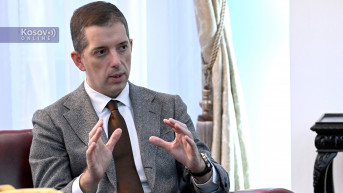
Serbian Foreign Minister Marko Djuric stated in an interview with Berliner Zeitung that the new term of U.S. President Donald Trump represents a new opportunity to revive the dialogue between Kosovo and Serbia, though he does not believe this issue will be a main priority for the American administration in the first few months.
"President Trump's first term led to the revival of dialogue between Belgrade and Pristina, introducing new ideas focused on promoting economic development and better connectivity. Thus, we see President Trump's second term as a new opportunity to reinvigorate the dialogue process. Realistically, we do not expect this issue to be a main priority in the first few months after the new U.S. administration takes office," Djuric emphasized in the interview.
He stressed that Serbia is ready, when the time comes, to present the dire situation in Kosovo, which is deteriorating daily and includes constant discrimination and harassment of Serbs, as well as violations of their fundamental human rights.
Belgrade remains committed to finding a compromise—a peaceful negotiating solution that will leave both sides equally satisfied and dissatisfied.
Asked about the upcoming parliamentary elections in Kosovo, Djuric remarked that they are being held under political circumstances in which Albin Kurti's regime, over the past two and a half years, has done almost everything theoretically possible to undermine the collective political, economic, and social rights of the Serbian community.
"Kurti's regime has deprived the Serbs in Kosovo of their economic livelihood by blocking transfers of money and remittances from central Serbia for hospitals, schools, and basic social services. There have also been dozens of unlawful arrests condemned by both the EU and the USA. Kurti has publicly stated that he does not want to implement the Brussels Agreement, which stipulates the formation of the Community of Serb Municipalities, despite it being signed by the EU, Belgrade, and Pristina. The list of things Kurti's regime has done to deprive the Serbian community of the basis for life and basic political rights is so long that a special edition of your paper would be needed just to write about it," he explained.
Djuric, asked whether the price of Serbia's foreign policy neutrality is a stall in accession talks with the EU, underscored that Serbia's main priority and strategic direction is EU membership.
"Our open foreign policy, which anticipates that we are ready to cooperate with the West and the East, North and South, should be considered a comparative advantage. We believe we have a lot to offer at the European table. Although we, like any other candidate country for entry into the EU, would like to see faster progress, our progress is far from insignificant. The European Commission has given a positive assessment of our progress for the third year in a row and indicated that Serbia meets the criteria for opening Cluster 3, so we expect to open this cluster in the coming weeks," he said.
Djuric emphasized that Serbia, within its modest means, strives to become a bridge between Europe and other parts of the world.
"We are the only European country that currently has a free trade agreement with China. Last May, President Xi Jinping visited us, elevating our comprehensive strategic partnership to a new level. I would say that China has become one of the most important investors in the Serbian economy. We also have exceptionally good political relations. This is reflected in China's support for the territorial integrity and sovereignty of Serbia concerning Kosovo and Metohija. Serbia tries to reciprocate by supporting the one-China policy," he pointed out.
Asked whether the expected improvement in relations with the U.S. under Trump means that Serbia must distance itself from China, Djuric said that Serbia has the advantage of being able to boast an independent foreign policy.
"Of course, we will consult with our friends in the international community. But our friendship and partnership with the United States will not come at the expense of our relations with our traditional partners. Likewise, I do not believe that our traditional partnerships will affect our friendship and cooperation with the United States. I believe the world needs places where global actors can meet and seek opportunities for cooperation, whether economic, political, or security policy. Serbia has built such a position over many generations and has no intention of giving it up now," he underscored.
In response to the statement that it is often heard in Germany that Serbia is not desired in the EU and is considered Vladimir Putin's Trojan horse, and that another Hungary blocking all decisions is not needed, Djuric stated that Germany has positioned itself as one of the biggest supporters of EU enlargement.
"As much as I appreciate the differences of opinion you mentioned, the reality is different. To illustrate this, let me refer to last year when Federal Chancellor Olaf Scholz came to Belgrade in July and when a memorandum of understanding between Serbia and the EU on critical raw materials and the development of the value chain for electromobility in our country was signed. A few months later, in October, Serbia hosted European Commission President Ursula von der Leyen, who clearly expressed her desire for Serbia to become a full member of the EU during her second term," he reminded.
He highlighted that Serbia will continue to diligently work on implementing the reforms needed for full EU membership by December 31, 2026.
"As far as we are concerned, we will meet all the technical conditions because we want to be judged based on our merits and tangible results," he emphasized.
When it comes to relations between Germany and Serbia, he noted that the two countries have much in common.
"We are natural partners and friends, and there is great interest in Serbia to build a different, much better relationship with Germany. Sometimes there was a lack of interlocutors on the German side, sometimes on the Serbian side. But we are very confident that in the next period after the German elections, the stars will align perfectly for a new kind of partnership between Serbia and Germany," said the head of Serbian diplomacy.
Regarding Ukraine, he recalls that Serbia has a very clear stance on the situation in that country.
Marko Djuric, the Serbian Foreign Minister, conveyed in an interview with the Berliner Zeitung that a new term for U.S. President Donald Trump could revitalize the dialogue between Kosovo and Serbia, yet he remained skeptical about this issue becoming a priority for the American administration in its early months. He articulated that Serbia stands ready to defend the principles of territorial integrity and sovereignty as enshrined in the UN Charter, emphasizing a strong stance against war and advocating for peace, even when the term seems almost taboo in European political discourse.
Djuric highlighted Serbia's efforts under President Aleksandar Vucic, noting multiple discussions with Ukrainian President Volodymyr Zelensky over the past year, underscoring mutual respect and support for each other's sovereignty and territorial integrity, a sentiment reciprocated by Russia.
Addressing domestic challenges, Djuric criticized the regime of Albin Kurti in Kosovo for undermining the rights of the Serbian community through economic blockades and politically motivated arrests, despite the international condemnation these actions have attracted. He accused Kurti of failing to implement the Brussels Agreement on the formation of the Community of Serb Municipalities, crucial for the rights and sustainability of Serbs in Kosovo.
In terms of international relations, Djuric praised Serbia's balanced foreign policy, maintaining openness to cooperation with global powers from all quadrants, which he views as a strategic advantage. He reaffirmed Serbia's commitment to European Union membership, noting positive evaluations from the European Commission and anticipating further progress in accession talks.
Reflecting on Serbia's geopolitical stance, Djuric emphasized its unique position as a mediator potentially facilitating high-level discussions on sensitive international issues, leveraging historical relationships with involved parties. He reassured that Serbia is prepared to host peace summits and offer logistical support for potential negotiations, drawing on its history of hosting complex international discussions discreetly and effectively.
Concerning U.S.-Serbia relations, Djuric expressed optimism about closer political ties under Trump, highlighting strong connections with high-ranking officials in Trump's circle. Despite persistent differences, particularly regarding Kosovo, he sensed a bipartisan consensus in the U.S. on improving relations with Serbia.
Reacting to speculation about Richard Grenell's role, Djuric expressed confidence in Grenell's continued importance in U.S. politics and praised his constructive influence on Balkan regional affairs, particularly his efforts to foster economic cooperation and connectivity.
Finally, regarding U.S. investments in Serbia, Djuric welcomed the involvement of major American companies, seeing it as beneficial not only for Serbia but for the broader Southeast European region. He closed by addressing the impact of recent U.S. sanctions linked to Biden's administration, recalling the harsh effects of past sanctions on the Serbian population and pledging government action to mitigate potential adverse impacts on Serbia's growing economy.
Serbia, he emphasized, is diligently working to achieve the highest growth rate in Europe by 2025.
"We expect it to be significantly above 4 percent of GDP. The fact that our national oil company is under sanctions requires urgent action by the Government of Serbia. We have already contacted both the American and Russian sides to find a solution that satisfies all parties involved as much as possible. I want to emphasize that we have no intention of nationalizing property. This is contrary to our stance on how property should be treated," he said.
He underscored that President Vucic has made it very clear that nationalization is only a last resort for Serbia.
"This is something we do not intend to do, something we do not want, and we will consider all possible alternatives. We do not believe in sanctions, we do not believe in nationalization, we do not believe in the application of these kinds of measures," stated the head of Serbian diplomacy.
Asked whether he sees a possibility of sanctions being lifted under Trump, he said that Serbia will definitely talk to his team and ask them for understanding and help on this matter.
"However, I must say that those who designed the sanctions seem to have tried to make them 'Trump-proof.' Some clauses have been introduced that would prevent the president from changing the executive order without the consent of Congress. This has politically complicated the possible reduction of sanctions," he pointed out.
Serbia has, in his words, completely changed the paradigm of its economy, politics, and infrastructure over the past ten years, which had been neglected during the disintegration of the former Yugoslavia.
"Today, a visitor to Belgrade can see that our capital is a successful urban center that attracts people from the entire region and draws more than 65 percent of all foreign investment in the Western Balkans. Not just Belgrade, but all of Serbia is a large construction site. We have achieved a lot. More than 500 kilometers of new highways have been built, a new high-speed railway connecting Belgrade with the northern border with Hungary, and during that time we have managed to reduce the unemployment rate from 26.3 percent to 7.9 percent. The paradigm of our politics has also changed. Questions of national identity were once the cornerstone of Serbian politics. Today, the people will only elect you if you can demonstrate that you contribute to growth, development, and the quality of public services," Djuric conveyed.
Expo 2027, he says, will be a unique opportunity to connect countries far beyond our region with Europe.
"We want Belgrade to become one of the entry points for global companies. The success of Expo 2027 could prove relevant for German companies operating in Serbia, as Germany is currently by far the largest single investor and many German companies successfully operate in and from Serbia. We have free trade agreements with China, Egypt, the United Arab Emirates, and the Eurasian Economic Union, while at the same time we have free access to the European market. This puts us in a unique position to serve as a bridge for companies from Europe to other global markets. Currently, we have confirmations from more than 100 countries that will be represented with their pavilions at the Expo," he added.
Asked about student protests, Djuric said that the 15 innocent people who died in Novi Sad represent a great loss for their families and friends, but also a great loss for the state, and that after such a shocking event, it is natural for citizens to seek ways to express their grief, but he added that such a tragedy should not be exploited for political purposes.
"Protests and demands for accountability are legitimate means because Serbia is a democratic country where freedom of expression is highly valued and guaranteed by our Constitution. However, there is a line that separates constructive protest and legitimate criticism from the exploitation of tragedy for political purposes. Unfortunately, it has become evident that some political currents in Serbia, which show signs of foreign involvement, are manipulating people's grief and exploiting this heartbreaking event. Our government is determined to thoroughly investigate all the circumstances that led to this tragedy and ensure that all responsible are brought to justice," he said.
He pointed out that the right to peaceful protest is important, but it is also important that the relevant institutions conduct investigations and trials responsibly and transparently, without political manipulation or pressures that could undermine trust in institutions.
At the end of the conversation, asked whether he plans to participate in the Berlin Marathon again, Djuric emphasized that he loves Berlin.
"First of all, and this is not an empty phrase: I love Berlin. I see many similarities in the spirit of Berlin and Belgrade. I haven't run a marathon for a long time because unfortunately, I don't have time to train. But I think the Berlin Marathon, with its amazing audience, atmosphere, and support, and the fact that it is a good marathon for people running it for the first time, could be an option to participate in it a second time. I don't yet know who my potential German colleague might be. The German people will have to decide. But I would recommend German voters to vote for someone who is able to run a marathon," Djuric concluded in an extensive interview with the prestigious German newspaper.


0 comments