
Djuric: Kurti is to blame for the deterioration of the situation, persecuting the Serbs and seeking to provoke conflict

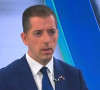
Ambassador of Serbia to the United States, Marko Djuric, stated that Kosovo Prime Minister Albin Kurti was to blame for the deterioration of the situation in Kosovo, who was making an effort to persecute the Serbs and sought to provoke a conflict with Serbia, while the Government in Belgrade was doing everything to de-escalate tensions.
Djuric pointed out for Newsweek that Kurti, during his two years in power, had promoted the most extreme and dangerous approach to dealing with the Serbian community in Kosovo, resulting in more than 275 violent attacks on innocent civilians.
He also said that the Serbian Government genuinely regretted the tragic violence that had occurred on September 24th in Banjska. However, he noted that it was important that Kurti had not allowed the European Union Rule of Law Mission in Kosovo (EULEX) to participate in the investigation after the incident.
"As the President of Serbia, Aleksandar Vucic said, we have significant evidence that unarmed prisoners were denied medical care, and in at least one case, they were shot while lying on the ground," Djuric said.
That is why, he adds, a comprehensive international investigation is needed to determine what happened.
Ambassador Djuric asked why members of the Kosovo Security Forces had even been present in the north, where Serbs were the dominant population. He stressed that this presence was only allowed with NATO approval, based on agreements.
Djuric also pointed out a long series of abuses that could create conditions for such an incident, such as the one in Banjska.
"However, for years, we have been warning that the state of human rights in Kosovo is unbearable and that sooner or later, someone - out of sheer frustration and despair - will take matters into their own hands, just to ensure their basic safety, survival, and the security of their homes and families," Djuric stated.
He emphasized that Serbia had no incentive, either politically or economically, to provoke a military conflict. On the contrary, the Serbian Government was doing everything in its power to de-escalate tensions.
"We are striving to hold every Serbian citizen involved in violence fully accountable. We are asking our international partners in Washington and Brussels to empower NATO's mission, KFOR, to assume police and security duties in areas populated by the Serbs, and we call for the establishment of an international investigation into what happened in Banjska on September 24. We would just like Kurti to do the same," Ambassador Djuric said.
Newsweek notes in the article that while the international community's attention is still focused on Russia's conflict in Ukraine, "another potential war in Europe is brewing as tensions between two longtime enemies in the Balkans reach dangerous heights".
Kosovo's Ambassador to the US, Ilir Dugolli, claims that the security of the entire region is at stake and that Serbian President Vucic "cannot be trusted". According to Dugolli, Vucic is trying to manipulate evidence of Serbia's direct involvement in training and planning military aggression.
He claims that Kosovo has concrete evidence that the Banjska case is the result of Serbia's "hybrid warfare" and calls it a "terrorist attack that Serbia planned and supported".
Dugolli has requested condemnation and concrete sanctions against Serbia, which, he says, has "clearly signaled its intention to wait for the moment to attempt to complete the 'Greater Serbia' project".


0 comments