
Djuric: With the new US administration, Kurti has nothing to hope for
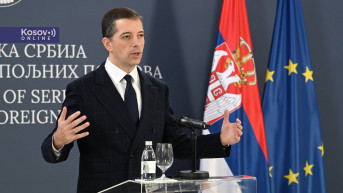
Serbian Foreign Minister Marko Djuric stated last night that with the new American administration, led by Donald Trump, Albin Kurti has nothing to hope for, as they see him for who he really is. He emphasized that Serbia's greatest resource in Kosovo is the Serbian people, and that both material assistance and diplomatic activity by the state will be increased.
Speaking about Kosovo, and as the former director of the Office for Kosovo and Metohija, Djuric told Kurir TV that for Serbia, the greatest resource in Kosovo is the Serbian people who survive in that area.
“The Government of Serbia and the president have increased support for the people to survive under unprecedented pressure and terror from Albin Kurti. Since World War II, we have not had a period in which organized repression has taken such a hold,” the minister warned.
He pointed out that Kurti does not enjoy anywhere near the position in the new American administration that he might have initially had in certain political circles close to the outgoing one, reminding that the Kosovo Prime Minister has not been received at a high level in Washington for several years.
“With the new American administration, Kurti has nothing to hope or rejoice for, as they have seen through his undemocratic and authoritarian character, his Enverist policy, and some of them, at least those I have spoken with, seem to perceive him as he truly is,” Djuric said.
On the other hand, the minister indicated that one should not have the illusion that the US will change its stance on Kosovo, because they will not. However, he added that circumstances are changing.
“I believe that when this topic comes on the agenda of the new administration, which I do not expect to happen in the first weeks and months, we will have interlocutors to whom we can propose various creative and constructive solutions and show them the position of the Serbian, Christian community, which is exposed to tremendous discrimination,” Djuric stated.
He added that he believes that, despite all the hardships that Serbs in Kosovo are going through, better times are coming and that 2025 will offer more opportunities.
He also announced that material support for Serbs in Kosovo, as well as diplomatic activity on this matter, will only be intensified, reminding that President Vucic has also requested additional engagement in the diplomatic fight for Kosovo from both the Office for Kosovo and Metohija and the Ministry he leads.
Djuric also pointed out that there is no doubt that Pristina will try to gain new recognitions, but that Serbia will work to prevent this, as it did last year by blocking Kosovo's membership in the Council of Europe, which, he emphasized, they did not deserve.
“We will continue to fiercely advocate for our interests. A Center for the Protection of Territorial Integrity has already been formed in the Ministry, and every embassy and consulate of Serbia will be a ‘small Office for Kosovo and Metohija’,” Minister Djuric said.
We must build our lobby in the US
The minister emphasized the necessity for Serbs, as Albanians have already done, to establish their own lobby in America and to win over not only the political class in Washington but also other decision-making centers that have levers of power on the ground in Kosovo.
He mentioned that strategic dialogue with the US is very important in strengthening relations with Washington, as well as for Serbia's position in the international arena.
He stressed that strategic dialogue with the US does not come at the expense of relations with other international partners but can only enhance Serbia's value and position.
He noted that there are still numerous topics where there is no agreement with the US, adding that Kosovo is one of those topics, but there is a huge need and space to gain new allies.
He reminded that Congresswoman Claudia Tenney, president of the Serbian Caucus, has proposed a bill demanding that all aid to Kurti's regime be suspended until he withdraws his forces from the north, stops the terror against Serbs, and frees the prisoners.
"We can hold as many patriotic speeches about Kosovo and Metohija as we want, but unless we do what the Kosovo-Metohijan Albanians did—build our lobby in the US and win over not only the political class in Washington but also other decision-making centers that have levers of power on the ground—we can only look among ourselves for a Brankovic," Djuric explained.
He said that strategic dialogue will help to have an ally in the new administration who can be made aware that Christians in Kosovo are persecuted, and that the Patriarch is not allowed to enter Kosovo for Christmas because a "follower of a totalitarian ideology forbids it."
Djuric pointed out that over a million people of Serbian origin live in the US.
"In the US, we have 137 active parishes of the Serbian Orthodox Church. Do you know what it takes for a parish to function in America? It's not just about building a church, but also about paying taxes, paying the priest, and conducting various activities. We have 137 living centers where the Serbian language and culture are studied. We also have a clear picture of which congress members are from the districts of these parishes. Our community has begun to act," he emphasized.
He said that Serbia now fully understands the mechanics of influence in the US.
He evaluated that the strategic agreement in the field of energy, signed last year, is of crucial importance for Serbian-American relations and fits well into the long history of relations, as the oldest international agreement still in effect that Serbia has is with the US, a trade agreement and consular convention.
"Now this represents a new base of cooperation. Today, energy security is a prerequisite for development. As the Serbian economy develops at a high speed, it is extremely important that we can count on access to new technologies that the US undoubtedly has. This gives us further diversification of our supply," Djuric explained.
The signing of the strategic partnership in the field of energy, he says, was an introduction to the commencement of strategic dialogue.
"This is of exceptional political significance not only in relation to the US but also in the global arena. Let the citizens not think that we are only rooting for relations with the US. We already have strategic dialogues with nine countries, adding the world's largest economy and the most significant country of western democracy, we have moved from a group of a broad mass of diverse countries to a group of friendly states," he said.
He reminded that Serbia has a clear goal to be the fastest-growing economy in Europe in 2025, and that the independent policy led by Belgrade gives Serbia additional weight in geopolitical conditions.
"Our policy is consistent, not designed to please those who are partisanly disposed. It is respected by the US. By opening strategic dialogue, recognition was given to such a policy of Serbia," he emphasized.
Djuric reminded that Serbia is the country in Europe where the highest percentage of citizens support the elected president of the US, Donald Trump.
He stressed that there are reasons for Serbia to believe that relations with the arrival of the new administration in Washington will go in a positive direction.
In this regard, he reminded that President of Serbia Aleksandar Vucic was among the first ten world leaders to talk with Trump after the elections.
"It is extremely significant that strategic dialogue has now been agreed upon. This is a bipartisan matter. Technical dialogue is maintained, and that is one of the advantages of the format, regularly, at least once or twice a year. This means you don't have to invest political capital and credit to schedule top-level meetings, they are automatically scheduled," he explained.
In the coming weeks, the appointment of the Serbian ambassador to the US
Djuric expressed his expectation that the Serbian ambassador to the US will be appointed in the coming weeks.
"We expect in the coming weeks the appointment of the new Serbian ambassador in Washington and a strong momentum with the new administration in the US for new encounters and initiatives, as well as activities of our diaspora," Djuric said.
He added that as the Minister of Foreign Affairs, he would prioritize cooperation with Donald Trump's team, whose visit to Serbia he eagerly anticipates.
When asked who is expected to take the place of the Serbian ambassador in the US, he could not answer, as diplomatic rules do not allow it.
Regarding sanctions against NIS, Djuric said that Serbia is fundamentally opposed to sanctions as a mechanism of political, economic, and other pressure.
"Sanctions are a problem for us, but the Serbian leadership has taken a responsible and serious approach to this issue. The President and the Government of Serbia have been working on the country's energy security for months, even years," Djuric said.
He also pointed out that the current administration deliberately introduced sanctions in this way, introducing congressional procedure, which means that the president alone cannot repeal them, making it difficult for Donald Trump.
"This is a complex political, economic, and energy issue, but I am sure that we will manage to overcome it. We are in a situation that requires maximum engagement and principled action. We will not seize anyone's property. We did not introduce sanctions, nor contributed to the escalation of tensions, we offer that Belgrade be the place of meeting, we want to find a solution without harming anyone and preserving our interest. It is important that there will be no shortages, price shocks, or disruptions in supply, the rest is a matter of our effort, work, and persistence to find a solution," Djuric said.
Velebit: Strategic dialogue in the interest of Serbia, Kurti's policy directly against the interests of the US in the region
Executive Director of the Pupin Initiative Vuk Velebit stated that strategic dialogue with the US is in the Serbian interest and that today Washington looks more at Belgrade than it used to when it looked at Sarajevo, Pristina, or Podgorica. He also noted that the organization in the US tries to indicate that Albin Kurti's policy is directly against American interests in the region.
"Strategic dialogue is like having a highway between Belgrade and Washington that should enable cooperation to go faster, but also to have an upgrade in the future. I believe that the new administration will use the dialogue to raise relations with Serbia to an even higher level," emphasized Velebit.
He said that Serbia for the first time has strategic dialogue with Washington and that it is very important for Serbia as it will strengthen its international position.
By strategic dialogue, he believes, Serbia will have a stronger voice at the table in Washington, and its voice will be heard more.
"We have a generational opportunity to set relations at the level of alliance as they once were and for Serbia to work through cooperation with the US on achieving its national interests," Velebit emphasized.
He explained that the goal of the Pupin Initiative, as an independent organization, is to try in conversations with the American administration, Congress representatives, and the wider community to present what Serbia is today.
"That it is not the Serbia of the '90s today, but also to show citizens why relations with the US are in our interest, because Serbia is economically and politically strengthening its international position through cooperation with America," Velebit noted.
He observed that Serbia's positive reputation in the US is an advantage to "rebrand" the country there and to attract American companies.
"In recent years, there has been a positive shift and Washington today looks more at Belgrade than in recent decades when it looked at Sarajevo, Pristina, Podgorica. That is a shift. We need to work on those relations, so we do not come to a situation where others deal with the Serbian question in Washington," Velebit warned.
He also assessed that Serbia has acted wisely and principled from the beginning of the conflict in Ukraine, respecting the territorial integrity and sovereignty of Ukraine and strengthening relations, especially in a humanitarian sense, given that most of the humanitarian and financial aid from the Western Balkans has come from Serbia.
This, he says, has enabled a positive change in the narrative about Serbia in Washington.
Regarding Kosovo, Velebit pointed out that the Pupin Initiative in all conversations in the US tries to indicate that Albin Kurti's policy is directly aimed against American interests in the Balkans.
"If the interest of the US is stability in the region, Kurti is the main man who tries to disrupt it every day," Velebit emphasized.
Commenting on recent statements by Donald Trump about Panama, Canada, and Greenland, he says that they are primarily aimed at strengthening his negotiating power with various actors.
"Greenland is significant for the US because of mineral resources, the melting of the Arctic, and the creation of new shipping routes, but the only announcement that has some reality is related to the Panama Canal, due to the competition between the US and China. There it is realistic that there will be an escalation. Messages about Canada serve to strengthen the US's economy and production and to be less economically dependent on Canada," Velebit said.
0 comments