
Djuric: Serbia enjoys unprecedented respect in Israel
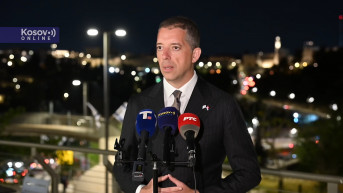
Serbian Minister of Foreign Affairs Marko Djuric stated this evening, at the conclusion of his visit to Israel, that following high-level meetings and a series of agreements reached—including the elevation of bilateral relations to the level of a strategic partnership—the visit reaffirmed a strong commitment to further advancing relations between the two countries, as well as a clear affirmation of Serbia’s state and national interests.
Djuric noted that during the visit he held talks with Israel’s highest-ranking officials, including the President, the Prime Minister, and the Minister of Foreign Affairs, as well as with representatives of the political, cultural, and business communities.
He particularly highlighted a four-hour meeting with Israel’s Foreign Minister, and identified as a significant outcome of the visit the establishment of a Serbian-Israeli Business Council, which is expected to contribute to strengthening economic cooperation, the Serbian Ministry of Foreign Affairs announced.
Djuric emphasized that Serbia’s objective was to strengthen relations with one of the most influential countries in the world and a nation with a long history and global impact, assessing that this goal had been achieved.
“I will always, as long as I hold this position, stand firmly behind Serbia’s state and national interests and the policy we have formulated together with the President,” Djuric stated.
He underlined that it was precisely such a policy that enabled the elevation of relations between Serbia and Israel to the level of a strategic partnership.
“We came here for Serbia, for our history, but also for our future, and today I can say that we have succeeded,” Djuric said.
He added that Serbia enjoys unprecedented respect in Israel, noting that the same applies to the President of Serbia within that country’s political circles.
Preserving memory to ensure that the evil our peoples endured is never repeated
Djuric, who attended this evening in Jerusalem the presentation of the book “Ustasha Crimes: A Collection of Documents (1941–1942)”, emphasized that preserving memory is essential so that future generations may understand the past and prevent the recurrence of such crimes.
“Safeguarding memory must provide a sound foundation for the future and ensure that the evil our peoples endured is never repeated,” Minister Djuric stressed.
Earlier, at the Begin Center in Jerusalem, addressing the book presentation, Serbia’s top diplomat stated that there is a shared obligation to ensure that such tragedies are never forgotten, denied, or repeated.
Highlighting that the work is of exceptional historical significance and represents a powerful testimony to the suffering of the Serbian, Jewish, and Roma peoples during the Second World War, Djuric underlined its lasting moral weight and its importance for understanding the past.
“This book is not merely a collection of documents. It is the voice of those who can no longer speak, a testimony to the victims, and a warning to future generations, obliging us to preserve and convey the truth without distortion,” Djuric stated.
He assessed that the Second World War represents one of the darkest chapters for both the Serbian and Jewish peoples, whose histories are deeply intertwined through tragedy, but also through a shared commitment to preserving memory and dignity. According to him, understanding these sufferings transcends national frameworks and forms part of the broader human narrative of the Holocaust and genocide.
Referring to contemporary challenges, Djuric warned of the rise of historical revisionism and extremist ideologies, particularly in the Balkans, where narratives persist that seek to relativize well-documented crimes, thereby undermining the foundations of historical truth. He stressed that it is the responsibility of institutions and society to confront this decisively.
“Preserving historical truth is not merely an academic duty, but a moral imperative and a prerequisite for the stability of our societies. At a time when we witness attempts to revise the past, it is our obligation to rely on facts and safeguard the dignity of victims,” the Minister stated.
He further emphasized the importance of clear and principled action in the political and diplomatic sphere, noting the necessity of timely recognition and unequivocal rejection of ideologies stemming from the darkest periods of history, including neo-Nazi, neo-fascist, and neo-Ustasha narratives. He warned that silence and ambiguity are equally dangerous as the outright denial of crimes.
Reflecting on the significance of presenting the book in Jerusalem, Djuric noted that this further underscores the universal character of remembrance and the need to address such suffering at a global level. He highlighted that Israeli institutions represent a model in preserving the memory of the Holocaust and an inspiration for fostering a culture of remembrance, adding that such initiatives contribute to understanding suffering and countering hatred and intolerance.
Minister Djuric reiterated that it is the enduring responsibility of all societies to nurture a culture of remembrance and, through education and institutional action, prevent the relativization of crimes, ensuring that the tragedies of the past are never repeated.
The book, authored by Dr. Milan Koljanin and his associates, and published by the Archives of Vojvodina (Novi Sad), the publishing house “Beseda” of the Backa Eparchy, the Archives of the Republic of Srpska (Banja Luka), and “Obodsko slovo” (Podgorica), is the result of years of research and offers a comprehensive account of Ustasha terror through archival materials and testimonies of survivors from the period 1941–1942.



0 comments