
Djuric: Serbia will not allow red lines to be crossed in Kosovo and Metohija, especially regarding the Law on Foreigners
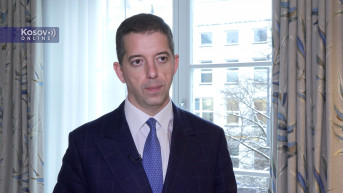
Serbian Foreign Minister Marko Djuric stated that Serbia will not allow red lines to be crossed in relation to Serbs in Kosovo, especially when it comes to the introduction of the Law on Foreigners, which is set to enter into force on March 15.
Speaking on RTS on that occasion, Djuric said that Serbs in Kosovo endured many years under foreign occupation, and that what has been happening over the past three and a half years under Kurti’s regime is reminiscent of that period.
“Serbian institutions are being abolished and shut down, even Serbian culture is being banned. We are talking about the Serbian Orthodox Church. His Holiness the Patriarch and other bishops have on many occasions been prevented from going to Kosovo and visiting our holy sites. It is important that we speak with interlocutors who have influence, such as the EU, which leads the dialogue, but also the United States and Turkey, which have a military presence in Kosovo, to ensure that red lines are not crossed. This also includes the protection of our healthcare and educational institutions,” the minister emphasized.
He added that Serbia will continue to stand by Serbs in Kosovo and that material support can only increase.
“As for protecting our University and school system, we will do everything to ensure that succeeds. In the 21st century there must be no place for such institutional persecution. It is necessary to change the atmosphere and focus the dialogue on mutually beneficial topics – on growth and the development of economic relations – and Serbia will work to ensure that red lines are not crossed,” the head of Serbian diplomacy stressed.
In that regard, he underlined that another problem is that Kurti’s regime was rewarded in the elections by voters for its hard and destructive stance toward Serbs.
“Those who supplied weapons to Kurti should now stop. Those who worked on new recognitions should now stop, and Serbia, with a strengthened economy, will be able to protect its national interests. For us, there is no greater priority on which the entire Government, President Vucic, the Office for Kosovo and Metohija, and this ministry of mine are working,” Djuric said.
When it comes to relations between Belgrade and Washington, Djuric says they currently have great potential.
“We went to Washington to fight for Serbian interests, better relations and higher quality cooperation. I am very satisfied with the visit. We managed to convey detailed information to various interlocutors about the position of our people in Kosovo and Metohija, especially in light of the unilateral actions of Kurti’s government, and to hold quality discussions on strengthening cooperation in the field of energy, where it is vitally important for us to preserve security of supply in the case of NIS. We had talks with the US Council for Global Energy Dominance, where the executive director of that council helped resolve the crisis surrounding NIS. The new administration is trying to turn a new page in relations with us. We also see a different approach toward the Republic of Srpska,” Djuric said.
He points out that regarding Kosovo, Washington has suspended strategic dialogue with Pristina partly due to the endangerment of the rights of our people.
“Do we have an identical view on the issue of the status of Kosovo and Metohija – obviously not, but we absolutely need to talk, and that is what I am fighting for. Serbian interests are above all,” he said.
He emphasized that there is no doubt that there is a struggle for influence among major powers in our region, but Serbia is pursuing a sovereign and independent foreign policy.
“We have a balanced approach. We are trying to deepen Serbia’s foothold in Washington and not leave that ground to Pristina’s lobbyists, as many would like. I have seen how many attacks there have been regarding this visit,” he stated.
Asked to comment on claims that he met with US Secretary of State Marco Rubio to discuss recognition of Kosovo, Djuric said he is very concerned about the way that something which is a fight for Serbian interests meets such resistance from domestic political circles.
“These are people who want to tie Serbia’s hands and feet, so they invent stories that Serbia is conducting talks about so called surrender. This comes from people during whose time we lost control over that part of our territory and had the worst relations with the United States. Now, in our own way, we will continue to fight for our interests. I did in fact have an unplanned, brief, passing encounter with Marco Rubio, my third meeting with him in the past five years. This time we discussed how to improve our relations and strategic dialogue, and we clarified certain matters related to the Peace Committee,” Djuric said.
He explained that during talks at the National Security Council with Rubio’s deputy, Andy Baker, he had many discussions about the position of the Serbian people in Kosovo.
“No one will solve the problems of our people in Kosovo and Metohija on social media while Kurti’s regime is trying to take over universities, schools and healthcare institutions. That can only be resolved with people who have influence there, with international organizations. As for stories about talks on Kosovo’s independence, none of us is conducting or wants such talks. Our Constitution prohibits that. None of us would ever, in human terms, do anything of that kind,” the head of Serbian diplomacy emphasized.


0 comments