
Djuric: Serbs in Kosovo and Metohija have imposed mayors in their communities
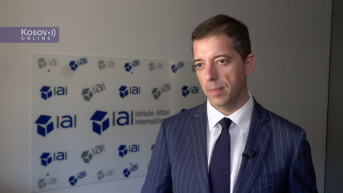
During an official visit to Italy, Serbia's Minister of Foreign Affairs Marko Djuric pointed out the tragic situation of the Serbian people in Kosovo, explaining that Serbs found themselves in a situation with mayors imposed on their communities by Kurti's regime.
In Rome, Djuric stated that Serbia and Italy are celebrating 145 years of diplomatic relations and 15 years of strategic partnership this year.
“I must say that, on the wings of what President Vucic and the Serbian government have done in recent years, we now see the fruits of cooperation between Serbia and Italy. This is a confirmation that Italy supports Serbia on the issue of European integration, demonstrates a high level of understanding for our regional problems, and shows a readiness to engage in resolving them positively, taking Serbian interests into account,” Djuric said.
He emphasized that in the past two days in Italy, he had spoken with Minister of Foreign Affairs Antonio Tajani, a man whom he described as having immense prestige in interactions with the European Union.
“I spoke with the chairmen of the foreign policy committees of the Senate and the Lower House of the Italian Parliament, with the Speaker of the Italian Parliament, namely the President of the Lower House. We also had a phenomenal forum at the Institute of Foreign Affairs just a few minutes ago, where we talked about Serbia’s strategic priorities and the advantages Europe has by accepting Serbia into its ranks. Not only what Serbia has to gain, as Serbia does not enter Europe with an outstretched hand, but standing tall, proud, and ready to take its equal place in the family of European nations,” Djuric said.
He pointed out the tragic situation of the Serbian people in Kosovo.
“I tried to explain the genesis of the problem since the 1990s and the fact that now the Serbs in Kosovo and Metohija find themselves in a situation where they have mayors imposed in their communities by Kurti's regime, that Serbs are practically ousted from all institutions, from the police, from the judiciary. For 12 months, not a single bag of chips, not a single bottle of drink, including Coca-Cola, has been able to enter from central Serbia as a product into Kosovo and Metohija due to the discriminatory decisions of Kurti's regime. And as a result of the ongoing repression, even the Serbian Patriarch has been prevented from visiting Serbian holy sites, including the Visoki Decani Monastery, which has been guarded by Italian Carabinieri for decades,” Djuric said.
He added that this had led to a wave of emigration of the Serbian population.
“Today, in Kosovo and Metohija, we, unfortunately, have a mirror image of what happened in the 1990s, with Serbs in the role of victims, and the international community must rise up, stop it, prevent it, in the same way as in the 1990s, and often under the influence of incorrect information, part of the public sided with the other side,” Djuric said.
He reiterated that Serbia and Italy are like one big family.
“Mentally and culturally, we are only an hour's flight away, but we have been interwoven for centuries. The Serbian economy is developing today in cooperation with the Italian one. Italy is the second largest European investor. President Vucic has, in the past 24 hours, opened the Fiat Grande Panda factory and the Ariston factory in Nis. This gives a new impetus to our economy. Just the Fiat Grande Panda will add 0.5 percent to our national GDP. On the wings of what President Vucic and the government have done in recent years, we are building a strong political foothold here in Italy to ensure that in Europe, both regarding European integration and our regional concerns, we have Italy on our side,” Djuric stated.
As he explained, it is an old alliance.
“I remember that the first and most beautiful book I read about Nikola Pasic was by Italian author Carlo Sforza, a former Minister of Foreign Affairs who was friends with Pasic. Our friendship truly spans centuries and should continue into the future, and Serbia should build more and more friendly homes in European capitals. Thank you. I hope that this second and old was again,” Djuric concluded.


0 comments