
Djuric: Strong and open condemnation from the US administration of Kurti's regime
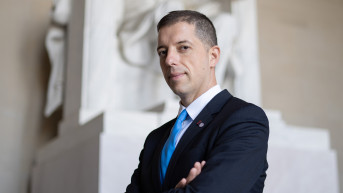
Serbia is now charting its foreign policy towards the United States based on fundamental determinants stemming primarily from a strong and responsible domestic policy, clearly outlined and sustainable goals for growth and development, as well as careful identification of areas of cooperation of interest to Serbia and its citizens, Serbian Ambassador to the US Marko Djuric says in an interview with Politika. After a three-year term, Djuric is returning to his country.
"With the support and understanding of our state leadership, such an approach yields concrete results on the ground, not only in the last three years, which I personally witnessed but also in the last more than ten years," Djuric notes.
He adds that it is of essential importance, in his opinion, for Serbia to continue moving along this good, right path of cooperation with the US, along the well-trodden paths of the historical partnership forged 143 years ago, but also through newly paved political infrastructure, a new image of Serbia, and a new enthusiasm in approaching US soil.
"The key element is continuity in action, which, like a secret ingredient, can help us, first in the short term, and then in the medium and long term, to regain the position and perception of our country from those periods when we had the greatest political and economic influence," he emphasizes.
Considering the numerous challenges in Kosovo caused by the harsh attitudes of Pristina toward the Serbian community, is there a greater understanding in Washington of Belgrade's positions on that issue?
The fact is that we differ with Washington on the issue of the status of our southern province, but it is also a fact that unilateral and provocative measures repeatedly adopted and applied by Pristina to make the survival of the Serbian community in Kosovo and Metohija increasingly unbearable not only evoke serious concern but also increasingly strong and open condemnation from representatives of the US administration - from US Ambassador to Serbia Mr. Hill, through Special Envoy for the Western Balkans Mr. Escobar, to Blinken's Assistant Mr. O'Brien. One of the glaring examples is the recent Bill submitted to the US Congress by Congresswoman Claudia Tenney, Co-Chair of the Serbian Caucus, which directly condemns the Kurti regime and demands the cessation of any form of US aid and support to Pristina until the persecution of the Serbian population in Kosovo and Metohija ceases. Such important messages from senior US officials, as well as from the global community, as we had the opportunity to witness after President Vucic's address to the United Nations Security Council a few weeks ago, indicate that support for Pristina is diminishing internationally and that we are approaching the delegitimization of the regime of Albin Kurti and his cronies.
In the bilateral relations between countries, one of the most important components is economic relations. What can you tell us about the economic relations between the two countries?
In recent years, the economic cooperation between our two countries has emerged as one of the strongest pillars of overall bilateral relations, reflected primarily in a record trade exchange of $1.2 billion for two consecutive years. Besides being our fourth largest trading partner globally, the United States is also our primary export market for ICT services. Starting from several dozen business delegations and trade missions that have visited Serbia, as well as business conferences and roundtable discussions – the latest of which was just a few weeks ago organized by the Council for International Business Understanding as the oldest and most renowned umbrella association of US companies – to the intensified collaboration with the American Chamber of Commerce and the American-Central European Business Association, and culminating in the establishment of the US-Serbia Business Council a few months ago as a new channel of cooperation for companies and businessmen in Serbia and the United States, we have positioned Serbia on America's economic map as a regional economic hub and an attractive investment, infrastructure, technological, and tourist destination.
Considering everything, you have been a very successful ambassador. What advice would you give to your successor?
I would leave it to others to judge and evaluate our work, but personally, I can say that I am proud of the effort and dedication of my team at the Embassy in Washington. Now, I can rightfully say that we are actively building a new foundation for Serbian-American relations. I had the privilege to serve in a politically and commercially significant world power at a historically short but extremely important moment for our country and our bilateral relations, in a decade where we witness perhaps sometimes slow but gradual and steady transformation of the image of Serbia in the eyes of Americans. Thanks to the support of our state institutions, president, and government, I believe that in the past three years, we have laid a new cornerstone in the structure of Serbian-American relations with an emphasis on political, economic, and cultural infrastructure. We significantly increased the Serbian Caucus in the US Congress, engaged two companies to assist us in lobbying, concluded Memorandums of Cooperation in the fields of economy and education with the state of Ohio, as well as a Memorandum between the State Department and the Ministry of Foreign Affairs on cooperation between foreign services and exchange of diplomats, while in the upcoming period, we expect to finalize an agreement on strategic partnership with the US in energy.
Less than a year ago, we opened a direct flight route from Belgrade to Chicago?
This makes our "Air Serbia" the only airline in the region with even two direct flights to the US, and we are also preparing to open a third route, from Belgrade to Miami. Additionally, last year we organized two major conferences of the Serbian diaspora under the name "Strengthening Bonds," which have strategic significance. We opened supplementary Serbian language schools across the US, and in collaboration with NBA teams, we hosted several "Serbian Heritage Nights" in Washington. There have been numerous exhibitions featuring our artists and creators, concerts, literary evenings, visits, appearances, and participation in various festivals and events.
For our colleagues who come after us, we are leaving a new embassy building less than a kilometer from the White House and a renovated ambassadorial residence in an elite neighborhood of the US capital—not only as places for meetings with US officials and the local diplomatic corps, but also as sort of "Serbian homes" in the US, places for representing and promoting our language, culture, and heritage, and gathering spots for the Serbian community. I hope that our diplomacy will demonstrate and prove its dedication and perseverance in striving to, in the long term, boldly and diligently strengthen Serbia's presence, expand partnerships, and further enhance cooperation with the US in all fields in the future.
What are your expectations upon returning to Belgrade?
I expect to reconnect with many old friends and look forward to socializing with our people, returning to Serbia, and the opportunity to continue working in the president's and state team towards creating an even better and more successful Serbia. A Serbia with numerous highways, railways, factories, scientific centers, universities, and schools. A Serbia that will be the center of the world as the organizer of the global Expo 2027 exhibition, a Serbia that will host European and world political, economic, academic, and cultural delegations and sports competitions, a Serbia that will progress more and more each day and become a country to be proud of in every respect for our future generations.

0 comments