
Djuric: A visible consensus at the UN Security Council that the repression and oppression of Serbs in Kosovo must end
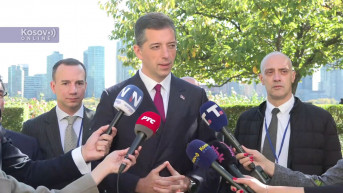
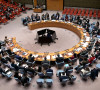
Serbian Minister of Foreign Affairs Marko Djuric emphasized that following today’s session of the United Nations Security Council, there is now a growing consensus within the international community that the repression, oppression, and trampling of the Serbian people, Christians, and the Serbian Orthodox Church in Kosovo must stop.
“This was anything but a routine session of the UN Security Council. Whenever Kosovo and Metohija are discussed, such meetings cannot be routine by their very nature. Kosovo is an example of where international law and the UN Charter have been trampled upon. We did everything we could to make the cry of the Serbian people in Kosovo and Metohija heard — a people whose rights have been crushed, and whose suffering can only be compared to that experienced during apartheid in South Africa,” he explained in a statement to the press.
During the session, Djuric pointed out that the basic rights of Serbs in Kosovo are not merely being neglected, but systematically destroyed, piece by piece.
He called upon the members of the Security Council to support the work of UNMIK, both to protect the fundamental rights of Serbs and to uphold international law as the cornerstone of global security.
Djuric reminded the Council that there is a nation in Europe whose rights are being trampled upon and reiterated that Serbia stands firmly on the side of international law, opposing war and conflict as a means of resolving problems.
He noted that on the ground, 128 Serbian institutions, sports centers, and healthcare facilities have been shut down — services that directly enable the Serbian population to live — while churches and monasteries are equally subjected to pressure and terror.
“What is significant,” he said, “is that today, for the first time, both from countries that recognize and those that do not recognize Kosovo’s independence — the majority in the UN — we could hear a clear message condemning the repression, the breach of agreements, and the violence faced by Serbs in Kosovo. On the other hand, we witnessed a somewhat theatrical and pitiful performance by the representatives of Pristina, who tried to paint a rosy picture in which human rights are flourishing, claiming that the problem lies with the Serbs themselves, who supposedly persecute themselves. We even heard absurd accusations against Serbia of genocide and claims that the Serbian president is calling for war — as if this were not the same man who spent years working for regional cooperation, launching the ‘Open Balkan’ initiative to show that Albanians are not, and need not be, our enemies. Our problem is not with the Albanian people, but with tyrants like Kurti, who seek to subjugate Serbs in order to advance their ethno-nationalist agenda — the very thing they accuse others of doing,” Djuric explained.
He stressed that it was not easy to hear and listen to such things when one knows how Serbs in Kosovo truly live.
“Our duty is to present the truth here. We did so, not only by voicing our own positions but by citing UNMIK’s report, which clearly describes what Serbs are going through. After today’s session, we are one step closer to consensus within the international community — the same consensus that led the EU to impose restrictive measures on Kurti’s regime and the Trump administration to suspend its strategic dialogue with Kosovo — that the time has come to end repression, oppression, and the trampling of the Serbian people, Christians, and the Serbian Church in Kosovo,” the Serbian foreign minister said.
He also spoke of the symbolic removal of the Cyrillic sign “Kosovska Mitrovica” with a red heart, replaced by its Albanian version with a green heart — a move he described as emblematic of Kurti’s desire to deepen divisions between Serbs and Albanians.
“We are doing the exact opposite. We are a country that can say it is developing economically and pursuing a different kind of policy — something that was recognized today more than ever. The message we heard was extremely important — it was the final warning to Kurti and others to stop doing what they have been doing so far,” Djuric stressed.
Commenting on the United States’ position that UNMIK should be closed, Djuric said that this was not the first time such a stance had been expressed. He noted that Serbia disagrees but remains grateful to the U.S. for suspending its strategic dialogue with Kosovo.
“It is well known that the U.S. advocates for more efficient United Nations missions. This position is not new, nor was it stated for the first time today. We will speak here with senior U.S. officials, to whom we are grateful for having suspended their strategic dialogue with Kosovo last month — sending Kurti a clear signal that they understand what he is doing to the Serbs and, moreover, that they do not accept such treatment of Serbs or anyone else in Kosovo. Although we do not share their view on UNMIK’s role, we acknowledge that their recent actions marked an important step toward protecting the rights of non-majority communities in Kosovo and Metohija,” Djuric said.
Responding to a question about whether this UNMIK report was more objective than the April one and the fact that the Deputy Head of UNMIK did not mention the formation of the Community of Serb-Majority Municipalities (CSM), Djuric stated that he fights at every forum and refuses to remain silent about any harm inflicted upon the Serbian people.
“We do not allow silence in the face of violations of our people’s fundamental human rights. It is good that this UNMIK report contains so much evidence demonstrating that our diplomats, people on the ground, and institutional representatives have succeeded, through daily documentation and arguments, in building a case that is now reflected in UNMIK’s report. Without their work, you would not have heard nearly all 15 members of the Security Council today speak about Pristina’s unilateral actions,” Djuric noted.
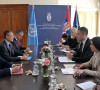
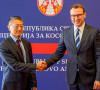
He added that while in New York, he would meet with Russia’s Permanent Representative to the UN, Vassily Nebenzya, as well as with senior U.S. officials.
“We continue to lobby for Serbia,” Minister Djuric concluded.
0 comments