
Donic: Brnovich understands the historical context, Trump’s policy toward the region remains focused on economic integration
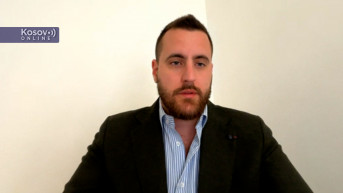
Petar Donic, a fellow at New Third Way, commented on the nomination of Mark Brnovich as the US ambassador to Serbia, stating that it is beneficial to have someone in this position who understands the historical situation in the region. However, he cautioned that it is unrealistic to expect a sudden and significant shift in US policy toward the region, especially regarding Kosovo.
Donic noted that the White House’s policy is centered on economic integration and the normalization of relations in the region. He added that frozen relations and a lack of economic cooperation create fertile ground for negative scenarios, something the White House is well aware of, making it highly likely that it will work in the opposite direction.
“However, we can expect positive incremental progress because Mark Brnovich himself has repeatedly stated that Serbia’s image remains stuck in the 1990s, tied to an outdated narrative that has not changed. Serbia has not done enough to promote its own interests, position, and relevance over the past 20–30 years. We can expect that he, along with other political actors, will work to change this. As Serbia improves its standing in the US and strengthens its role as a relevant partner, we can also expect certain policies to align more with Serbian interests rather than those of other actors,” Donic explained.
Brnovich’s appointment as ambassador in Belgrade, despite not being a career diplomat, is not surprising, according to Donic. He argued that former US President Donald Trump introduced a new dynamic in how the White House conducts politics.
“He faces the challenge of elevating MAGA Republicans over the Republican establishment, which is why some of his appointments, including special advisors like Richard Grenell, come from his inner circle rather than from career diplomats. These are new faces in politics,” Donic said.
Regarding Brnovich’s background, Donic highlighted that he has spent his entire career in law. He served as Arizona’s 26th Attorney General from 2015 to 2023 and worked in both the military and the private sector as a lawyer.
“As Attorney General, he primarily handled cases that were in the public interest, especially when large corporations acted against the interests of citizens. He returned 1.5 billion dollars to the people of Arizona, demonstrating his strong commitment to the rule of law. He has stated that any country aiming to establish itself as an economic power must uphold the rule of law. He also supported Montenegro’s NATO membership and is well aware of his roots. This was evident when, during his 2020 Senate campaign, which he lost after Trump endorsed another candidate, he stated that it was high time for the Senate to have an Orthodox Serb as a member,” Donic noted.
He further emphasized that, considering the nomination of Colleen Hyland to a position in the State Department – who also advocates for the rule of law – both she and Brnovich view corruption as a major challenge in the region. This suggests that Trump’s policy toward the region will remain consistent with his previous administration’s approach, which focused primarily on economic integration, making the region more competitive within Europe, and supporting both economic and security-based EU integration.
“Additionally, as the son of parents who fled Yugoslavia for the US, Mark Brnovich has a strong anti-communist stance and is very cautious about Russian and Chinese influence. Therefore, US policy will aim to reduce Serbia’s energy dependence on Russia by deepening relations with the US, while also taking a cautious approach to economic relations with China,” Donic concluded.


0 comments