
Donic: Stability of Kosovo's institutions and political developments in the US crucial for the US-Kosovo strategic dialogue
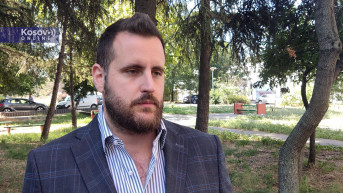
Petar Donic, an associate at the New Third Way organization, assessed that the issue of the position of Serbs is important for the strategic dialogue between the United States and Kosovo, but that it is also influenced by other factors, including the stability and functioning of Kosovo's institutions, energy, telecommunications, as well as political developments in the United States.
Donic noted that, from Pristina's perspective, one of the main reasons for the delay in the strategic dialogue between the US and Kosovo is the lack of functional institutions.
"A strategic dialogue requires extensive preparation by institutions on both sides. If a country has been in deadlock for two years, that cannot be accomplished, and the appointment of ambassadors also took a long time. It is not realistic to expect this to happen quickly. In addition, there are unresolved issues on Kosovo's side, including energy, telecommunications, and, on top of all that, the Serbian issue," Donic told Kosovo Online.
He reminds that Kosovo has been experiencing political and institutional deadlock for the past two years, including several rounds of parliamentary elections and the failure to reach an agreement on the election of a president.
"Now we are once again in that situation. So, until there is clear political stability in Kosovo, negotiations with the Americans will not be possible," Donic pointed out.
According to him, the United States has had "slowed institutional engagement" with the region over the past two years, and launching the strategic dialogue with Serbia also required several years of preparation.
Donic assessed that issues such as energy and the 5G network, as well as the position of Serbs, could be on the agenda of the strategic dialogue with Kosovo.
"It is no secret that the current US administration is not a big fan of Albin Kurti's government. Kurti received the strongest support in the elections, but still not enough to form a government, and the Serbian issue remains a condition," Donic said.
He stated that Kurti's platform is focused on consolidating Kosovo's institutions and preventing the establishment of the Community of Serb Municipalities, while Washington is once again putting that issue back on the table.
"We will see whether that gives momentum to the possibility of the Serbian List playing a role in the new government," Donic said.
Asked whether it is currently more advantageous for Pristina not to meet US demands concerning the Serbs, Donic replied that it depends on several factors.
"First, we need to see how quickly the new government will be formed, and whether the process will be just as difficult and slow as last time. Then Kosovo's president must be elected. That is an even more difficult requirement because 80 votes are needed, and it could once again trigger a crisis and lead to the dissolution of parliament," Donic cautioned.
He said that any new political crises in Kosovo could further affect the dynamics of relations with Washington, but that the political situation in the United States, including the upcoming congressional elections, would also play an important role.
"All of that remains to be seen, and only then comes the Serbian issue, which is important but not the most important in this context, because you have the functioning of the Kosovo state and the major elections in its biggest ally, without which Kosovo effectively would not exist," Donic concluded.



0 comments