
Donic: The US expects Kosovo to resolve the issue of the CSM and respect the Serbian side
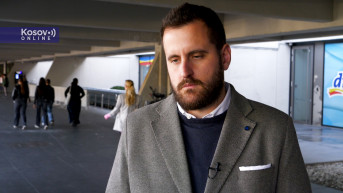
Petar Donic, an associate of the New Third Way organization, says that since Donald Trump returned to power in the United States for a second time, it has become apparent that the traditional American policy of the previous 30 years, which favoured the Albanian side, is not necessarily still in effect. In his assessment, when the US State Department says that launching strategic dialogue with Kosovo also depends on fulfilling obligations towards Kosovo Serbs, it is referring primarily to the Community of Serb Municipalities.
"The format and manner in which this will happen are details that I am fairly certain the Trump administration is not even getting into. Will the two sides jointly come up with a solution, or will the latest active proposal be implemented with Europe getting involved? In either case, the Serbian side must be respected. That is what is expected," Donic told Kosovo Online.
He explains that strategic dialogue with the United States should be viewed as an additional operational resource.
"Opening strategic dialogue provides a framework in which you have dedicated people at the State Department who want to work on something and are expected to get things done. Having it means addressing issues, while not having it means leaving them unaddressed. Strategic dialogue is a framework. It does not involve a predetermined, 'copy-and-paste' approach from one region to another, but instead depends on the region and its political climate. For Kosovo, this could mean economic projects, stabilising projects it already had with the Americans, or extending some of them. I would remind you of the motorway construction project, which took considerably longer than expected but was ultimately completed successfully. These could be similar infrastructure projects," our interlocutor explains.
Donic adds that Kosovo is very small and has a small economy, while investments in Kosovo of the kind the United States has already made would amount to "next to nothing" for America.
"As our people would say, what is little for one person is a lot for another. Having this on the table means a great deal to them economically. Not having it could seriously slow down such a small economy," Donic says.
Although there have been various statements from envoys close to Trump and American officials at the highest, middle and lower levels, Donic believes that little has been seen beyond declarations, the failure to launch strategic dialogue with Kosovo, and the decision to initiate it with Serbia.
"We need to be realistic. We should not expect more intensive diplomatic activity until ambassadors are in place. The ambassador to Serbia will not arrive until the beginning of the year, which reflects certain shortcomings and the slowness of the American system, where appointments have to go through numerous procedures and vetting processes. Every president also changes ambassadors to a greater or lesser extent in countries where they want to change policy. That is why we are only now getting a new ambassador. Until we have, so to speak, people on the ground to carry out the work, we should not expect a diplomatic offensive from their side. We can expect one when the ambassador arrives. Whether this will genuinely represent a shift or merely a cosmetic change, we cannot know until it happens," Donic says.
Given that the White House has not even nominated an ambassador to Kosovo, he says this could be a positive signal for Belgrade, because the diplomat arriving in Belgrade will begin working without a counterpart in Pristina to act as a "counterweight".
"Certain decisions and moves with consequences will be made. So, alongside a certain change in rhetoric, which has not explicitly stated that 'the Serbian side gets 100 per cent and the Kosovo side gets zero', something that would not be realistic either, we are nevertheless seeing moves that suggest a change in the climate," he concludes.


0 comments