
Drecun: The more KFOR invokes Resolution 1244, the less it fulfills its mandate

Milovan Drecun, Chairman of the Serbian Parliament’s Committee on Defense and Internal Affairs, stressed that KFOR’s decision to reconfigure its mandate and incorporate Kosovo’s security institutions into its security architecture is unacceptable, because those very Kosovo forces are involved in carrying out what he described as terror against Serbs.
Drecun told RTS that the decision was expected, given that several months ago KFOR announced that, due to the improved security situation, it would return its presence to the level it had before 2023.
“It was completely clear at the time that it would transfer part of its mandate and responsibilities to Kosovo’s security institutions, even though those institutions are the main actors in endangering security and carrying out what he described as terror against the Serbian people,” Drecun explained.
He stressed that “the more KFOR invokes Resolution 1244, the less it fulfills its mandate.”
“It is no surprise that the Turkish general has been brought in to head KFOR for a second time, because he is supposed to do the dirty work and contribute to the further strengthening of Kosovo’s security institutions,” Drecun said.
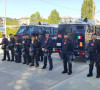
He recalled that KFOR has allowed the transport of lethal weapons into Kosovo, even though this is prohibited by the Resolution, and that it allows what he described as terror against Serbs and the demolition of houses with the assistance of the Kosovo Police, which it is now incorporating into the security arrangements for the Visoki Decani Monastery.
Drecun said that a reduction in KFOR’s presence could be expected in the coming period and that, since KFOR says it will remain visible in Kosovo, it could remain as a kind of observer, similar to EULEX.
“The extent to which the security situation has improved can be seen in northern Kosovo, where the number of Serbs has decreased by 18 percent because they do not have normal living conditions. What KFOR is doing is unacceptable and the wrong move,” Drecun stressed.
He pointed out that KFOR has stated that it will remain the first security force to respond in the area of the Visoki Decani Monastery, but when it needs to respond in the north, it claims to be only the third link in the security response chain.
“They are deliberately creating ambiguity so that they can interpret it as they wish. When they do not want to intervene, they say they are the third force in the security chain,” Drecun stressed.
He emphasized that KFOR is handing responsibility for the monastery’s security to the Kosovo Police, the very institution that, according to him, is endangering worshippers and Serbian religious sites.
According to him, the decision is concerning because further steps can be expected.
“I am afraid we will reach a situation in which the agreement that the Kosovo Security Force cannot enter the north without the KFOR commander’s approval will be abandoned, or that such entry will be tolerated. The announced creation of a gendarmerie is intended to create a classic military formation under the guise of a police force, which would not require the KFOR commander’s approval,” Drecun warned.
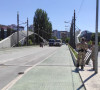
He stressed that the announced moves at the bridge over the Ibar and around the Visoki Decani Monastery are bringing the threats to the Serbian community and its survival to a maximum level.
He also said that there should be no illusion that this is not a plan, because, in his view, all the moves have been coordinated with Pristina.
“KFOR is actually fulfilling Albin Kurti’s demands. These are his demands, both regarding the bridge and Visoki Decani, as well as the increased presence of special units in the north. All of this is being agreed upon. The only question is what else has been agreed,” Drecun noted.
Regarding KFOR’s statement that it remains the first force to respond when it comes to protecting Visoki Decani, he also asked why it is not the first force everywhere in Kosovo where Serbs are under threat or are being arrested.
“Where are you when you need to respond? Under UN Security Council Resolution 1244, KFOR can in no way be the third link, and this interpretation of KFOR’s mandate, as well as its operationalization and deployment, shows that KFOR is there solely to guarantee the survival of the fake state of Kosovo and nothing else,” Drecun concluded.
Commenting on the removal of the Ukrainian flag from the center of Pristina, Drecun said that Ukrainian President Volodymyr Zelensky had dispelled all hopes that Ukraine might recognize Kosovo.
“Kurti, Pristina, and all the other Greater Albanian separatists wanted to take advantage of the situation and fish in troubled waters, using anti-Russian rhetoric to pursue some of their own interests, accusing Belgrade of being a destabilizing factor in the region in coordination with Moscow and of having aggressive intentions toward Kosovo. They wanted to curry favor with Ukraine and try to change its position on the basis of that anti-Russian rhetoric,” Drecun explained.
According to him, Pristina had hoped that the situation might change and that Kosovo would become of greater geopolitical importance to Ukraine than Serbia, which is a key country in the Western Balkans.
“I think Zelensky dispelled any hope that Ukraine’s position would change. How can Ukraine demand respect for its territorial integrity if it were to recognize the unlawful secession of part of our territory? They are now disappointed,” Drecun said, adding ironically that “the Ukrainians were so concerned” about the flag being removed.
0 comments