
Eight years since the arrest of Marko Djuric and the ROSU incursion into Northern Kosovo
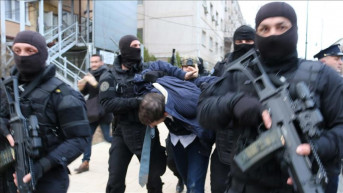
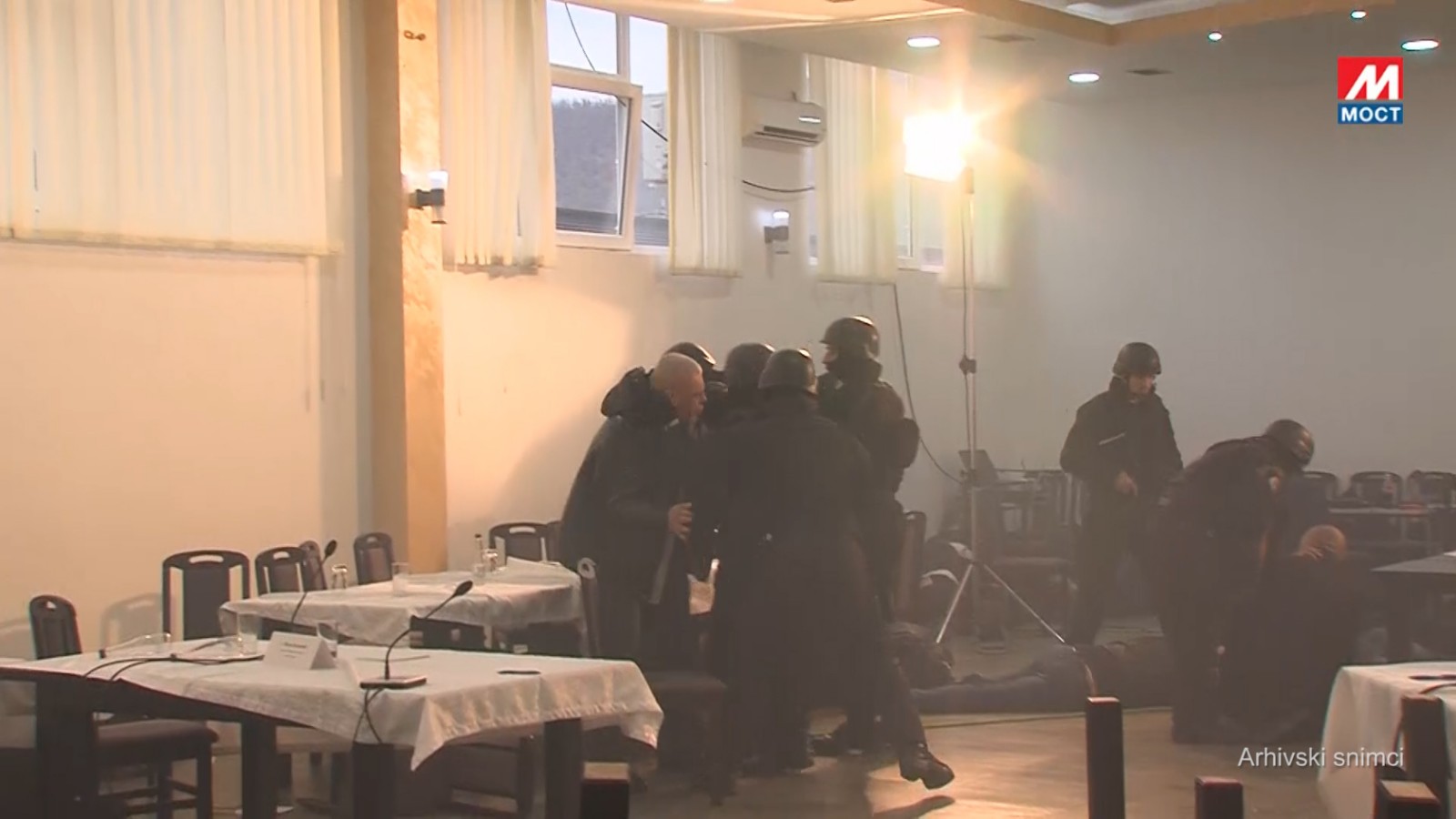
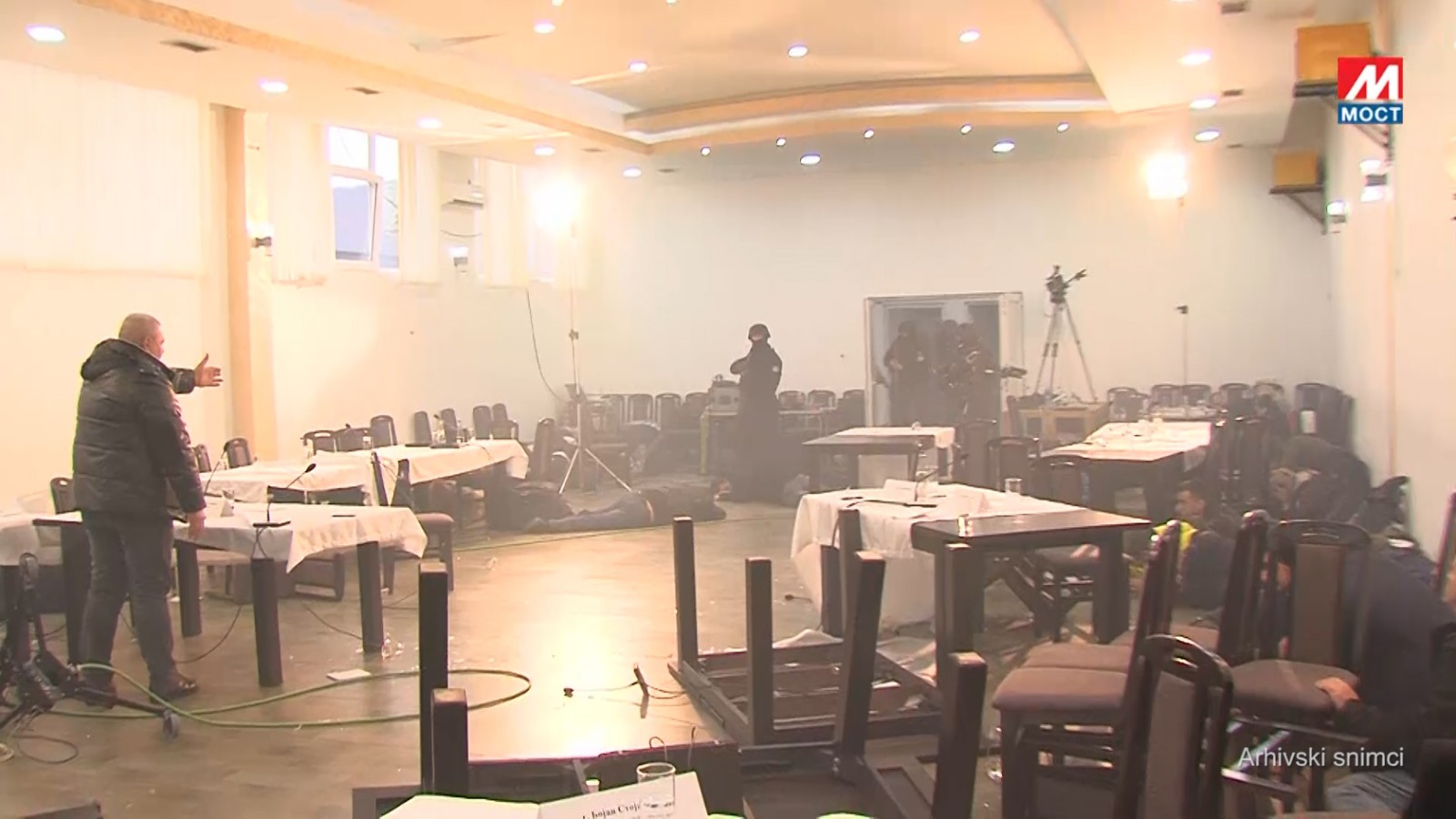
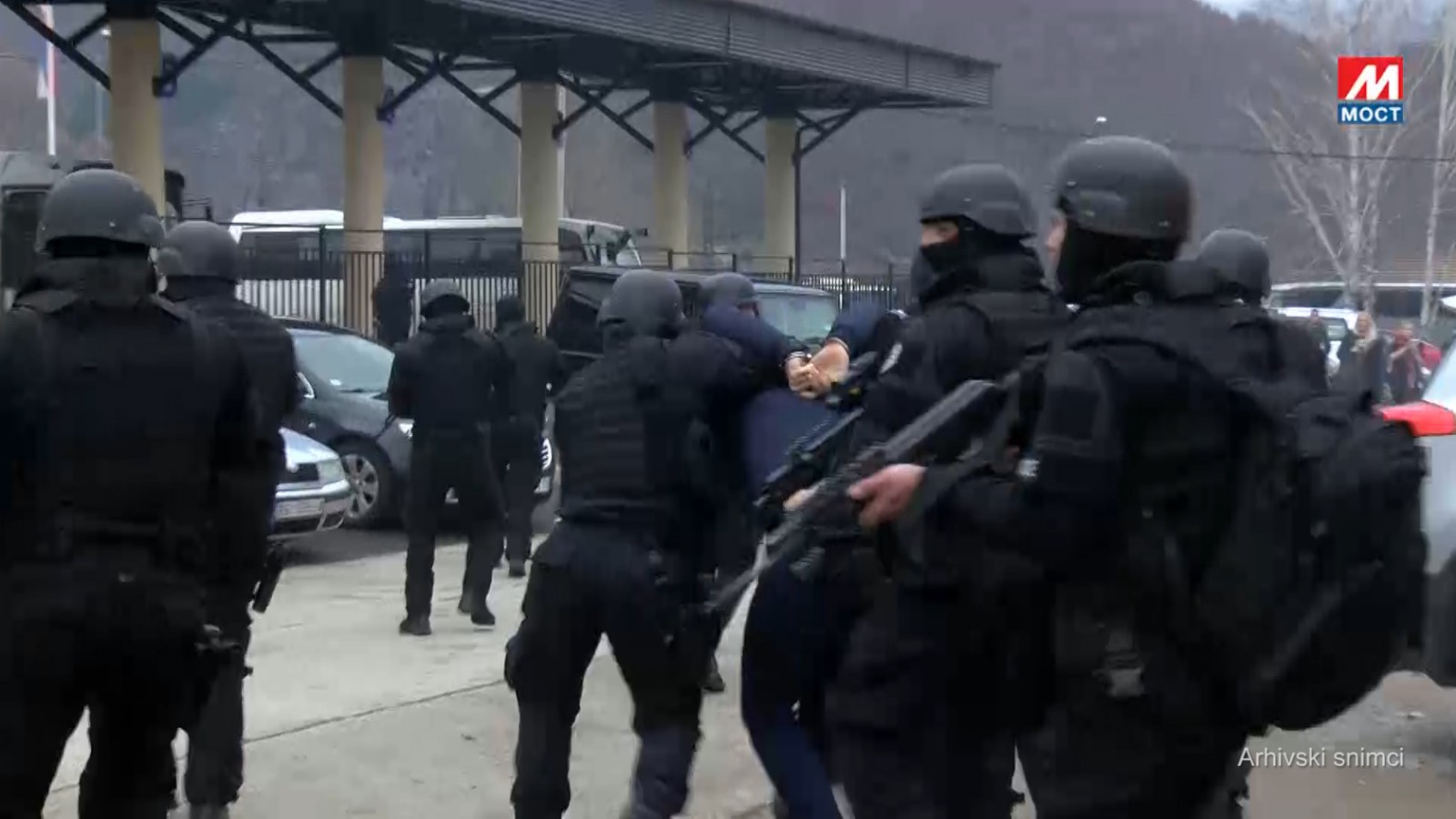
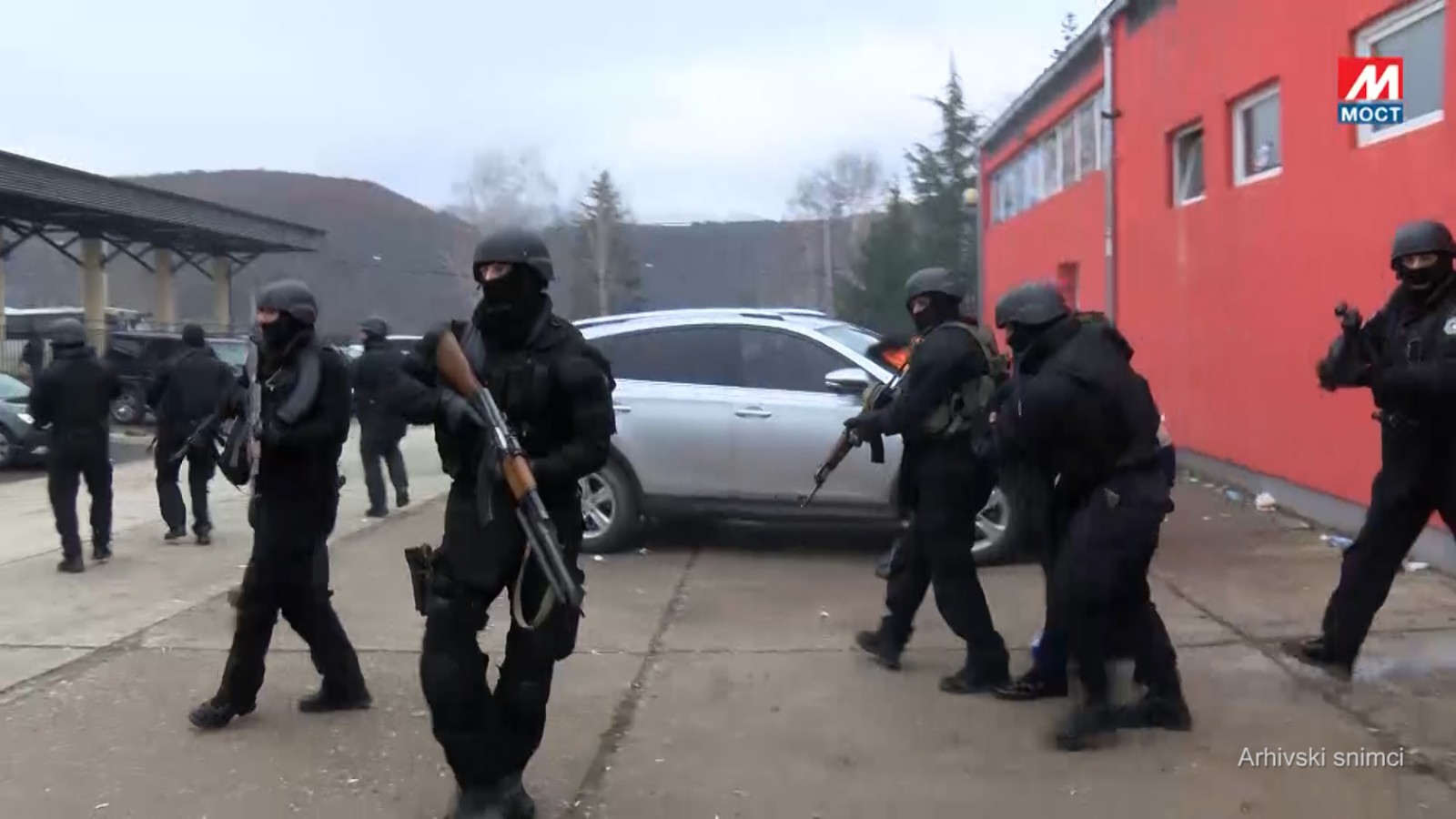
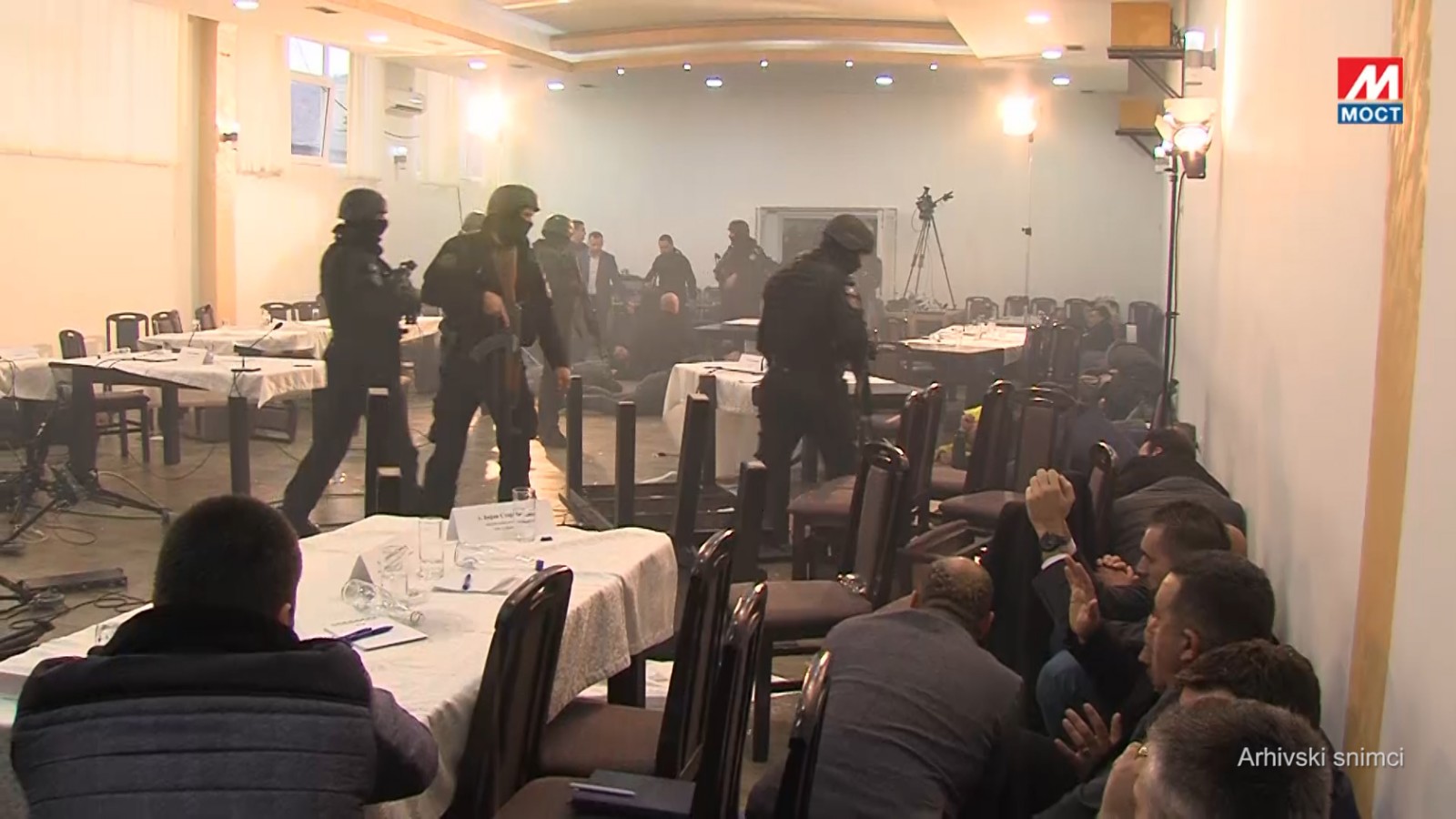
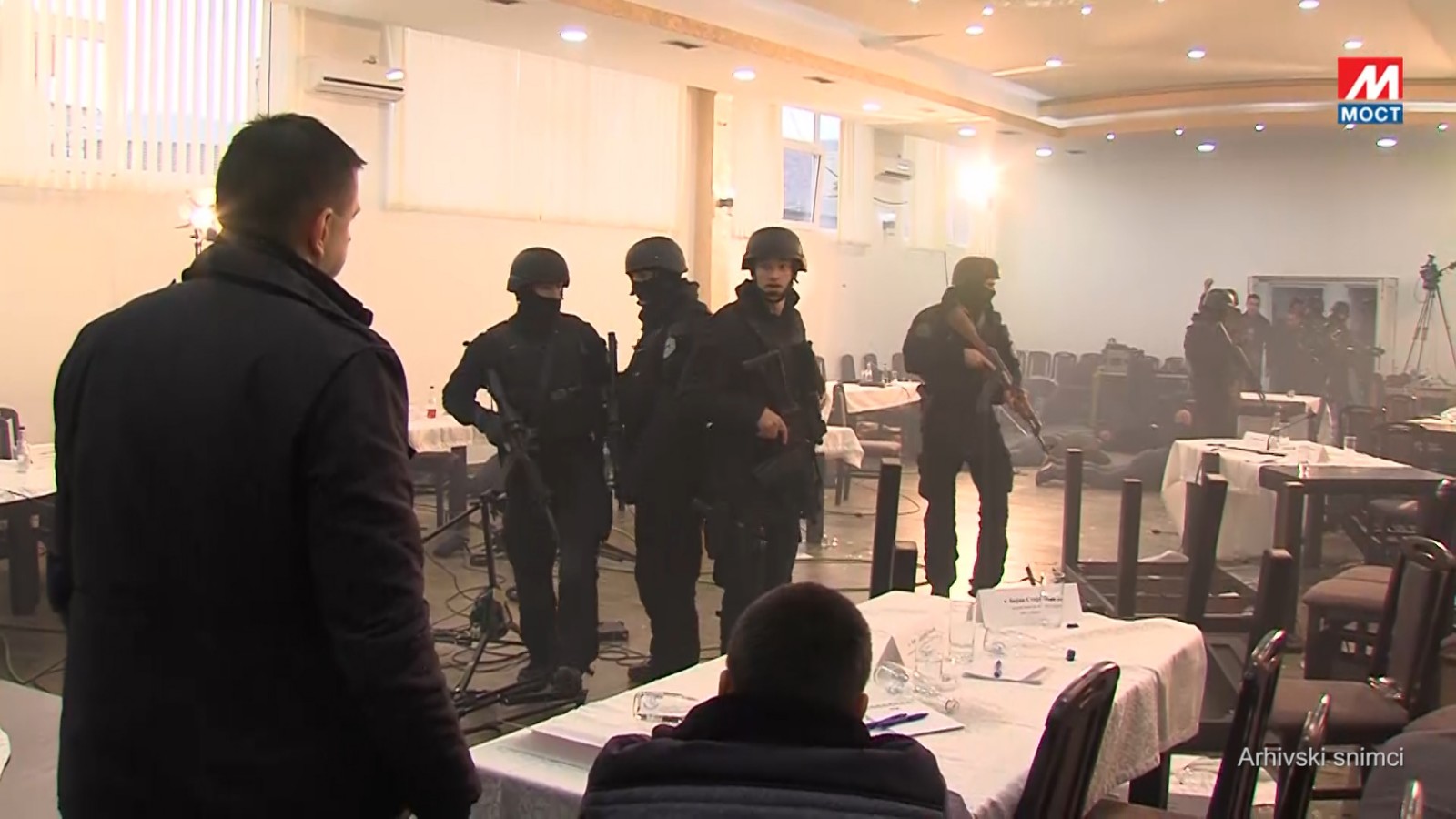
Exactly eight years ago, on 26 March 2018, a discussion was being held in the hall of Mitrovica Court in North Mitrovica as part of the internal dialogue on Kosovo initiated by the President of Serbia, Aleksandar Vucic. Present at the time were the then Director of the Office for Kosovo and Metohija, Marko Djuric, and the Secretary General of the President of Serbia, Nikola Selakovic. The peaceful discussion was interrupted by the incursion of Kosovo Police special units (ROSU), who, using threats with automatic weapons and stun grenades, arrested Djuric and, with excessive use of force, took him to a police station in Pristina. This was also the first major incursion of ROSU into northern Kosovo.
More than 30 people were injured during the incident. Around 200 heavily armed members of ROSU entered Mitrovica Court at approximately 17:30, using stun grenades and tear gas, as well as rifle butts and boots, and moved toward Djuric.
They kicked him and knocked him to the ground. Participants of the roundtable were ordered not to move and were kept under gunpoint throughout. Rifle butts were also used to strike the then Mayor of North Mitrovica, Goran Rakic, as well as citizens attending the gathering.
As reported at the time by TV Most, gunshots, breaking glass, and shouting in the Albanian language were heard during the operation.
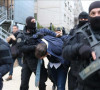
Footage of the arrest of Marko Djuric, who was taken to Pristina in handcuffs, bent over and surrounded by Kosovo special police forces, circulated worldwide.
Djuric’s associate, Zeljko Jovic, was also arrested and sustained injuries while attempting to resist detention, after which he received medical treatment at the Clinical Hospital Center in Kosovska Mitrovica. Citizens gathered at the scene also clashed with Kosovo Police, who used tear gas and stun grenades against them during the intervention.
Following what was described as an apparent provocation, sirens were heard in northern Kosovo, and citizens gathered to express their discontent over what they perceived as an attempt to humiliate Serbia and its officials.
Selakovic later stated that he and Djuric had come to discuss how to resolve problems, not to create new ones, and that they had not insulted anyone. However, as he said, “individuals from Pristina stormed into Mitrovica Court with long-barrel weapons, stun grenades, and tear gas.”
He stated that there was a live round in every barrel, that unarmed civilians were harassed and terrorized, and that some sustained serious injuries while others suffered minor ones. He also emphasized that there was no justification for people to be terrorized, kicked, or subjected to having boots placed on their heads, rifle butts on their backs, or gun barrels forced into their mouths.
“They did this today to our people in North Mitrovica,” Selakovic said, adding: “It is clear to us that they do not want to implement the Brussels Agreement, that they will not establish the Association of Serb-majority Municipalities, and that they will continue to invent reasons to terrorize an unarmed population. One can only imagine what is happening where there are fewer Serbs.”
He also reported that Nenad Rikalo, Zoran Todic, Ivan Milojevic, and Nebojsa Milanovic sustained serious injuries. During the arrest operation, Kosovo special forces also attacked and injured RTS cameraman Vladimir Milic.
Following his arrest, Djuric was transferred to the headquarters of the Kosovo Police in Pristina and then brought before a misdemeanour judge. He was taken out of the vehicle in handcuffs, with his head lowered, surrounded by masked police officers, and quickly escorted into the building. His transfer was accompanied by several hundred Albanians who shouted derogatory remarks in the Serbian language.
He was brought before the misdemeanour judge, who ordered his “deportation from Kosovo,” on the grounds that “action had been taken against him based on an order banning his entry into Kosovo.” Earlier that day, the Kosovo Ministry of Foreign Affairs had issued a statement indicating that Djuric and Selakovic had not been granted permission to stay in Kosovo “due to inappropriate behavior and provocations made by Djuric during previous visits, as well as rhetoric inciting hatred among the citizens of Kosovo.”
Escorted by a large convoy of Kosovo Police vehicles, Djuric was taken to the Merdare crossing, where he was handed over to Serbian police.
Representatives of the European Union issued a statement following the arrest, with EU spokesperson Maja Kocijancic calling on the authorities in Serbia and Kosovo to “exercise the necessary restraint and maturity in order to prevent further escalation of the situation in Kosovo following the arrest.”
Following the incident and the arrest of Djuric, President of Serbia Aleksandar Vucic convened a session of the National Security Council and subsequently described the event as a “kidnapping,” stating that “terrorists dressed in police uniforms stormed a peaceful gathering of Serbian citizens as part of the internal dialogue on the Kosovo issue, attempting to demonstrate that they are capable of taking control of the northern part of the Serbian province,” and that this occurred, as he stated, with the direct support of EULEX, as special forces vehicles were accompanied by EULEX vehicles.
He also noted that Djuric had notified the authorities of his visit to Kosovo in accordance with agreements and procedures, adding that what had occurred was “pure banditry,” as evidenced, he said, by the fact that Marko Djuric was arrested, while Nikola Selakovic was not.


0 comments