
Elek: Continuity of Kurti’s policy brings no optimism for the Serbian community
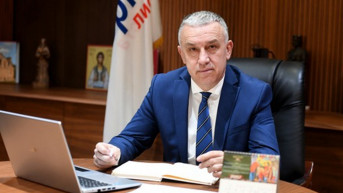
The President of the Serbian List, Zlatan Elek, stated that the continuity of Albin Kurti’s policy offers no grounds for optimism for the Serbian community, noting that if the current course continues, it is realistic to expect additional pressure, particularly in institutional and security terms, Kurir reports.
In an interview with Kurir, Elek emphasized that healthcare and education represent the pillars of the Serbian people’s survival in Kosovo. He also reiterated that dialogue has no alternative, but that it must be based on the implementation of previously reached agreements, adding that Serbian political representatives expect concrete steps toward the establishment of the Community of Serb-majority Municipalities (CSM).
Many were surprised last week by the news that you resigned from your position as a member of the Kosovo Assembly. Why did you decide to take that step and leave the public without an explanation?
The decision to resign was neither easy nor impulsive. It was the result of prolonged political deliberation and a careful weighing of my responsibilities in leading our party, as well as my duties as a pediatric surgeon. The decision was made thoughtfully in consultation with my associates. However, I would like to stress that even after my resignation, the Serbian people continue to have brave and responsible representatives in parliament who are fighting for our people under extremely difficult conditions.
Albin Kurti has just become prime minister in the new Government of Kosovo. What could this continuity mean for the Serbian community? Do you fear that Kurti, politically stronger, may be even more uncompromising toward the Serbs?
Unfortunately, the continuity of Albin Kurti’s policy does not bring optimism for the Serbian community. In the previous period, we have witnessed a series of unilateral moves that have further worsened the position of Serbs and deepened mistrust. If such policies continue, it is realistic to expect additional pressure, particularly in institutional and security terms. I would remind you that despite political turbulence in Pristina, Kurti has not ceased institutional pressure on our people through the announced implementation of the so-called Law on Foreigners and vehicles, as well as efforts to address the status of healthcare and educational institutions by force, outside the agreement on establishing the Association of Serb-majority Municipalities. Nevertheless, our goal is not to raise tensions, but to insist on respect for agreements and fundamental human rights.
During the adoption of the Kosovo budget, the Serbian List reacted and warned the public that not a single euro was allocated to Serb-majority municipalities. How does the central government explain this?
The official explanations by the central authorities are reduced to technical reasons and procedural formulations, but the essence is political. The absence of financial support for Serb-majority municipalities demonstrates a selective approach that deepens institutional discrimination. This directly jeopardizes the functioning of local self-governments and the quality of life of citizens, which we consider unacceptable. At the same time, it sends a message. If I tell you that €100,000 was earmarked for the municipality of North Mitrovica for the construction of an alleged genocide museum, then words are unnecessary.
Announcements regarding the integration of Serbian healthcare and education into the Kosovo system coincide with the start of the implementation of the Law on Foreigners on March 15. Is there a way to prevent this?
Serbian healthcare and education represent the pillars of our people’s survival in Kosovo and Metohija. Any attempt at their forced integration without the agreement and consent of the Serbian community constitutes a serious problem. There are mechanisms to prevent this through political struggle, diplomatic channels, and international institutions. We will insist that all issues be resolved through dialogue, not unilateral decisions, and that the status of these pillars of our survival be addressed in the Belgrade–Pristina dialogue through the establishment of the CSM. At our meetings, we have made it more than clear to international representatives that unilateral moves by Pristina, and their possible silence, would imply the existence of a plan for the ethnic cleansing of the Serbian people.
To what extent is there understanding within the international community for Serbia’s and the Serbian representatives’ warnings that these measures are highly discriminatory and directly aimed at the survival of Serbs in Kosovo and Metohija?
There is a certain level of understanding, but concrete reactions are often lacking. International representatives acknowledge that problems exist; however, we expect more decisive steps and clearer messages toward Pristina. It is our obligation to continuously point out the real situation on the ground and to demand consistent implementation of international agreements. The international community must not remain a silent observer of actions coming from Pristina.
There are problems in local communities where Serbs have returned as political actors in power. What are the biggest challenges, and what are municipal authorities facing when dealing with a central government that is, to say the least, uncooperative?
The biggest problems are administrative blockages, restrictions on funding, and constant political pressure. Local leaders are trying to address citizens’ everyday issues but often face obstruction coming from the central level. Despite this, we strive to preserve institutional capacity and community stability. The municipalities have been left in chaos, with 80 percent of employees being Albanians who are not trained for those positions, whereas previously those tasks were performed by other municipalities. Police repression against local authorities occurs daily, bordering on what could be described as police occupation.
Changes in U.S. foreign policy implemented by Trump could bring changes in terms of configuration and presence, including a possible reduction of KFOR troops in Kosovo and Metohija. What could happen, and how would that affect the security of Serbs there?
Any reduction in the international security presence causes concern among Serbs, as KFOR represents a key factor of stability and security. Should changes occur, it would represent a dangerous scenario for us, given that Kosovo institutions have demonstrated themselves to be nationalistic mechanisms for exerting pressure on our people. Without adequate KFOR forces, the sense of insecurity among the population would increase.
This week, Serbian President Aleksandar Vucic spoke with the EU Special Representative for the Belgrade–Pristina dialogue, Peter Sorensen. Are you optimistic about the continuation of the dialogue, and what would be realistic expectations for this year?
Dialogue has no alternative, but it must be based on the implementation of already reached agreements. Our expectations for this year would be a reduction of tensions and concrete steps toward the establishment of the Association of Serb-majority Municipalities, which is a key element for building trust. Optimism exists only if actors from Pristina demonstrate readiness for compromise and respect for assumed obligations, and if the international community remains consistent in upholding what has been agreed.

0 comments