
The Eparchy of Raska and Prizren: The ban on the dinar will hinder normal life in Serbian communities
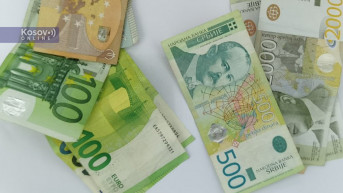
Regarding the intention of Kosovo institutions, contrary to numerous international recommendations and strong opposition from the Serbs in Kosovo, to ban the use of the dinar currency and payment transactions in dinars in the territory of Kosovo, the Eparchy of Raska and Prizren raises its voice in protest against this decision and appeals to international institutions to stop Pristina in its complete ethnic cleansing of Kosovo.
As stated in the statement of the Eparchy, the decision of Kosovo institutions to ban the dinar will have a deeply negative impact, not only on the Serbs in Kosovo but also on other minority communities that use the dinar and will completely block normal life in Serbian communities.
They add that the dinar ban will significantly complicate the payment of salaries, pensions, social benefits, donations, and scholarships, block humanitarian work that particularly depends on the socially most vulnerable, prevent the normal financing of health and educational institutions on which life in Serbian-populated areas relies, and will also adversely affect the life of the Serbian Orthodox Church.
"Unfortunately, Kosovo institutions have not only prevented the return of our displaced people to their homes but actively encouraged further Serbian exodus through police repression, selective application of the law, violent appropriation of Serbian spiritual and cultural heritage, denial of Serbian identity, and the right to life. In these circumstances, it can be clearly stated that an open process of ethnic cleansing of the remaining Serbs in Kosovo is underway, implemented by institutional and police methods," they stated in the press release, adding that if this repressive measure by Pristina was implemented, Kosovo would practically become an ethnically pure Albanian territory, even though more Kosovo Albanians were currently leaving it.
They stated that the worsening of the already existing crisis with new provocations would inevitably lead to further escalation of interethnic relations and completely block any further dialogue.
"The Kosovo Serbs have been assigned the role of hostages, treated by Pristina with all methods as second-class citizens and openly unwelcome population, probably hoping that under such pressure, Belgrade will make political concessions," the statement added.
They expressed deep concern that this logic would not only fail to solve the problems but would further complicate them for everyone.
"We appeal to international representatives, given that our Church is already completely ignored by Kosovo institutions and exposed to open persecution, to stop further escalation that can endanger the entire Balkans and thus Europe. The politics of extortion, ethnic repression, selective application of the law, and police methods of coercion and intimidation have never led to the creation of a stable society anywhere but a society based on such foundations is economically and politically isolated with increasingly negative demographic trends," they said from the Eparchy.
It is added that the SOC has shared all the hardships throughout history with its faithful people, remaining and enduring on its centuries-old territories, never giving up the readiness to live in peace and mutual respect with all people in Kosovo, regardless of their faith and ethnic origin.
"We remain deeply committed to this evangelical approach, but at the same time, enduring numerous injustices against the Serbian Orthodox Church and our people, openly witnessed by Western international representatives, we cannot remain silent on institutional repression that is gaining momentum and whose goal is the complete expulsion of the Serbs from these areas and the erasure of the centuries-old history of the Serbs and the Serbian Orthodox Church in Kosovo and Metohija, where our people have made a great historical, cultural, and civilizational contribution," the statement concludes.

0 comments