
Novakovic: Abolishing the dinar does not contribute to dialogue but imposes predetermined solutions
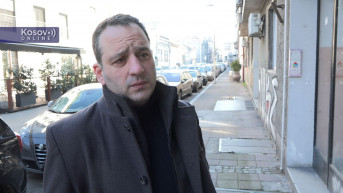
Igor Novakovic from the Center for International and Security Affairs believes that the decision of the Central Bank of Kosovo to abolish the dinar in payment transactions in Kosovo is not a step towards dialogue but rather towards imposing certain predetermined solutions. He pointed out that from today's statements of Kosovo leaders, it could be seen that Pristina was not considering the suspension of the decision to abolish the dinar but was postponing the deadline for citizens to 'adapt'.
"As I understood what she (Vjosa Osmani) said, there will be no suspension, but the final decision on how the measure will be implemented will be announced in a few days, which may mean some delay or finding a new modality with which a transitional period would be given. She is talking about 'citizens adapting'", Novakovic said for Kosovo Online.
However, as he emphasizes, the key question is what is the real impact of the CBK decision on the dialogue and what is achieved with these moves.
He points out that it was obvious, based on the statements of the Quint countries, that this issue should be resolved through the CSM issue, not separately.
"So, these are unilateral steps that do not contribute to the dialogue but rather towards imposing certain predetermined solutions," Novakovic notes.
He notes that the life of the Serbs in Kosovo if the decision to abolish the dinar is implemented, would be very difficult. The question is, he says, how schools, hospitals, and other institutions that still exist in Kosovo will function and how employees will receive salaries.
"It is undisputed that the vast majority of them already use the euro in the context of everyday life, but in principle, when it comes to the functioning of the institutions themselves, the question arises of how it will affect the daily life of an ordinary citizen. So, we have already heard from some other experts from Kosovo that the effects will be quite catastrophic, especially for those who do not have other sources of funding," he said.
Asked whether, if it did happen that Pristina abandoned the abolition of the dinar, it would be a sign of goodwill or whether this issue would be used as a threat to the Serbs that it could be reactivated at any moment, Novakovic assessed that this decision was just one in a series of decisions that were actually looking at "some consolidation of subjectivity and control before what is yet to come".
"I don't think, in principle, that the dialogue is coming; first, the elections are coming in Kosovo, which will probably be in the summer of this year when the diaspora comes. This means that all these moves are aimed at strengthening the position of Kurti himself and his political elite before the election cycles in the EU and the USA," he explains.
The EU Special Representative for the Dialogue between Belgrade and Pristina, Miroslav Lajcak, who met with the President of Kosovo, Vjosa Osmani, and Kosovo Prime Minister Albin Kurti in Pristina yesterday, said the decision of the CBK had been mentioned during the talks with Kurti, but stated that he would not be 'the spokesperson for the Kosovo Government', instead, the Government would announce information regarding the CBK regulation today.
Regarding this matter, Kurti stated today that the decisions of the Central Bank of Kosovo (CBK) were independent, and it was merely doing its job. He emphasized that the euro, as the only means of payment and purchase in Kosovo, was not a subject for negotiation.
The President of the Management Board of the Central Bank of Kosovo, Bashkim Nurboja, stated today that discussions were not about the suspension of this institution's regulation that would prohibit the Serbian community from using the Serbian dinar but about delaying the implementation.
He warns that there is only a couple of months for the implementation of agreements and dialogue.
"In other words, for dialogue and some implementation, we have a limited period if we take for granted what Vucic said, that the Government would be formed on March 15. We have a period from mid-March to the end of May for implementation and dialogue. After that, I think everything is slowly heading towards a stand-by mode that will probably last until the end of the year," Novakovic concluded.


0 comments