
Gajic: As long as Resolution 1244 is in force, it is impossible for Kosovo to go through the Admission Procedure to the UN
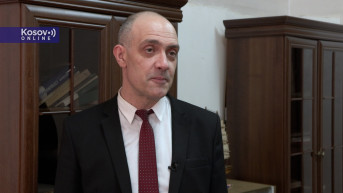
Aleksandar Gajic, a professor at the Faculty of Law in Belgrade, told Kosovo Online that the recent resolution on Palestine adopted by the UN General Assembly is unique and a rarity in the practice of the United Nations, and that the situation concerning Palestine is entirely different from the issue of Kosovo.
The primary purpose of this resolution, he points out, was to determine the modalities of Palestine’s participation in the work of the General Assembly and the Economic and Social Council, as a non-member entity with only observer status in the General Assembly.
"This issue is not new to UN bodies, as Palestine has had an appropriate status with the General Assembly for years and enjoys the support of a very large number of states. The issue of Kosovo is entirely different. UN Security Council Resolution 1244 placed Kosovo under international administration, and it is clear within the United Nations that Kosovo cannot be considered a state. Resolution 1244 is clear that within the UN, Kosovo can only be treated as an integral part of the Republic of Serbia that is currently under international administration, and the issue of the situation in Kosovo and Metohija, in accordance with Resolution 1244, is before the Security Council," says Gajic.
For an entity or state to be admitted to the UN, it must first submit a request that must pass through the Security Council, which must give a positive recommendation to the General Assembly for the admission of that entity to the UN. The Security Council also needs to determine whether that entity is a state.
"In the case of Kosovo, as long as Resolution 1244 is in force, it is impossible for it to go through such a procedure. Once the Security Council gives approval, the UN General Assembly can then decide on the admission of the state by a two-thirds majority of the members present. The current Kosovar authorities likely desire any kind of status within the UN General Assembly, but they are currently hindered not only by the lack of support from enough countries that would back such a proposal but also by their status before the Security Council. The Security Council is the body primarily responsible for maintaining peace and security, and as long as an issue is on the Security Council's agenda, the General Assembly cannot discuss or decide on it. An eventual request by Kosovo to obtain observer status or any other status within the UN in the near future would be overly ambitious. There might be an attempt, but it is unlikely that such a proposal could pass," Gajic assesses.
He adds that if the legality of Kosovo were questioned before UN bodies, it would be much more problematic than in the case of Palestine.
"The way Kosovo seeks to become an independent state is absolutely contrary to the fundamental principles of international law and to everything on which the UN is founded. There have been several theoretical works that have attempted to view Kosovo as having a status similar to a colonial status, which is absolutely excluded and has obviously long been abandoned. In the case of Palestine, it involves relations with Israel and the decolonization process, but in the case of Kosovo, the situation is completely different," concludes Gajic.



0 comments