
Gerxhaliu: It would be a shame if EU funds went to others due to unresolved issues in the Belgrade-Pristina relations
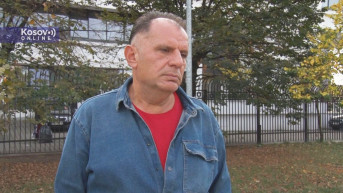
If the problem between Kosovo and Serbia is not resolved and there is no political stability, I fear that we will lose the opportunity to absorb European funds intended for the Western Balkans, Safet Gerxhaliu, former president of the Chamber of Commerce of Kosovo, says for Kosovo Online.
He emphasizes that the summit in Tirana, where a budget of 6 billion euros for the Western Balkans until 2027 was presented as part of the EU's Growth Plan, was of great importance, and that there is another dimension of support for the region until 2030, during which around 20 billion euros will be allocated.
"We all need to realize how important dialogue is in bringing final decisions or solutions. It would be a shame to miss this opportunity because there are several dimensions from which not only Kosovo and Serbia but the entire Western Balkans would benefit. This includes education, digitalization, infrastructure... It would be a great loss if due to unresolved issues between Belgrade and Pristina, these funds are not used for development but are received by those who have projects and political stability and who guarantee a European perspective," Gerxhaliu says.
The use of funds from the EU's Growth Plan for Kosovo and Serbia is conditioned on progress in the normalization process, and when asked what progress would represent for Kosovo, Gerxhaliu says that we are all witnesses to the many signed agreements between Kosovo and Serbia and that the biggest problem is their implementation, as in the case of the Community of Serb Municipalities.
"The more this is delayed, we will surely be hostages to the fact that we will not have the opportunity to absorb all of these funds. Dialogue has no alternative. The longer this prolongs, we all lose, and this does not contribute to the future in the European family. Solving this open problem certainly opens up a new perspective, not only for Kosovo but for all citizens of Kosovo and even for Serbia. It should be understood that for large projects and decisions, compromises and sacrifices are needed, and people must start thinking much more about citizens and the state than just about parties and power," Gerxhaliu says.
Regarding the issues arising from the decision of the Central Bank of Kosovo to abolish the dinar, our interlocutor hopes that a decision will be made soon to license a certain bank, perhaps even the Postal Savings Bank, and that the problem will be resolved.
"The question is, who benefits from opening Pandora's boxes? From one perspective, to score a goal, we scored an own goal that harms Kosovo more than Serbia," Gerxhaliu says.
He says that he was against the decision of the Central Bank of Kosovo because it was not announced so that citizens could prepare for it.
"How can such a decision be made when we are in the process of dialogue on the normalization of relations with Serbia and when there are EU sanctions against Kosovo? That was a misstep that harmed Kosovo. Instead of contributing to the normalization of relations and lifting measures that harm Kosovo, the situation is now completely different," Gerxhaliu concludes.



0 comments