
Vladisavljev: Diplomatic activities can raise awareness about the CSM as a mechanism for protecting the rights of Serbs
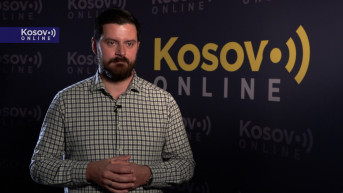
Program Coordinator for the BFPE Foundation for Responsible Society Stefan Vladisavljev assumes that the non-paper, which Belgrade announced it would deliver to all Council of Europe members, will emphasize that Kosovo does not effectively meet the basic prerequisites for membership in the Council of Europe and that these prerequisites should be met before membership is granted, rather than granting membership first and then expecting the prerequisites to be fulfilled.
"It seems to me that the focus will be on the position of the Serbian minority in northern Kosovo, which is in an unfavorable position due to the institutional lack of political will to implement the aspects of what was achieved through the Ohrid Agreement on the ground. After forming a team aimed at intensifying efforts to prevent Kosovo's membership in the CoE, Serbia has announced a series of new steps to further expand its position among CoE members. While a non-paper lacks legal weight, it could serve as a good communication tool to convey specific messages. Raising awareness about establishing the Community of Serb Municipalities as a mechanism for protecting the rights, freedoms, and position of Serbs can be further enhanced through diplomatic activities and potential challenges to Kosovo's membership in the CoE," Vladisavljev says for Kosovo Online.
He assumes that the main argumentation will focus on drawing parallels between Kosovo's membership in the Council of Europe and the role Kosovo plays in the EU-facilitated dialogue process.
He notes that the report presented by the rapporteur for Kosovo to the Parliamentary Assembly of the Council of Europe also points out the elements that are substantive and part of the dialogue and the Ohrid Agreement.
"At this moment, Serbian diplomacy seems to be fighting an uphill battle, and the pieces on the chessboard are set in a way that it will be very difficult for any of the states that initially expressed support for Kosovo's membership to change their positions. However, what Serbia can certainly do is to further highlight the institutional problems arising from the non-implementation of the Ohrid Agreement. Serbia's position, when it comes to the Ohrid Agreement, implies that Serbia will not object to Kosovo being part of international organizations, but it is necessary in order for Serbia to fulfill its prerequisites and not contest Kosovo's membership possibilities, for Kosovo to fulfill those parts of the agreement that are designated for implementation by Pristina institutions," Vladisavljev emphasizes.
He believes that the only tool Serbia can use is to try to prevent the vote from even being placed on the agenda, as everything indicates that if this item is on the agenda, Kosovo will become a new full member of the CoE. He also points out that it would send a bad message if Serbia were to take steps leading to its potential withdrawal from the CoE in the event of Kosovo's admission.
"Membership in the CoE and the institutions associated with the CoE are mechanisms through which we can fight for the protection of the rights of Serbian citizens, but we can also use these mechanisms to protect Serbs living in northern Kosovo. If and when Kosovo becomes a member of the CoE, it will fall under the jurisdiction of the International Court of Human Rights, which means that not only Serbia but also Serbs living in northern Kosovo will have the institutional right to seek protection of their rights before that court and will be able to point out inconsistencies in Pristina institutions regarding the implementation of those aspects of the Ohrid and other agreements aimed at improving the position of Serbs living in Kosovo," Vladisavljev concludes.
0 comments