
Gerxhaliu: Uncertainty is driving people away from Kosovo; it's not just the poor who are leaving
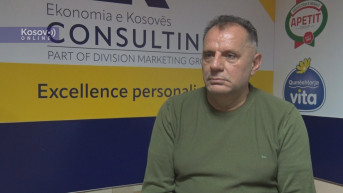
An economic expert from Pristina, Safet Gerxhaliu, says that estimates from some sectoral unions about the number of workers who have left Kosovo should be taken with caution and that what drives people away from Kosovo the most is the uncertain future.
“Look at education, look at healthcare... The lack of political stability is what drives people the most to leave Kosovo,“ Gerxhaliu emphasizes for Kosovo Online.
Gerxhaliu says that multiple factors are driving the workforce migration and emphasizes that it's not only the poor who leave.
“Europe is the major challenge where people go, besides, there is another reason, we have the largest diaspora in European countries. Not only poor people are fleeing Kosovo, but also educated individuals, doctors, architects, IT experts, and sectors that will be most affected if there is a mass exodus, will be trade, hospitality, and construction,“ Gerxhaliu claims.
He notes that Germany, Austria, and Switzerland are the most common destinations, citing the large number of Kosovar diaspora in those countries, followed by Italy, Finland, and Sweden.
However, Gerxhaliu believes that the migration trend from Kosovo is similar to the phenomena experienced by many European countries before and after visa liberalization, such as Poland, Hungary, Bulgaria, and Romania.
“In those countries, before liberalization, emigration was massive, people wanted to go to Europe at any cost. After liberalization, that trend not only declined, but more people returned than left. The same will happen in Kosovo. Europe is not what it used to be. People will surely visit it, and we should appreciate its culture, architecture, history, and everything else, but if we analyze all circumstances, there is no fear of a mass exodus, so there is no need to panic,“ Gerxhaliu assesses.
He emphasizes that the key to preventing a mass exodus of workers lies in a strategy that motivates young people to stay.
“I thought the government would at least enact a law regarding health insurance, to take some steps toward motivating people to stay here. Simply counting the people who leave is not a solution to this problem; we need to ask ourselves, "What are we doing to motivate these people to stay here?" Look at the dialogue with Serbia, look at the politicians' debates, the talk of war. This does not contribute to prospects in these areas. Therefore, we must understand one thing: the common denominator in solving all problems in Kosovo is political stability and economic development, and only then can we work on keeping the youth from leaving,“ Gerxhaliu says.
Commenting on the claim of Jusuf Azemi, the president of the Independent Union of the Private Sector of Kosovo, who asserts that approximately 150,000 private sector workers left Kosovo in the first six weeks after the liberalization of the visa regime, Gerxhaliu urges caution in presenting such data, arguing that visa liberalization came into effect on January 1st, during the holiday season, which many citizens working in the West used to spend time with their families at home.
"It was during the New Year, and as a part of that exodus, it wasn't just workers, but also members of the diaspora who spent holiday time in Kosovo for New Year's. There's also a wave that drives people to tour Europe, to simply see what Europe is, because, in a way, it was forbidden fruit for years. I think everyone has realized that Europe is no longer what it used to be," Gerxhaliu says.
He explains that the last time he was on the Munich-Frankfurt route, he found out that salaries at McDonald's were 950 euros.
"Our young people from Kosovo mostly work there, and then the question arises whether it's worth it," Gerxhaliu says.



comments