
Visa liberalization for Kosovo - a security challenge for Europe; is there a fear of Albanian extremism?
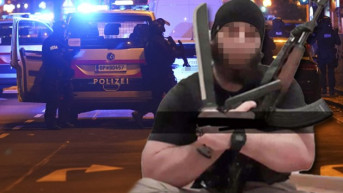
Globalization and conflicts worldwide have led to an increase in extremism and radicalism across the globe, and this has not bypassed our region. In the latest terrorism report by the US State Department, it is stated that citizens of Kosovo are easy targets for recruitment by various violent extremist groups. Security experts assess in this regard, for Kosovo online, that the upcoming visa liberalization for Kosovo citizens, effective from January 1, 2024, will bring certain security challenges and risks to Europe.
The State Department's terrorism report covers countries worldwide. In the section related to Kosovo, it is mentioned that citizens from this territory, as well as those from abroad, are "potential targets for recruitment by violent extremist organizations with ethnonationalism or religious political orientations".
The report further warns about lenient penal policies and concludes that Kosovo lacks a detailed strategy to counter violent extremism.
"It continues to impose low sentences for terrorism-related crimes in Kosovo. Despite facing many returnees, Kosovo operates with an outdated strategy", the State Department states.
Predrag Petrovic from the Belgrade Centre for Security Policy (BCSP) says for Kosovo Online that there is a relatively lenient punitive policy in Kosovo regarding terrorism, primarily because a portion of the population considers those who fought in Syria as heroes.
"A part of the population sees them as heroes, as people who were willing to give their lives for higher ideals. It is important to emphasize here that it is not crucial for the punitive policy to be very strict because a significant part of radicalization actually takes place within the prisons. Therefore, one of the recommendations is for the penal policy not to be overly stringent. What may be lacking more in Kosovo is the absence of more serious reintegration and resocialization programs for those who returned from Syria," Petrovic highlighted.
When it comes to recruitment into violent extremist organizations, our interlocutor notes that there is a risk, but it is of a moderate nature.
"I understand that Western states have significant concerns about Kosovo Albanians, considering that we had one of the leaders and commanders of the Islamic State Mujahideen from there, and there was an attack at Frankfurt Airport committed by a Kosovo Albanian. The fact is that the risk exists, but it is of a moderate nature", Petrovic said.
He doesn't believe that visa liberalization for Kosovo citizens, starting on January 1st, can intensify the security risk for the Western Balkans and Europe but believes that there is another problem, a bigger one.
“People identified as violent extremists are known to the authorities. I believe that the significantly greater risk for Western states comes from organized crime originating from this region", our interlocutor emphasized.
When asked why Kosovo is known for extremists who become part of the Islamic State, Petrovic responded that the reasons were mainly socio-economic.
"People living in Kosovo are susceptible to radicalization primarily because the socio-economic situation there is very poor. People living in rural areas, who do not have a good level of education, are particularly at risk, making them susceptible to radical ideas", Petrovic concluded.
Commenting on the State Department report, Pristina security expert Nuredin Ibishi states for our portal that Kosovo has a good legal basis in the fight against terrorism, but it is essential to implement all these laws in practice.
"Kosovo has a good legal basis for prohibiting participation in foreign conflicts, with a maximum prison sentence of 15 years. About 120 returnees from the conflict zones due to involvement in terrorist organizations have been returned to Kosovo, and another 80 are in camps in Syria. Therefore, the State Department's criticisms are more related to the severity of the punishment. Now it is up to the courts to prove their involvement in terrorist actions in Syria and Iraq or in other organizations that were present in Kosovo. The Ministry of Internal Affairs and the Government will probably take this into account, but it is more a matter for the Prosecution and the judiciary to prove involvement in terrorist organizations", Ibishi said.
As he stated, the Law on Prohibiting Participation in Terrorist Organizations was in line with European countries, but the State Department's criticism had arisen due to the non-application of the law in practice.
He adds that Kosovo has a broad branch for preventing terrorist acts but emphasizes the need for synchronization with partners to ensure that the measures are adequate at the end of the process.
"We have the Law on the Prohibition of Financing Terrorist Organizations, we have agencies dealing with it, and we have acted against terrorism together with the United States. Institutionally, we are very well organized. We have a broad branch for preventing terrorist acts and responding to them, as well as good cooperation regarding the return of our citizens who participated in organizations. However, all of this needs to be synchronized and upgraded for cooperation to be adequate, to prevent it, whether it's on ethnic or religious grounds", Ibishi added.
Director of the International Institute IFIMES in Ljubljana, Zijad Becirovic, tells Kosovo Online that migrations and the abolition of the visa regime, in any case, represent a security challenge, and in certain situations, they can even pose a security threat.
He believes that migrations are taking place in the context of global chaos, as global wars and conflicts are happening worldwide.
"One of them is the war in Ukraine, especially the situation between Israel and Palestine, or the war between Hamas and Israel, which opens a new question about increasing security threats for Europe. As for Kosovo itself, we must know that in the structure of the Albanians, when they were formed, religion did not play an important role. First and foremost, ethnic affiliation and belonging to the Albanian nation were important, but religion now plays an increasing role among the Albanians, and it relates to the principle of cultural defense", Becirovic emphasized.
He added that Kosovo was simultaneously a space for the imposition and attempts to infiltrate various ideologies.
"It is not at all surprising because we know that Albania has accepted Iranian Mujahideen. There is a base near Tirana where they are located. Now, Edi Rama has signed a new agreement with Italy, and Albania will accept about 40,000 migrants from Italy, who will be accommodated in Albania. All this increases the risks, especially when there is a visa-free regime. Kosovo as a space is not attractive for migrants; it can only be a transit route. However, you never know in global currents where there are many actors, who can use whom for different purposes", Becirovic said.
Our interlocutor emphasized that extremism and radicalism would continue to grow as a result of globalization and global conflicts.
"This is a great challenge for the security sector, which must find appropriate responses to it. Above all, local authorities must take care of it establish control, and cooperate with each other. I am afraid that there is none of that when it comes to Kosovo, and I can say the same for the Western Balkans region. These threats are not only directed at one side; it is a global threat, and for a global threat, cooperation and a global response are needed", Becirovic concluded.


0 comments