
Giaufret: The ban on the dinar does not contribute to the normalization of relations
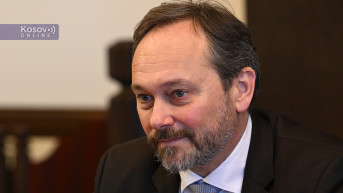
The European Union is clearly moving towards enlargement and wants Serbia in its family, but this is a process that has its rules and they must be respected, stated the EU ambassador to Serbia, Emanuel Giaufret. He added that the ban on the Serbian dinar in Kosovo "certainly does not contribute to the normalization of relations" between Belgrade and Pristina, reports RTV.
In an interview with NIN, Giaufret said that Serbia has made significant progress in the reform process, but there are still issues that need to be addressed before joining the EU family. One key issue is the normalization of relations with Pristina.
Giaufret noted that Serbia is firmly anchored to the EU's economic space, with 60% of Serbia's trade being with the EU, amounting to 40 billion euros exchanged annually.
"I think we see that Serbia and the Western Balkans are already anchored in the EU," he said.
Giaufret also mentioned that the ban on the Serbian dinar in Kosovo does not contribute to the normalization of relations, emphasizing that the EU has clearly stated that this unilateral action taken by Pristina, specifically by the Central Bank of Kosovo, is not useful and does not contribute to the dialogue.
"This issue of providing support to Kosovo Serbs from Belgrade needs to be addressed in dialogue and should also be part of discussions on the creation of the Association of Serbian Municipalities. Therefore, the EU, through its special representative Miroslav Lajčak, is trying to find a compromise solution on this specific issue," he said.
He added that after seven rounds of dialogue, it has been impossible to find a compromise between the two sides, noting that the EU has complained about the unilateral nature of the action, which has created a series of difficulties for the people living there.
Giaufret highlighted that the region is going through a very specific moment and is facing a great opportunity to make significant progress towards EU membership.
"I think this is, if I may say, the bigger picture that everyone understands in the context of the new reality created by Russia's aggression against Ukraine and the new geopolitical reality," said Giaufret.
According to him, the result of this new reality is the EU's desire to accelerate the membership of the Western Balkans, which has been evident in recent months, such as the decision to open negotiations with North Macedonia, Albania, and in March with Bosnia and Herzegovina.
"That is what everyone should be focused on. At the same time, I know there is still a legacy from the past that has not been fully resolved. Some issues still need to be addressed, but we must tackle them in the spirit of Brussels, towards rapprochement with the EU through dialogue, negotiations, compromises, and reforms. That is how we can make progress," said Giaufret.
He explained that joining the EU means that a country becomes a member of a club, a family, where a series of things must be done, and the economy must be able to compete with the EU economy, as all barriers will disappear. This, he emphasized, is a great opportunity but also requires the capacity to withstand the pressure.
"It is also necessary to strengthen the foundations, the rule of law, the fight against corruption, and other important matters. This means that even in the current circumstances of renewed enlargement momentum, enlargement remains a merit-based process because those are the rules of the game," said the EU ambassador to Serbia.
He stressed that now is certainly not the time to strengthen relations with Russia, while the EU has a different relationship with China. China is a partner on many issues such as climate change, and cooperation on that is necessary. It is also a competitor in terms of economic competition, which is what is called a systemic rival, Giaufret noted.
He is also convinced that a large majority of Serbian citizens would vote for EU membership and that the community would like to see more information provided by the Serbian government to its citizens about the benefits of EU membership and candidate status, of which there are many.
He emphasized that the EU wants to be able to count on Serbia as a reliable partner in foreign policy.
"My job is to help Serbia achieve its strategic goal of becoming an EU member, and that requires contributions from various actors. It cannot be done by the government alone; you need to gain support from the population, the business sector, civil society, and everyone must contribute. Therefore, it is very important for me to talk to everyone," concluded Giaufret.
0 comments