
Gogic: Although tensions are rising in Kosovo, there is no indication that escalation will occur
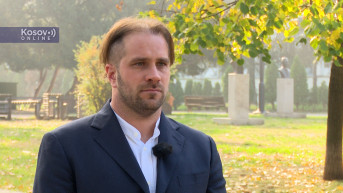
Political scientist Ognjen Gogic notes that there is a high risk of further increased tensions in Kosovo, along with continued violations of human rights and order, but that there is no indication that escalation will occur.
Gogic emphasizes that based on the report by UN Secretary-General Antonio Guterres, which states that tensions in Kosovo are high and that escalation is possible, it is clear that the source of tensions in Kosovo is attributed to Pristina, however, as he says, it was not specified which side could potentially lead to escalation.
"In Guterres's report, two terms are used – tensions and escalation. Tensions indicate issues that disrupt relations between communities or between communities and the central government in Pristina, creating animosity. Escalation would mean that one of the sides takes more radical or violent measures. Tensions are always the groundwork for potential future escalation. However, for escalation to occur, someone would need to act as an agent of radicalization, taking violent steps. Guterres was not clear about whom he meant here. When it comes to tensions, he was unequivocal that they are due to unilateral measures by the Pristina government, but he was less clear on escalation and who might take violent action. So, we can only speculate about whom he was referring to," Gogic told Kosovo Online.
He assesses that the risk of escalation is not high and that there are no actors on either side likely to initiate "mass violence."
He also suggests that when Guterres spoke of escalation, he might have been referring to events in Zvecan and Banjska from last year.
"So, while the risk of tensions is high, the risk of human rights violations and disruption of order is high, but the risk of escalation is not high because I don’t see an actor likely to take mass violent action. Thus, when Guterres wrote about this, he was not necessarily referring to Pristina, people often reference the events from last year, meaning the clashes between Serbs and KFOR in Zvecan in May and the armed attack in Banjska," the political scientist noted.
Gogic emphasizes that the situation in Kosovo is not good.
"Saying that escalation may be unlikely does not mean the situation is good, it is far from it. We are currently in a situation where the position and rights of Serbs are deteriorating, but there is no resistance. They actually lack the capacity to properly resist it. I would conclude that while tensions are high and human rights violations against the Serbian community are significant, the risk of escalation is not high because there simply doesn’t seem to be an actor willing to initiate any large-scale violent action," he said.
When asked whether the increase in tensions is due to the election campaign or if everyday incidents have heightened the atmosphere, Gogic recalls that the current government in Kosovo, led by the Self-Determination Movement, has taken unilateral actions since coming to power.
He added that it all started in September 2021, when entry was banned for vehicles with license plates from central Serbia.
"For three full years now, we have seen various unilateral actions. These cannot be explained by the election campaign, they were happening before, too. But if Self-Determination returns to power, which is very likely, it will continue to take unilateral actions. This has become the way the current Pristina government operates. So, in that sense, this goes beyond rhetoric; these are very concrete actions that have led to tensions, to the deterioration of Serbian rights in Kosovo, making Serbs in Kosovo dissatisfied, eroding even the minimal trust that existed toward Pristina. These actions once led to escalation, and now we see they serve a purpose in the election campaign, likely unchanged until the election," Gogic noted.
He emphasizes that international missions still present in Kosovo play a secondary role in reducing tensions, explaining that they expect Kosovo's institutions to guarantee order, rights, and legal security.
The international community, Gogic points out, has invested many resources, time, and money to build Kosovo's institutions to a level where they can independently protect human rights.
"This has not happened in practice, and the Serbian community is rightfully dissatisfied with the missions' work, especially with EULEX, as they still cannot rely on Kosovo’s institutions to ultimately protect their rights," the political scientist said.
He notes that EULEX and KFOR see themselves as intervening only when things become dramatic and severely deteriorate on the ground.
"This shows that the time for preventive action has come. Their role should primarily involve greater control over Kosovo's institutions, overseeing their work, and building trust between Serbs and institutions. But they are doing none of this. They have reduced their role to monitoring and reporting, which brings no benefit to the Serbs in Kosovo," Gogic concluded.
0 comments