
Gogic: The Constitutional Court delivered a Solomon’s solution, Self-Determination fell into its own trap
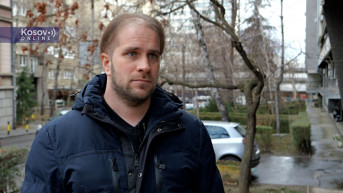
Political scientist Ognjen Gogic told Kosovo Online that by ruling that the election of Nenad Rasic as Deputy Speaker of the Kosovo Assembly from the ranks of the Serbian community was unconstitutional, the Constitutional Court sent a message to MPs that a similar move in the future would also be contrary to the Constitution.
According to Gogic, the Constitutional Court reached a Solomon’s solution, but also decided that the ruling would not be applied retroactively, meaning it would have no consequences for the previous Assembly term.
“That is rendered moot by the fact that the term has been dissolved. At the same time, the Court noted that this would jeopardize legal certainty, because it would then annul all actions taken afterward. Therefore, it used the legal standard that the ruling is not applied retroactively, but that it has consequences for future processes. The Constitutional Court essentially told MPs that a similar move in the future would have consequences, because it would be unconstitutional,” Gogic said.
He assessed that the Constitutional Court, through its ruling, responded to objections heard in the public that it had delayed too long in issuing a decision that is very important for the processes of constituting institutions in Kosovo.
“It preempted problems that could potentially arise in the future by timely stating its position on how the Deputy Speaker of the Assembly from the Serbian community should be elected ahead of the constitution of the parliament that is to follow in some upcoming period, depending on when the election results are confirmed. With this ruling, the Constitutional Court has effectively rounded off this issue,” Gogic said.
He recalled a Constitutional Court ruling from October last year.
“It stated that the Albanian majority cannot prevent the election of a Deputy Speaker from the Serbian community and then say that the Assembly is constituted and that it can move on to the election of the government. So, last time it said that it cannot be done that way, and this time it said that the Albanian majority cannot choose suitable representatives from the Serbian community. Therefore, the majority of MPs from the Serbian community are the ones who must delegate the candidate. In doing so, it confirmed the principle of constitutiveness that exists in the Constitution of Kosovo, which requires appropriate representation of members of non-majority communities, their participation in the sharing of power, and in such a way, on the principle, that they are asked about who will represent them. Thus, with this ruling, the Constitutional Court actually wanted to respond to objections that it had been inefficient in the previous period, but also to timely indicate how the process of constituting the new Assembly Presidency should look in the coming weeks,” Gogic emphasized, noting that for now only a statement has been published and that the full ruling is yet to be seen.
He noted that the decision is also important for the Serb List, because through the ruling the Constitutional Court will primarily send a message to MPs from the Albanian community that they must adhere to both the letter and the spirit of the Constitution.
“This requires that representatives of all communities in Kosovo that are not in the majority, including the Serbian community, have appropriate representation in institutions, both in the legislative body and in the executive branch, and that they themselves must choose their representatives. If these two criteria and conditions are not met, according to the Constitutional Court, institutions cannot be constituted. In this way, the Constitutional Court confirmed a general principle that permeates the constitutional legal order of Kosovo, namely that there is a high degree of protection and representation of communities that are not in the majority,” our interlocutor explained.
Gogic points out that this represents an obstacle on the path to constituting institutions from the standpoint of the ruling Self-Determination party, which is also the winner of these elections.
“They have already stated that they will not vote for a candidate from the Serb List, and in a way, karma has caught up with them. They fell into the trap they created. Because they persistently ran a campaign against the Serb List, they voted against its certification for participation in elections last year on as many as three occasions. In doing so, they antagonized the Albanian public and their overall position toward the Serb List, and now they have come to the point where they cannot constitute institutions without voting for the Serb List,” Gogic said.
As he explained, if Self-Determination does not overcome the obstacle of electing a Deputy Speaker from the Serbian community, then the Assembly cannot be constituted, after which it will not be possible to vote for the government nor to grant a mandate to form a government.
“In fact, what they did by running a campaign against the Serb List has caught up with them, it came back like a boomerang, because now, if Self-Determination does not raise its hands in the Assembly for the election of a Deputy Speaker of the Assembly from the Serb List, it will not be able to form a government at all, and in doing so will plunge Kosovo into yet another deeper crisis. Because Kosovo would then again be without institutions, without an assembly, without a government, and all possible deadlines will pass, both for voting on the budget and for the election of the President of Kosovo,” the political scientist concluded.



0 comments