
Constitutional Court: Procedure for the election of Rasic as Deputy Speaker of the Assembly was unconstitutional
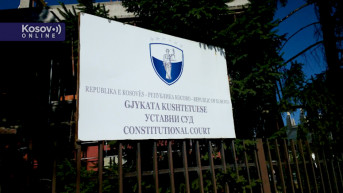
The Constitutional Court of Kosovo, responding to an appeal filed by the Serb List, has determined that the procedure for the election of Nenad Rasic as Deputy Speaker of the Assembly was not in accordance with the Constitution, Koha reported.
The decision states that the decision on Rasic’s election was not in compliance with paragraph 4 of Article 67 of the Constitution of Kosovo.
“Applying the above-mentioned principles to the circumstances of the present case, the Court, as explained in the Judgment, concluded that the majority of deputies from among the deputies of the Serbian community exercised their right to propose a Deputy Speaker of the Assembly, namely a member of the Assembly Presidency, by proposing nine candidates. Consequently, the election of Deputy Nenad Rašić to the position of Deputy Speaker of the Assembly did not result from a proposal by the majority of deputies from among the Serbian community, nor was there a refusal by the majority of deputies from among the Serbian community to exercise this right. Accordingly, the Court found that, in the circumstances of the present case, the deblocking mechanisms were not used in accordance with the spirit and purpose for which they were intended,” the Constitutional Court’s decision states.
The Court clarified that, based on the principle of legal certainty, this judgment has no retroactive effect, Koha reports.
On the website of the Constitutional Court of Kosovo, it was announced that the Court, by five votes in favor and two against, found that the Decision of the Assembly of Kosovo of 10 October 2025 on the election of the Deputy Speaker of the Assembly from among the deputies of the Serbian community is not in accordance with paragraph 4 of Article 67 (Election of the President and Deputy Presidents) of the Constitution of Kosovo, in conjunction with subparagraph 1 of paragraph 6 and paragraph 7 of Article 12 (Election of Deputy Speakers of the Assembly) of the Rules of Procedure of the Assembly of Kosovo.
By five votes in favor and two against, the Court also decided that, based on the principle of legal certainty, this judgment does not have retroactive effect in the circumstances of the present case.
“In the context of the procedure for the election of a Deputy Speaker from among members of the Assembly who do not belong to the majority, the Judgment emphasizes that the right to propose, as defined by the Rules of Procedure of the Assembly and in both the letter and spirit of the Constitution, and as confirmed in the Court’s case law, belongs to the majority or the largest number of Assembly members from among the communities that are not in the majority, elected in accordance with subparagraphs 1 and 2 of paragraph 2 of Article 64 (Composition of the Assembly) of the Constitution, who enjoy the greatest democratic legitimacy within their respective communities. The Judgment underscores that this standard is of fundamental importance for the constitutional protection of the rights of non-majority communities, also in terms of the requirement set out in paragraph 7 of Article 58 (Responsibilities of the State) of the Constitution, given that it is the responsibility of the majority to ensure effective representation of non-majority communities in the state institutions of the Republic of Kosovo, namely in the Assembly Presidency,” the statement of the Constitutional Court reads.
The Judgment further clarifies that deblocking mechanisms, including (i) the possibility that voting for the same candidate may be conducted only up to three times for the same candidate and the drawing of lots procedure, should be used only in exceptional circumstances and for the purpose for which they were established, namely to enable the constitution of the Assembly, taking into account the deadlines set by the Constitution, so that the legislative body becomes functional within 30 days.
As explained in the Judgment, the application of these mechanisms in a manner that would allow the majority of Assembly members to determine the representative of a non-majority community, without a proposal from members of that community, would essentially constitute a circumvention of the formal guarantees established by the Rules of Procedure of the Assembly.
“This is because the nomination of candidates for Deputy Speakers from among non-majority communities is a right of the majority of members of those communities. This principle is particularly important given the representation of non-majority communities, which do not have the necessary votes to secure the election of their representatives to the Assembly Presidency. Applying the above-mentioned principles to the circumstances of this case, the Court, as explained in the Judgment, concluded that the majority of deputies from among the Serbian community exercised their right to propose a Deputy Speaker of the Assembly, namely a member of the Assembly Presidency, by proposing nine candidates. Consequently, the election of Deputy Nenad Rašić to the position of Deputy Speaker of the Assembly did not result from a proposal by the majority of deputies from among the Serbian community, nor was there a refusal by the majority of deputies from among the Serbian community to exercise this right. Accordingly, the Court found that, in the circumstances of this case, the deblocking mechanisms were not used in accordance with the spirit and purpose for which they were intended,” the statement on the Constitutional Court’s website reads.
Rašić, it should be recalled, was elected Deputy Speaker of the ninth convocation of the Assembly of Kosovo from the Serbian community on 10 October, and the Serb List submitted its appeal to the Constitutional Court on 16 October.




0 comments