
Gogic: The EU does not give up on dialogue even when it seems to be moving in the wrong direction
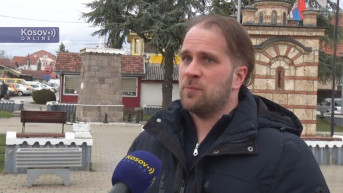
Messages from international officials addressed to Kosovo Prime Minister Albin Kurti after the formation of the government show that for the European Union the dialogue between Belgrade and Pristina and the normalization of relations are strategically important, political scientist Ognjen Gogic assessed, explaining that the EU does not abandon this process even when it appears to be heading in an undesired direction.
“For the European Union, the dialogue between Belgrade and Pristina and normalization are strategically significant because the current European Commission is pursuing a policy of strategically bringing this region closer to the European Union, that is, the Western Balkans. The issue of relations between Belgrade and Pristina stands out in particular, because it is the most sensitive point of the Western Balkans. That is a relationship that exists and that can threaten regional stability if it does not move in the direction of normalization. For that reason, the EU does not give up on the dialogue, even when it seems as though it is not moving in the desired direction”, Gogic told Kosovo Online.
The High Representative of the European Union for Foreign Affairs and Security Policy, Kaja Kallas, congratulated Kosovo Prime Minister Albin Kurti after the formation of the government and said she was ready to soon host a high level meeting, which according to Gogic suggests that Kallas would like to act as mediator in a potential meeting.
“That means she will send an invitation to the leaders from Belgrade and Pristina, because it is believed that conditions now exist to resume dialogue at the highest level after Kosovo finally formed a government following almost a year of institutional vacuum”, he said.
An invitation can be expected soon, Gogic points out, and it remains to be seen whether a direct meeting of the leaders or separate meetings will be organized. However, what is certain is that the European Union will continue to insist on the implementation of undertaken obligations because, as Gogic notes, this is crucial for both Serbia and Kosovo on their path toward the EU.
“The European path of both Serbia and Kosovo, among other things, depends on whether they improve their mutual relations and whether they move along the path of normalization. The European Union does not punish, it does not exert pressure; it pursues a policy of conditionality. That policy essentially means that the EU makes certain benefits available to the parties if they meet the conditions it sets for them. If they do not meet them, if they are not constructive in the dialogue, the EU withholds its support”, he said.
Gogic explains that this was best seen in the case of Kosovo, which was subject to EU punitive measures in the form of suspended financial funds intended for Pristina.
“The EU sees itself as a mediator, as someone who should help the parties improve their relations, and not as someone who should punish them, because this process is voluntary. The European Union cannot force anyone to implement undertaken obligations; it tries to motivate the parties through benefits it makes available, or by withholding them if there is no progress”, the political scientist said.
In addition to the European Union, Gogic notes that the position of Donald Trump’s administration should also be monitored.
“Last year, the US Congress adopted the National Defense Authorization Act, which contains a special segment called the Western Balkans Prosperity and Democracy Act. Among other things, it addresses relations between Belgrade and Pristina and the normalization process. Interestingly, that law calls on the parties to implement the agreements from Brussels and Ohrid, which will soon mark three years. It is notable that the US administration is not returning to the Washington Agreement, even though it mediated its signing almost six years ago, but is instead insisting on the implementation of the Brussels and Ohrid agreements. The Americans are more inclined toward so-called bulldozer diplomacy, where they expect constructiveness in implementing obligations, with the possibility of applying tougher measures”, he concluded.



0 comments