
Who will be the chief negotiator in the dialogue with Belgrade – Konjufca or someone outside the government?
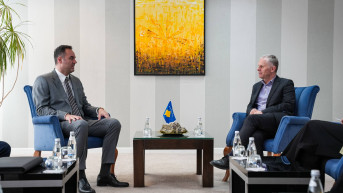
Edita Tahiri, Avni Arifi, Skender Hyseni, Besnik Bislimi… Who will continue the line and become the next chief negotiator for Pristina in the dialogue with Belgrade? The new Government has not yet announced the name of Bislimi’s successor, and according to some expectations, it could be Glauk Konjufca, who has taken over the position of First Deputy Prime Minister from Bislimi. It is not ruled out that this responsibility could be entrusted to someone outside the Government, and by lowering this position to a lower level, one of Kosovo Online’s interlocutors believes, a message would be sent that the dialogue remains not a priority for Pristina.
Written by: Dusica Radeka Djordjevic
Pristina’s delegation in the technical-level dialogue, when the EU-facilitated negotiations began in 2011, was led by Edita Tahiri. She was appointed to that position by then Kosovo Prime Minister Hashim Thaçi, and Tahiri had previously been one of the participants in the Rambouillet negotiations. In the government of Isa Mustafa in 2014, Tahiri also became Minister without portfolio in charge of dialogue with Belgrade.
In January 2018, the position of chief negotiator passed into the hands of Avni Arifi, adviser to then Kosovo Prime Minister Ramush Haradinaj, while the high-level political dialogue was led by Hashim Thaçi, who at that time was President of Kosovo.
During the government of Avdullah Hoti in 2020, the technical dialogue was led by Skender Hyseni, and with Albin Kurti’s return to power in 2021, Besnik Bislimi became the chief negotiator.
As Bislimi is not part of the “Kurti 3” government, voted in on February 11, speculation in Pristina suggests that his successor could be Glauk Konjufca.
Professor of political science from Pristina, Basri Muja, told Kosovo Online that he expects Konjufca, who now serves as First Deputy Prime Minister and Minister of Foreign Affairs, to be the person responsible for talks with Serbia, given that the new Government does not include Besnik Bislimi, who was First Deputy Prime Minister and chief negotiator in the previous mandate.
However, there are opinions that Konjufca lacks the experience required for the job of negotiator, which is the view of analyst Semsi Jasari.
Dialogue is not a formal meeting where protocols are implemented, Jasari pointed out, but rather deals much more deeply with discussions, implementation of agreements and their details, and experience is necessary, while Konjufca has not been seen as part of any negotiating team.
As one of the possible options regarding Pristina’s chief negotiator, Dragisa Mijacic, coordinator of the National Convention for Chapter 35, also mentioned lowering this position to a lower level.
This possibility is not ruled out by Milos Pavkovic, Director of Strategy at the Centre for European Policies in Belgrade, who believes that such a move by the new Kosovo Government could be interpreted as a message that dialogue remains not a priority for the Government of Kosovo.
“Even when Deputy Prime Minister Besnik Bislimi was the chief negotiator, dialogue was not a priority, and in this way the importance of dialogue with Belgrade for the Government of Kosovo would be further lowered on the scale. However, it could be an opportunity for a fresh face and a new approach. Much will depend on the kind of pressure that comes from the EU, that is, from the Quint countries, for Pristina to truly commit to the dialogue,” Pavkovic told Kosovo Online.
Bislimi Was a Hardline Negotiator
Speaking about Besnik Bislimi’s performance in the dialogue process, Pavkovic says that there has been very little progress in the normalization process.
“We are talking about a firm stance in the dialogue, very problematic relations over the past three to four years, with unilateral moves by Pristina and the setting of unrealistic conditions on Pristina’s side that were very unconstructive. When we speak about Bislimi’s legacy, we are not speaking about changes on the ground or progress in normalization, but about the status quo, failed rounds of negotiations and unilateral conditions and actions that Pristina undertook during the past year,” Pavkovic states.
According to Muja’s assessment, Bislimi performed well in the position of chief negotiator.
“Bislimi is, if I may say so, a politician of a hard line. I believe he did his job well, however difficult the talks with Serbia may be. I also believe that the success of those talks does not depend much on one person. No matter how strong one representative may be, that is not decisive,” Muja concluded.

0 comments