
Gogic: If elections are held, the question will arise of when the President of Kosovo will be elected afterward
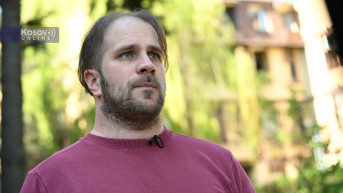
Political scientist Ognjen Gogic told Kosovo Online that if new elections are held in Kosovo, the question will arise afterward of when the president will be elected - whether immediately after the constitution of the new Assembly or whether that issue will wait until October, given that the mandate of the acting president can last six months.
“That is once again a constitutional and legal gap. Albulena Haxhiu can remain in the position of acting president until October. So the question is whether whoever forms the government, Kurti or the current opposition, will even be pressured to deal with this first, or whether they would not be obliged to address it immediately, which then gives them a period of several months during which they can focus solely on forming the government and governing, rather than electing the president,” Gogic points out.
He notes that, rationally speaking, new elections do not suit Albin Kurti and Self-Determination, as it is difficult to imagine that the party could perform better than it did in December, and that the opposition should be more inclined toward new elections, but that at the moment it appears that both sides favor such an outcome.
“Based on the messages being sent, both sides seem eager for new elections, even though those elections would not actually resolve anything,” Gogic says.
The results of the December 2025 elections, he says, serve as the starting point for all parties when assessing their chances in any potential elections, and they were favorable for the leading party, Self-Determination, and unfavorable for the opposition.
“The factor that changes the calculation for everyone compared to December is Vjosa Osmani. She is someone who has moved from a position into the opposition. She used to bring a certain number of votes to Self-Determination, and now she will take them away and shift them into the opposition bloc,” Gogic says.
Taking all of this into account, he adds, it is completely absurd for Self-Determination to even consider new elections instead of seeking a compromise with part of the opposition in order to secure the election of the president of Kosovo within the current Assembly term, rather than risking new elections.
“However, in practice it does not seem that they are thinking that way, but rather it appears that Self-Determination also believes it would perform sufficiently well in new elections or perhaps even better. But that is difficult to imagine,” he assesses.
He adds that it appears Self-Determination is buying time and delaying the process of electing the president until the last day, when it would be beneath the opposition’s political dignity to align with and yield to Self-Determination.
New elections, he emphasizes, would not resolve the issue of electing the president of Kosovo, as an agreement between the government and the opposition would still be necessary.
“New elections would not significantly change the results, and we would again arrive at a situation where the ruling side, together with at least part of the opposition, would have to reach an agreement on electing the president. Translated into concrete mandates, without Kurti and his support, a president could not be elected, whether he would propose the candidate and provide votes for their election, or simply provide a quorum. Self-Determination would not decline to the point where it could not influence the election of the president. So this seems completely counterintuitive, that Self-Determination wants to go to new elections, but based on the messages and behavior they are showing, it appears that they are indeed considering it,” our interlocutor says.
If opposition parties were to secure more mandates in potential elections than they currently have, Gogic believes there would likely be greater willingness among them to reach an agreement on forming a government than after the December elections.
He reminds that even last year the opposition could mathematically have formed a government, since Albanian parties had 52 mandates and needed support either from the Serb List or other non-Albanian representatives, which was not impossible to negotiate.
“At no point last year did the opposition state that they wanted the mandate to form a government and that they wanted to try to form one. Based on that experience, we can assume that there would again be factors obstructing their agreement. But this time, it seems the results would still be different, and again the factor of Vjosa Osmani would play a key role. She would likely be the leader of the strongest opposition party and would then be in a position to gather a cabinet around herself. It appears that the opposition would this time be in a stronger mathematical position and more ready to reach an agreement. At the same time, this would be supported and encouraged by the West,” Gogic assesses.



0 comments