
Gogic: There is one major issue that is not discussed enough, and that is the arming of Kosovo
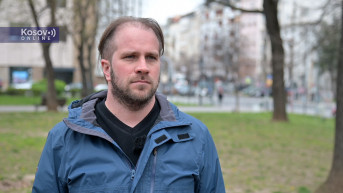
At the session of the United Nations Security Council, the regular six-month report of United Nations Interim Administration Mission in Kosovo was presented, prompting opposing assessments from Belgrade and Pristina on the situation in Kosovo. Political scientist Ognjen Gogic warns that behind diplomatic wording lie problems related to security, the legal system, and the position of the Serbian community, alongside the increasingly weak role of UNMIK on the ground. He also states that there is one major issue that is not discussed enough, and that is the arming of Kosovo, Euronews Serbia reports.
Gogic emphasized that the report itself has significant analytical value. As he noted, at the time of the session the document was not fully available to the public, which makes a more detailed analysis difficult, but despite that, its content could be inferred from the presentations and available excerpts.
“This is essentially a regular procedure, but also a very important document that provides a good picture of the situation in Kosovo over the past six months. Although it has not been published in full, from what we have heard it can be concluded that it fairly realistically reflects the situation on the ground,” Gogic said.
One of Belgrade’s main objections was that, as stated, the report does not clearly address the departure of Serbs from Kosovo. Gogic explains that such trends in documents like this are rarely presented through explicit figures, but rather through descriptions of the circumstances that lead to them. According to him, those circumstances are where the explanation for people leaving should be sought.
“I think numbers are not discussed directly, but the facts and circumstances leading to migration are noted. Diplomats formulate this more cautiously, but the problems are clearly indicated,” he said.
A significant part of the discussion concerned legal proceedings against Serbs in Kosovo, which Gogic sees as one of the key factors of insecurity. He points to patterns in which people are detained and kept in custody for extended periods without a clear and prompt legal outcome.
“You have situations where people are arrested, where detention lasts for months, and there is no clear outcome. That creates fear and insecurity among people, so many decide to leave Kosovo or not return at all,” Gogic said.
He adds that such actions have broader consequences.
“This is a form of subtle pressure. Formally, it is treated as a legal process, but in essence it introduces fear and uncertainty. By the time it is determined whether there are grounds, someone has already lost months or years of their life,” he said.
Speaking about specific cases, Gogic noted that there are situations that raise serious doubts about the validity of the charges.
He cited arrests in Serbian communities, pointing to inconsistencies in certain cases.
“It is hard to believe that someone who committed a crime 25 years ago would remain living in a community surrounded by people who would recognize them. Such things raise serious questions,” he said.
He also pointed to a practice in which the mere fact that someone was mobilized during the war is used as grounds to initiate proceedings.
As an illustration of the situation on the ground, Gogic also referred to the removal of flags in Gracanica ahead of a major religious holiday, assessing that such moves send negative messages.
“These are things that show there is no real willingness for dialogue. Dialogue is not built only through words, but also through gestures. And these are gestures that say the opposite,” he stressed.
He believes such actions further undermine trust and create a sense of insecurity among Serbs in Kosovo.
Although dialogue was the central topic of almost all statements at the United Nations Security Council, Gogic believes concrete results are lacking. According to him, minimal steps are often presented as major achievements.
“You have a situation where symbolic moves are presented as great progress. These are minimal steps that do not essentially resolve problems on the ground or affect people’s daily lives,” he said.
He added that the continuation of dialogue also depends on political circumstances in Pristina, including possible elections and the formation of stable institutions.
Gogic particularly highlighted a topic that, he says, was insufficiently addressed during the session – the development of Kosovo’s security forces.
“There is one major issue that is not discussed enough, and that is the arming of Kosovo. It is the ‘elephant in the room’ that everyone avoids talking about,” he said.
He warned of a potential scenario in which the transformation of these forces could lead to the withdrawal of the international presence.
The session also once again raised the question of the role of UNMIK, whose importance has been declining for years. Gogic assessed that the mission is now significantly weaker than before.
“UNMIK today exists primarily because of United Nations Security Council Resolution 1244. It is a pale shadow of what it once was, with fewer and fewer resources and less influence,” he said.
He added that on the ground, citizens more often turn to other international actors, while UNMIK’s role is becoming increasingly marginal.
Gogic also referred to the support Serbia receives from major powers, primarily Russia and China, noting that such messages should be viewed in a broader context.
“Major powers often project their interests in other crisis areas through the issue of Kosovo. It is support, but it also has a broader geopolitical context,” he concluded.
0 comments