
Gogic: Kalas will have better relations with Pristina than Borrell and will leave dialogue leadership to a mediator
Estonian Prime Minister Kaja Kalas has been nominated as the new High Representative of the European Union for Foreign Affairs, and political scientist Ognjen Gogic believes that, like Josep Borrell, whom she will succeed in this position, she will delegate the leadership of the dialogue between Belgrade and Pristina to a mediator who will likely take over from Miroslav Lajcak from January.
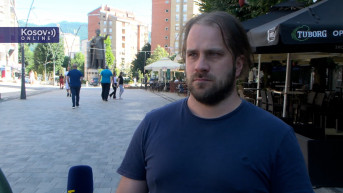
"If I compare her with Catherine Ashton and Federica Mogherini, who also held this position previously, there were no other significant foreign policy issues at that time, whereas Kaja Kalas will have other priorities, primarily the wars in Ukraine and Gaza, which will occupy most of her working time. Kalas will not bring any major changes except that she will have better relations with Pristina's representatives. As Prime Minister of Estonia, she had meetings with Kurti and Osmani, and generally, warm messages were exchanged, which is a significant difference compared to Borrell, who was immediately met with suspicion in Pristina, given that he, like Lajcak, also comes from a country that has not recognized Kosovo as an independent state," Gogic told Kosovo Online.
However, Gogic points out that the European Union's approach to the dialogue does not depend on the High Representative and that it is not the High Representative who defines the EU's expectations from the dialogue, but primarily the EU Council that leads EU foreign policy. In this sense, he notes that this personnel change does not necessarily indicate a change in EU policy.
"When High Representatives Mogherini and Ashton led the negotiations, they were backed by Angela Merkel's political authority. Thus, the High Representatives are implementers or operators executing the policy defined by individual member states. They are the ones who still play a key role in defining the European Union's foreign policy. When Borrell took the position, he initially did not have clear instructions from EU countries on the direction the dialogue should take until Macron and Scholz defined their Franco-German plan, which became the European proposal and was later adopted in the form of the Brussels and Ohrid agreements. Again, it was not Borrell who defined the framework but rather implemented what was given to him," Gogic notes.
He adds that Ashton and Mogherini were more successful in this than Borrell for several reasons, the first being that they were backed by Angela Merkel, but also because the issues seemed simpler and more technical than political at that time.
"Also, the prospect of EU membership for this region was clearer then, so both Belgrade and Pristina were more interested in fulfilling their obligations. Borrell did not have that kind of incentive to offer the parties, which led to a deadlock in the dialogue. This did not primarily depend on him, nor will it depend on Kalas," Gogic concludes.


0 comments