
Gogic: The most vulnerable paid the highest price for the implementation of the CBK regulation
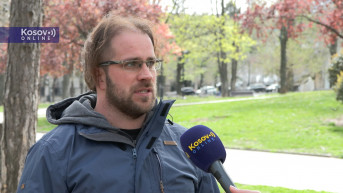
The most vulnerable citizens have paid the highest price for the implementation of the CBK regulation says political scientist Ognjen Gogic, summarizing the past two months since the regulation abolishing the dinar came into force. He explains that this is a previously used tactic by Pristina "to create crises" in order to seek a way out of the crisis through an agreement between Belgrade and Pristina, which would imply at least de facto recognition.
Gogic reminds that since the decision of the CBK came into force, the main problem has been the physical prevention of dinar imports into the territory of Kosovo, thereby preventing citizens who receive income from Serbia from withdrawing dinars.
"That is actually the biggest change that has occurred and has made people's lives more difficult. Of course, citizens have meanwhile sought alternative methods to cope with this situation, so they have started organizing themselves to, for example, go to central Serbia to withdraw money there. In the meantime, prefabricated facilities of the Post Savings Bank have been set up near the administrative crossings, and the Post Savings Bank has managed to pay part of these entitlements to citizens in Euros," Gogic recalls.
He notes that in this way, the negative consequences of the CBK decision on citizens and Serbian and other communities receiving money from Serbia have been somewhat mitigated.
"It has not yet fully produced consequences, but the most vulnerable citizens have paid the highest price, primarily persons with disabilities or older individuals receiving pensions at the Post Office, and a solution has not yet been found there. In the meantime, Pristina has maintained its uncompromising stance but has made certain concessions. First, it has accepted to discuss this issue after initially rejecting the possibility, because it was considered an internal issue of Kosovo that Kosovo could unilaterally decide on," our interlocutor emphasizes.
According to his words, CBK allegedly adopted certain adjustment measures "for which no one knows whether they have actually come into force, whether they are being implemented at all, and they certainly have not in any way eased this situation."
"A transitional period of three months was introduced, during which Kosovo committed itself to refrain from implementing repressive measures in order to enforce this regulation. So, at the beginning of the month, we had actions by the Kosovo Police where the dinar intended for pension and social assistance payments in Ugljare, Kosovo Polje, and Gorazdevac in Metohija was confiscated. This was not repeated afterwards. So, there was a very sharp reaction primarily from the United States, and after that, the KP was no longer used to ensure the implementation of that decision, and in general, Kosovo institutions refrained from punishing economic entities—hospitality establishments or retail stores—especially in northern Kosovo but also in other Serbian communities that still accept dinars as a means of cash payment," Gogic explains.
According to him, Pristina has opted for a tactic of trying to ensure compliance with this measure by preventing the dinar from coming to Kosovo and thereby sequentially leading to the complete disappearance of the dinar.
"So far, the implementation of this measure has mainly affected the purchasing power of the population, and there is indeed a decline in economic activity as a result—people have less disposable income and are somewhat more conservative and less inclined to spend money, precisely for fear of being left without it completely, which has also affected those economic entities operating in Serbian communities," Gogic states.
He believes that Pristina is actually hiding behind the rule of law.
"The term used as a cover to say that it was a decision of an independent institution such as the CBK of Kosovo and that the government or executive branch cannot interfere with it, which is not true at all because CBK issued that regulation, as is already known, outside the law. So, CBK could not define legal matters by regulation, and that is the issue of currency. Only parliament could have done that, through legislation," our interlocutor explains.
The second tactic Pristina uses is presenting the entire problem as a technical issue, but, as he says, technical solutions are actually sought within the imposed framework.
"So, Pristina's position is that the decision of the CBK is irrevocable and has come into force, and then they are allegedly ready to seek technical solutions within that decision, within the new reality it has created. It is primarily a political issue by which Pristina wanted to exert pressure both on Serbia and on Serbs in Kosovo in the dialogue," Gogic believes.
He recalls that Pristina has previously applied this tactic "to create crises," always hoping to gain the international community on its side, in the hope that a way out of the crisis would then be sought in an agreement between Belgrade and Pristina, which would imply at least de facto recognition.
"So, in this situation too, Pristina hinted that the way out of this situation could be mutual recognition between Serbia and Kosovo. This is actually a tactic and strategy that Pristina has applied and which has yielded results so far because the entire Brussels-Ohrid Agreement, which recently celebrated its first anniversary, was actually a response of the Quint countries to the crisis that had been unfolding in Kosovo over the previous two to three years, and they thought they would solve that crisis by somehow forcing Serbia to enter into an agreement with Kosovo that would involve mutual recognition," says Gogic.
However, he adds, this goal has not been achieved because no one in the international community perceived that agreement as Kosovo's recognition by Serbia, and therefore, no new recognitions followed from other countries that had not recognized Kosovo.
"That is why Pristina is very dissatisfied, and that is why Pristina actually provoked this new crisis—to put the issue of recognition back on the agenda as a way to resolve this crisis and everything else. This move did not receive understanding and approval in the international community, and this is evidenced by the fact that a UN Security Council session was held on this issue, so the issue was recognized as a potential risk to international peace, security, and respect for human rights, and it has indeed faced great and harsh condemnation from states that otherwise recognize Kosovo's independence," Gogic emphasizes.
However, as he observes, apart from some diplomatic and reputational damage suffered by Kosovo, concrete steps are still missing.
"The Quint again refuses to implement concrete measures that would actually persuade Pristina to abandon such moves. Specifically, I mean mechanisms that the EU has at its disposal, such as visa liberalization. If that were called into question, Pristina would certainly retract this decision. The same applies to the process of Kosovo's possible accession to the Council of Europe," he notes.
As he says, Kosovo is receiving mixed messages all the time, where on one hand, it is condemned for some measures such as the ban on the dinar, while on the other hand, Kosovo's membership in international organizations such as the Council of Europe is being promoted unhindered.
"If the EU had sent a message that Kosovo cannot count on membership in the Council of Europe until this situation is resolved and until, above all, those most vulnerable groups affected by this measure in Kosovo are protected, Pristina would have reconsidered this measure. But it seems to me that efforts are being made to expedite Kosovo's accession to the Council of Europe, and therefore, the threats and warnings coming from the West are not convincing anyone in Kosovo," Gogic concludes.
0 comments