
Gogic: Nothing will come of the Haradinaj's intention; Kurti gets a second term, and the Serbs will be collateral damage
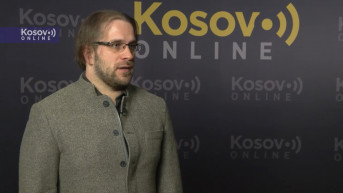
A political scientist from Belgrade, Ognjen Gogic, assesses that there are slim chances for opposition parties in Kosovo to form a united bloc to oppose the Self-Determination Movement. He also warns that the election campaign could have negative consequences for the Serbian community.
Commenting on the increasingly frequent announcements of parties in Pristina about forming an opposition bloc to challenge the Self-Determination Movement in the elections, Gogic tells Kosovo Online that it is unlikely.
"The formation of an opposition front is unlikely because the differences between certain parties in Kosovo are still too significant, too far apart. I am primarily referring to the Democratic Party of Kosovo (PDK) and the Democratic League of Kosovo (LDK). What connects them is that they are opposition to Kurti and that they want to come to power themselves, but cooperation among them would be very difficult, and I think their voters would not view it favorably," says Gogic.
He notes that it is far better for the leading opposition parties to solidify their voter base.
"This applies primarily to the PDK, whose voters are the least favorable to the ruling party, and hence the least favorable to cooperation with the LDK. It should be noted that the LDK had cooperation with Kurti. The question is how the PDK voters would view that alliance because they have little trust in both the government and other opposition parties," Gogic emphasizes.
Commenting on the announcement by the Alliance for the Future of Kosovo that it has formed the "United Opposition Bloc", Gogic believes that Ramush Haradinaj did this primarily to promote his position on the opposition scene.
Gogic says that Haradinaj is one of the most pragmatic politicians in Kosovo, and it is possible to imagine him in all post-election scenarios.
"I can imagine him in any variant, in cooperation with any of the parties, both opposition and government. He is the one who promotes this idea the most, counting on strengthening his position and benefiting him the most as someone who wants to unite and bring together all forces in Kosovo," Gogic explains.
He says that parties in Kosovo are speculating about the future election date because the decision will be made solely by the ruling party when it deems the timing most favorable.
Gogic says that the crucial factor in making that decision will be the economic factor and the dialogue with Belgrade.
"There is a huge inflation in Kosovo that worsens the standard of living for citizens, and the government could take that factor into account. When the consequences of inflation will most affect citizens, they might decide to hold elections earlier. Also, a very important factor is the process with Serbia, the dialogue with Belgrade. If there is increased pressure on the Pristina side to make concessions, primarily related to the formation of the Community of Serb-majority Municipalities, it is almost certain that Albin Kurti would opt to avoid discussions on that topic by going for new parliamentary elections. This would delay the processes; during that period, discussions on the formation of the CSM would not be possible. Then, he would put all other parties on the spot to declare whether they were for or against the formation of the CSM, which is not a popular matter in Kosovo. Essentially, we are in that pre-election period in Kosovo. Regardless of when these elections will take place, these statements should be viewed in the context of parties positioning themselves for the upcoming elections," Gogic clarifies.
The claim by representatives of the Self-Determination Movement that they will secure more than 50 percent of the votes in the next elections has caused much controversy. While opposition MPs argue that this "calculation" is not based on facts and public opinion polls, Gogic says it is "very likely" that Kurti will win another term as Prime Minister.
"It is very likely that the Self-Determination Movement will have enough votes to independently form a new government. This does not necessarily mean that they will have more than 50 percent of registered voters, i.e., votes. But if they have a result that is close to that threshold, there may be enough seats to independently form a government. It should be noted that there are also the votes of minorities. In addition to the Serbian community, which has 10 seats, other communities also have 10 seats and are automatically a part of the government. So, if Kurti is short of a certain number of seats, he can certainly get those seats from the minorities," Gogic explains.
On the question of what the Serbs could expect from these elections, Gogic emphasizes that it is challenging to predict how parties will shape their campaigns, meaning that the Serbs might be both a "central and secondary topic".
Nevertheless, Gogic highlights that it is undisputed that a new crisis in the north during the campaign would suit Kurti to homogenize his voters.
"For the Serbs in Kosovo, elections are probably a slightly more favorable moment when they can breathe a little because then Albanian parties focus more on themselves and internal issues. However, on the other hand, there may be another crisis in the north because crises also contribute to certain parties. Albin Kurti might welcome a new crisis in the north during the campaign to homogenize his voters.
The Serbs in this campaign can be both a central and completely neglected issue," Gogic says.
He assesses that in the event Kurti gets a new prime ministerial mandate, the Serbs could expect further deterioration of relations and a new decline in standards for protecting the position of the Serbian community.
"If Albin Kurti remains in power, as I expect, then indeed the Serbs can expect a harsh approach. Since he came to power, he has constantly antagonized the Serbian community, not making a single positive gesture towards them. If citizens give him their trust again, he will have even less reason to be lenient towards the Serbs compared to the policy he has pursued so far. If this happens, I think there will be a decline in the standards that have already been achieved regarding the protection of the positions of Serbian communities," Gogic says.
According to him, other parties might have more understanding of this issue, but only to a certain extent.
As key reasons, he sees the fear of moderate Albanian parties of how voters would react to potential concessions to the Serbs.
"However, what sounds paradoxical is that parties that originated from the KLA, such as the PDK, and even the Alliance of Ramush Haradinaj, were able to make concessions at times and even be better for cooperation. For strange but understandable reasons. They first proved, in their view, through the war that they were not favorable to the Serbs, and then when they conceded to the Serbs, no one could dispute them in terms of being lenient or taking the 'Serbian side', Gogic says, reminding that both Haradinaj and Thaci had Serbian translators in their cabinets while parties like the LDK have the 'burden of the past' for being too 'lenient' towards the Serbs, so, as he claims, they have to prove their nationalism.
He assesses that these reasons will be crucial for determining political entities in Kosovo concerning the Serbian community.
"We should understand that the situation in Kosovo is quite complex when it comes to political parties, and we cannot say that any of them is the best or most favorable to the Serbs in every situation. A lot depends on their internal relations, and the Serbs are often collateral damage in these reshufflings," Gogic concludes.


0 comments