
Odalovic: Pristina's decisions provoke and make life difficult for Serbs in Kosovo
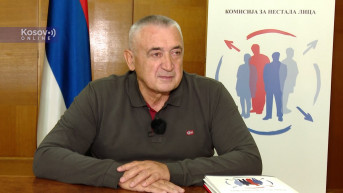
Decisions made by Pristina, led by Albin Kurti, deeply provoke, complicate, and make life difficult for Serbs in Kosovo, Veljko Odalovic, President of the Commission for Missing Persons of the Government of Serbia, says, as reported by RTS.
The President of the Commission for Missing Persons of the Government of Serbia, Veljko Odalovic, emphasizes that provocations continue in Kosovo.
"The institutional terror that Kurti established by occupying the northern part of Kosovo and Metohija now continues as he makes decisions that deeply provoke and antagonize. He is not a man of peaceful resolution; he is a man of incidents and has chosen to forcibly consolidate that conditional quasi-statehood," Odalovic says.
Odalovic claims that Kurti is making moves that are unprovoked and bring nothing to anyone, but they provoke Serbs, complicating and making life difficult for the Serbian people in Kosovo.
"The Minister of the Interior of the self-proclaimed state said that only the Serbian embassy would remain from Serbia in Kosovo," Odalovic explains the situation.
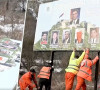
In Zvecan, a billboard with photos of honorary citizens of Zvecan, including Aleksandar Vucic, Novak Djokovic, Vladimir Putin, was removed, and Odalovic said for RTS that Pristina was sending a message to Serbs in Kosovo.
"A billboard with truly respected individuals who enjoyed full support among the Serbian population in that region should not bother anyone. You know, on the other hand, you have monuments being built to terrorists. People who have blood on their hands from crimes against the Serbian people, who simply do not deserve streets, squares, or monuments to be built in their honor," the President of the Commission for Missing Persons of the Government of Serbia says.
Odalovic believes that the expulsion of the dinar is another message, and the third message is what they are doing with churches and monasteries, an attempt to rewrite history.
The international community sends messages, appeals, calls...
"The authorities of the so-called state of Kosovo refuse to accept a return to dialogue, into which Serbia entered in good faith and with good intentions," Odalovic says.
Veljko Odalovic explains that when we hear messages coming from the international community – everyone supports dialogue, but in the field of implementing obligations, what is happening should not happen.
Odalovic claims that these are the final appeals of the international community to do something, otherwise Serbs in Kosovo will be left at the mercy of Kurti.
The international community urgently requested that mayors resign six months ago, and it still hasn't happened, as Odalovic emphasized.
"You have an absurd situation. When you have 1,527 or 1,537 voters who elected four mayors in four municipalities. The petition that was completed and submitted to their central electoral commission met the requirement that 20 percent of the described voters, over 9,000 people, maybe even 10,000 people, collected signatures. Now you come to these capsules, 1537 or 37 voters elected four chiefs, and 22,500 people need to vote on the day of the recall for them to be recalled," Odalovic explains the complicated situation.
Odalovic claims that when the recall process is initiated, the bureaucratic process is further prolonged, and new deadlines are created.
"When you look at it, everything seems ideal to proceed according to the deadlines and dynamics they initiated. Before June, it's not realistic to expect it to happen," Odalovic explains.
Odalovic claims that Pristina will do everything to make the recall process and later the election of new mayors more difficult, and Europe and America will not focus on the situation in Kosovo because they will have to deal with their own problems.
The fate of the dinar in Kosovo
Odalovic claims that the message from the State Department is good regarding Pristina's intention to suspend the dinar, but he reminds that the issue of financing institutions in Kosovo was defined in the Ahtisaari Plan.
"Ahtisaari said that a direct connection must be ensured for Serbs in Kosovo and Metohija, through joint Serbian municipalities, through Serbian municipalities with Serbia, with the central part of Serbia, and in financing. Instead of the United States forcing Kurti to form joint Serbian municipalities. And through joint Serbian municipalities, everything is resolved," Odalovic points out.
The euro is not the official currency, but it is used in Kosovo, Odalovic says.
Odalovic says that Kosovo is being armed by those who bombed, and that the Security Council is institutionally dismantled because it violates decisions it has made and cannot agree on anything.

0 comments