
Gogic: Osmani brought discord to the LDK, the party needs reform
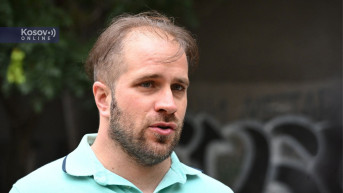
Political scientist Ognjen Gogic said that several election cycles have shown that Lumir Abdixhiku is not the leader who can return the Democratic League of Kosovo (LDK) to a successful path and that the party is in urgent need of reform. He believes that former Kosovo President Vjosa Osmani further deepened divisions within the LDK by returning to the party, which was reflected in its election result.
Speaking to Kosovo Online, Gogic said that the June elections showed that the LDK had failed to recover significantly compared to the December elections and that it had merely managed to maintain its position and slow its decline.
"They performed better in percentage terms, but in absolute numbers they once again recorded a decline in votes. The LDK cannot be satisfied with these results. It became clear that Vjosa Osmani did not contribute enough to improving the party's standing. This is the result of a series of poor decisions made by the party leadership, without any serious attempt to reassess its own work and find a way to consolidate the LDK," Gogic said.
Speaking about divisions within the party, he recalled that the issue of responsibility had already been raised after the December elections, when Abdixhiku offered his resignation, but it was rejected at the party assembly in January.
"It now appears that the party leadership is completely under his control and is shielding him from political responsibility," Gogic assessed.
At the same time, he noted that calls for Abdixhiku's resignation are becoming increasingly vocal, recalling that the mayors of Pec and Lipljan have publicly demanded that he step down.
"They openly called on Abdixhiku to resign, which he refused to do. It seems, however, that the two mayors are spokesmen for a faction within the LDK that sees Perparim Rama, the mayor of Pristina, as the party's new leader. A bloc is emerging that is trying to bring about change within the party," Gogic said, recalling that former Kosovo Prime Minister Abdullah Hoti had also called for Abdixhiku's resignation.
According to him, the LDK's most prominent officials are advocating change, but Abdixhiku and those around him still control the party's key decision-making mechanisms.
"There is a disconnect between the will of the leadership and the mood of the party base, which further weakens the party. If there is no strength for change, the LDK will have no serious future on Kosovo's political scene. This is a party that has been losing support for quite some time. In that context, calls for Vjosa Osmani to once again become the presidential candidate are pointless, because neither her election results nor the mood within the party indicate that such support exists, let alone among other political parties," Gogic explained.
Speaking about acting Prime Minister Albin Kurti's relationship with the opposition, Gogic said that Kurti does not directly interfere in the internal affairs of political parties, but benefits from their disunity.
"His political strategy benefits from the fact that the opposition parties are unable to reach agreement either internally or among themselves and form a united bloc against him. That is his greatest advantage. Kurti is not a politician who engages in political bargaining or offers concessions in exchange for support. He expects unconditional backing while offering nothing in return," Gogic said.
He added that Kurti does not attempt to influence internal relations within the LDK, but instead allows the party to deepen its own internal problems.
"That suits him because voters see disunity both within the opposition parties and between them, so they turn to Kurti as the only politically consolidated option," Gogic stressed.
Gogic believes it is no coincidence that it is precisely the mayors who achieved electoral victories who are demanding changes at the top of the LDK.
"That is why it is paradoxical that the LDK membership is not giving greater support at this moment to Pristina Mayor Perparim Rama, who has proven himself to be a charismatic leader capable of matching Kurti and bringing a fresh approach to the political scene," Gogic assessed.
According to him, repeated election cycles have shown that Abdixhiku is not the leader capable of returning the LDK to a winning path.
"The party desperately needs reform, but it has shown that it is incapable of carrying it out. It appears that a kind of oligarchy exists within the LDK that is preventing it. One possible outcome is a split, with the mayors seeking change looking for a political alternative outside the party if they fail to achieve reform from within," Gogic said.
Speaking about Vjosa Osmani's role, he stressed that she is not responsible for the split within the LDK, but that she has contributed to deepening divisions.
"Osmani left the LDK almost six years ago and cannot be the sole person blamed for the party's current state. She did deal the party a serious political blow when she left, but the question is why the party leadership failed to consolidate the LDK over the following six years. Those who led the party during that period must take responsibility," Gogic said.
He added that her return sparked new divisions rather than bringing fresh energy.
"She did not create synergy or restore support. Many criticized her political shifts and her return to the LDK after her cooperation with Kurti collapsed, expecting the party to extend her political career," he said.
Nevertheless, he believes that the current LDK leadership bears greater responsibility than Osmani.
"The greater responsibility lies with Abdixhiku, who, despite being aware of the divisions and controversies surrounding Osmani, opened the door for her return to the party. Responsibility lies primarily with those who have led the LDK all along, not with Osmani," Gogic concluded.



0 comments